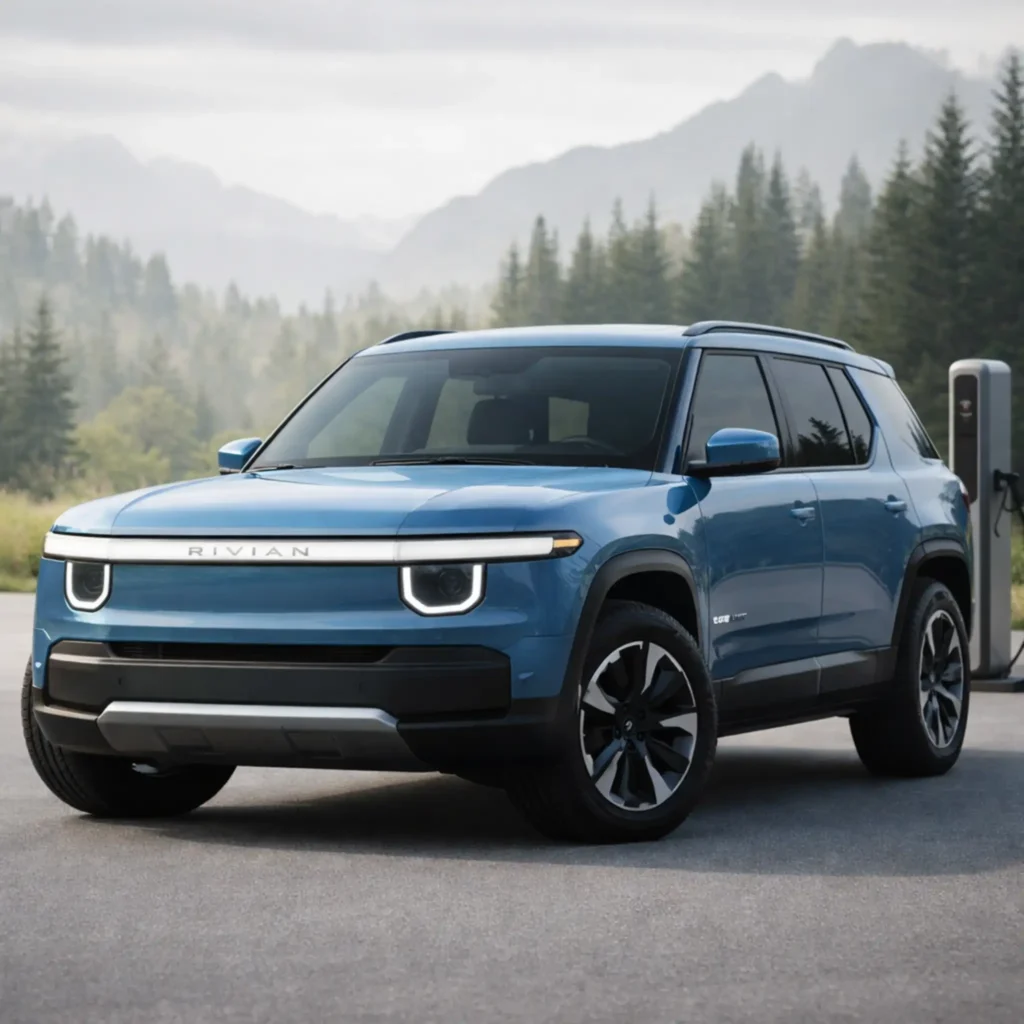

Rivian’s push into the mid-priced electric SUV market should have landed as a clear growth story. Instead, the company’s latest R2 update arrived with a timeline that left investors looking further down the road than they had hoped. Rivian (RIVN) stock slid 2.9% after the EV maker confirmed that the most affordable version of the R2, expected to start at around $45,000, will not be available until late 2027. That delay matters because the R2 is not just another vehicle for Rivian. It is the model expected to bring the brand into a much broader part of the market and challenge Tesla’s grip on mainstream electric SUV buyers.
The company is hoping the R2 can break deeper into the segment dominated by the Tesla Model Y, still the top-selling EV in America. Rivian’s brand is already established among buyers who like premium, adventure-focused electric vehicles, but the R2 is meant to do something bigger. It is designed to expand Rivian’s customer base by offering the company’s styling, technology, and performance in a more accessible package. The problem for investors is that the lowest-price headline sounds immediate, while the actual delivery schedule says otherwise.
Rivian laid out a staggered R2 rollout with higher-priced trims first
Rivian revealed several R2 trim levels and made clear that buyers will see the more expensive versions before the true entry-level model arrives. The top version, the R2 Performance with Launch Package, starts at $57,990. This trim features a dual-motor all-wheel-drive setup producing 656 horsepower and 609 lb-ft of torque. Rivian says it can go from 0 to 60 mph in as little as 3.6 seconds, while still delivering an EPA-estimated 330 miles of range.
The Launch Package adds a few attention-grabbing extras as well. Rivian says buyers will get lifetime access to its Autonomy+ driver assistance subscription, a tow package rated at 4,400 pounds, and an exclusive Launch Green exterior color. That package keeps Rivian’s premium image front and center, but it also underlines that the first R2 many buyers will see is far from the promised $45,000 version.
Next in line is the R2 Premium, which Rivian expects to arrive in late 2026 at $53,990. This version offers a 450-horsepower dual-motor AWD setup with 537 lb-ft of torque, a 0-to-60 mph time of 4.6 seconds, and the same 330-mile EPA-estimated range as the Performance trim. For many buyers, this could become the most balanced version in the lineup, combining long range with strong acceleration and premium features.
The lineup then moves to the entry R2 Standard, which is expected in the first half of 2027 at $48,490. Unlike the AWD trims, this one comes with a single rear-motor setup making 350 horsepower. Interestingly, Rivian says this version will offer up to 345 miles of estimated range, making it the longest-range announced trim in the family. After that, Rivian plans an additional Standard variant in late 2027 starting at around $45,000 with roughly 265-plus miles of range, likely using a smaller battery pack. Rivian did not provide more detailed specs for that version.
Read more trending coverage on Swikblog
The R2 is Rivian’s clearest shot yet at Tesla’s Model Y market
That pricing ladder makes one comparison unavoidable. Rivian is targeting Tesla’s Model Y, the dominant EV in the American market. The Model Y rear-wheel drive starts at $39,990, which is well below Rivian’s cheapest currently detailed R2 Standard trim. Even the later $45,000 R2 would still come in above Tesla’s base price. Rivian’s challenge, then, is to convince buyers that its design, utility, brand appeal, and driving experience justify that premium.
There is a more competitive comparison higher up the lineup. The Tesla Model Y Premium all-wheel drive is priced at $48,990, while Rivian’s R2 Premium comes in at $53,990. That keeps the gap narrower, especially for buyers who want a more rugged-looking EV with stronger differentiation from Tesla’s design language. Rivian is likely betting that some consumers who are looking for an alternative to Tesla, or simply want something fresher in the midsize EV category, will give the R2 serious attention despite the price difference.
Interior, branding and public display strategy keep the spotlight on Rivian
Rivian also used the R2 reveal to show that it is preserving its premium identity even as it moves downmarket. The Performance and Premium trims will feature birchwood accents and more upscale materials across two signature interior themes, Black Crater and Coastal Cloud. The Standard trim gets a simplified Black Crater interior with natural fiber accents. That split matters because Rivian is trying to protect the look and feel that made the R1 lineup stand out, while still creating a more attainable model for future buyers.
The R2 has also been put in front of the public quickly. Rivian said reservations are open now with a $100 refundable deposit, and the lineup is on public display at SXSW 2026 from March 13 to March 18. For a company that still needs excitement as much as sales scale, visibility matters. Rivian founder and CEO RJ Scaringe said the R2 embodies many of the company’s learnings, a line that reinforces how important this model is to the next stage of the business.
Rivian has also pointed to deeper technology control as part of its long-term strategy, including in-house AI chips that could give it more control over future vehicle systems and reduce dependence on outside suppliers. That angle may not be the main headline for consumers shopping an SUV, but it does matter for investors who want to see Rivian build more of its technology stack internally over time.
Why the market reaction still matters for RIVN stock
The market’s response suggests this was not a product disappointment as much as a timeline disappointment. On paper, the R2 lineup looks strong. Buyers are getting options that include 656 horsepower, 330 miles of range, a more affordable Rivian design language, and a clearer bridge between premium EV buyers and the mainstream segment. But investors are focused on what can move deliveries and revenue sooner, not just what looks promising in two years.
That is why the delay of the $45,000 version landed so heavily. Rivian has given the market a product with strong appeal and a direct path into a larger category, but the version with the biggest headline value will take the longest to arrive. For now, the company is asking investors to stay patient while it begins with pricier trims and tries to prove that the R2 can eventually become the model that reshapes its growth story.
Readers looking for official model information can also browse Rivian’s R2 product page, where the company highlights the vehicle’s design, technology, and reservation details. For Rivian, the opportunity is clearly there. Whether the stock begins to reflect that promise may depend less on the concept and more on how smoothly the rollout unfolds from 2026 through 2027.

Make Swikblog your go-to source on Google for reliable updates, smart insights, and daily trends.