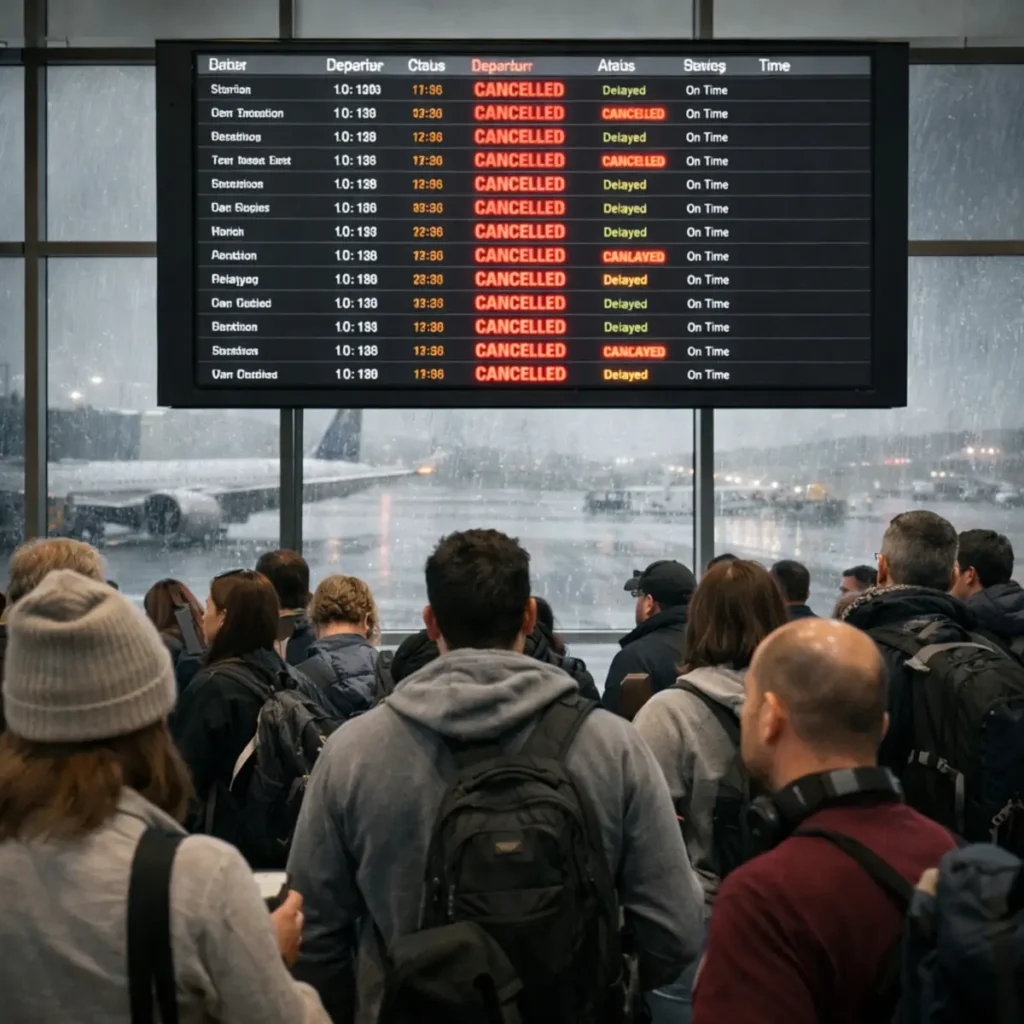

Severe weather has pushed the US aviation system into widespread disruption, with Boston Logan International Airport emerging as a major pressure point. By late evening, the airport recorded 279 flight cancellations and 339 delays, while nationwide cancellations surged past 5,400 flights, underlining the scale of travel chaos spreading across the country.
The disruption is not the result of a single isolated storm but part of a broader pattern of volatile late-winter and early-spring weather sweeping across the United States. Strong winds, heavy rainfall, and unstable atmospheric conditions have repeatedly disrupted airline operations, particularly across major East Coast hubs such as Boston and New York.
Storm systems and lingering disruption across US air travel
Recent weather patterns have created a stop-start recovery across the aviation network. Earlier in the season, powerful winter systems — including blizzard-like conditions — forced hundreds of flight cancellations in Boston, sharply reducing runway capacity and slowing airport operations. Even after those storms passed, follow-up systems brought additional rounds of rain, gusty winds, and low visibility.
These conditions continue to affect aircraft movement and air traffic flow. When wind speeds increase or visibility drops, airports are forced to reduce the number of flights that can safely take off and land, creating immediate bottlenecks. At major hubs like Boston Logan, even short-term restrictions can quickly cascade into larger disruptions.
Boston Logan at the center of nationwide travel chaos
Boston’s 279 cancellations and 339 delays reflect more than a local issue. The airport is deeply connected to the national flight network, meaning disruptions elsewhere feed directly into its operations. Aircraft arriving late from other cities, missed crew connections, and congestion at major hubs all contribute to delays and cancellations in Boston.
Across the country, more than 5,400 flights were cancelled, highlighting how severe weather in one region can ripple nationwide. As airlines attempt to stabilize schedules, flights that initially appear on time can suddenly be delayed or cancelled due to changing conditions elsewhere in the network.
According to FlightAware, such large-scale disruptions typically indicate system-wide strain rather than isolated operational issues.
Passengers face repeated cancellations and long waits
Inside terminals, the impact has been immediate and deeply frustrating. Passengers described long queues, extended hold times, and repeated rebooking attempts as airlines struggled to manage demand. For many travelers, the disruption was not limited to a single cancellation but involved multiple schedule changes throughout the day.
Maeve Higgins, travelling to Florida, described the experience after her flight was cancelled and rescheduled multiple times. She explained that after being unable to reach customer support for hours, her group had to go directly to the airport to resolve the issue, adding that they were on hold for three and a half hours trying to get assistance.
Another traveler, Lauren Price, said her group faced financial pressure due to non-refundable hotel bookings. With limited alternatives available, they chose to continue their trip for whatever duration remained possible, highlighting the broader financial impact of flight disruptions beyond airfare.
High-demand routes collapse under pressure
The severity of the disruption became especially clear when key routes began to disappear from departure boards. By midday, all remaining flights from Boston to New York were cancelled, a rare occurrence on one of the busiest air corridors in the United States.
High-frequency domestic routes are often the first to be cut during operational stress, as airlines consolidate resources and prioritize aircraft repositioning. Leisure routes and connections to warmer destinations were also affected, with multiple flights removed or delayed.
International services face additional complications. When inbound aircraft are delayed or unable to arrive, outbound long-haul flights are often cancelled, compounding disruption across multiple time zones.
Operational challenges extend beyond weather
While severe weather is the primary trigger, operational factors significantly amplify disruption. When flights are cancelled in large numbers, aircraft and crews are often left out of position. Jets may be stranded at airports where demand is low, while pilots and flight attendants may not be available where they are needed most.
Strict aviation regulations also limit how long crews can remain on duty. After extended delays, crews may reach their maximum allowable working hours, forcing airlines to cancel flights even if weather conditions begin to improve.
Ground operations further complicate recovery. De-icing requirements, runway adjustments, and strong winds all slow turnaround times. As gates remain occupied longer and aircraft cycles stretch, delays quickly escalate into cancellations.
Travel uncertainty likely to continue
The broader weather pattern suggests that disruption may not end immediately. As winter transitions into spring, fluctuating conditions across the eastern United States continue to create challenges for airlines attempting to maintain stable schedules.
For travelers, the current situation highlights the fragile balance within modern air travel systems. Even when skies clear at a specific airport, the aftereffects of earlier disruptions can continue to impact flights for hours or even days.
The scenes at Boston Logan — crowded terminals, repeated cancellations, and long waits for assistance — reflect a larger reality facing US air travel. Severe weather remains one of the most powerful forces capable of disrupting the system at scale, turning routine journeys into uncertain and often costly experiences.
You may like

Make Swikblog your go-to source on Google for reliable updates, smart insights, and daily trends.