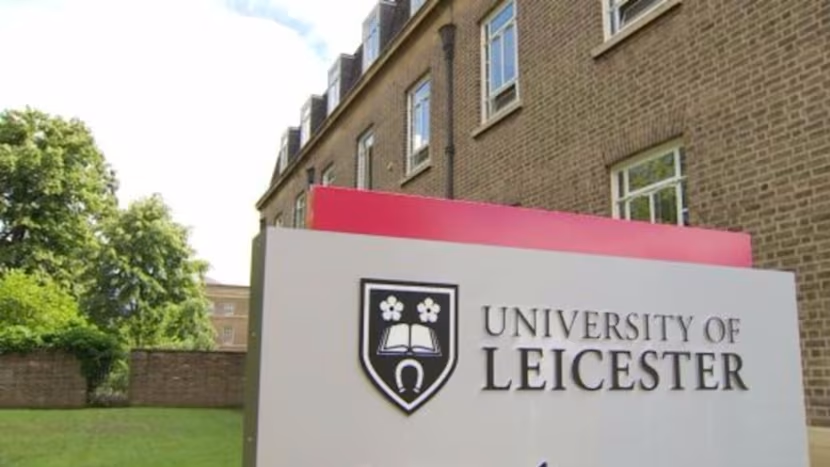

The University of Leicester course closures cancel nearly 300 UCAS offers, leaving hundreds of students scrambling for alternatives just months before the 2026 academic year begins. The university confirmed it will shut down its Modern Languages and Film Studies departments, a move that stops recruitment immediately and effectively voids offers already made during the current UCAS admissions cycle.
The timing has intensified the impact. With decisions made mid-cycle, affected applicants now face sudden uncertainty after believing they had secured a confirmed university place. According to reports, nearly 300 students could see their offers rescinded, forcing many to rethink their next steps in a highly competitive admissions environment.
University of Leicester course closures: Who is affected
The closures impact all degree programmes under Modern Languages and Film Studies. Students who had applied and received offers for September 2026 entry are now directly affected. Many of these applicants had already shortlisted Leicester as a firm or insurance choice through the UCAS application process, making the disruption particularly severe.
For these students, the consequences are immediate. They must now search for similar courses at other universities, reassess entry requirements, and potentially adjust career plans — all within a shrinking timeframe before the academic year begins.
Decision follows contested strategic review
The course closures are the outcome of a strategic review process launched in 2025, which quickly became a source of tension between university leadership and academic staff. The review led to protests and industrial action, including demonstrations by students and staff concerned about the future of key departments.
Despite months of opposition, the university confirmed earlier this month that both Modern Languages and Film Studies would be shut down. Staff involved in the process said the outcome had felt inevitable for some time, with concerns that the consultation process did not genuinely consider alternatives.
Union backlash and staff reaction
The University and College Union (UCU) has strongly criticised the decision, warning of both academic and regional consequences. The union estimates that 17 academic jobs will be lost as a result of the closures, though some redundancies may be delayed while current students complete their courses.
Dr Joseph Choonara, UCU branch co-chair, said he was “absolutely appalled” by the move, warning that it would reduce opportunities for students in the region. Staff members have also spoken about the personal toll, with some describing the closures as potentially “career-ending.”
Spanish lecturer Maite Usoz De La Fuente said the announcement left her “very upset and sad but not surprised,” highlighting that staff had anticipated the decision after months of uncertainty during the review process.
Teach-out plan until 2029
While new admissions have been halted, the university has confirmed that existing students will be able to complete their degrees through a structured teach-out plan running until 2029. This means current cohorts will continue their studies, but no new students will join the programmes from 2026 onward.
Teach-out arrangements are designed to protect enrolled students, but they also signal the gradual phase-out of departments. Over time, staffing levels decline and academic activity reduces, marking the end of the subjects within the institution.
Wider cuts and ongoing uncertainty
The closures may not be limited to just two departments. The UCU has raised concerns about additional proposed cuts in other areas, including Chemistry and Geography, Geology and the Environment, with decisions expected in the coming months.
Although the university has indicated that no compulsory redundancies will be made in certain departments such as History and the School of Education, consultations are still ongoing elsewhere. This has created a broader atmosphere of uncertainty across the campus.
Regional impact and long-term concerns
Academics have warned that the University of Leicester course closures could have consequences beyond the institution itself. With other universities in the East Midlands also reducing language provision, there are fears the region could become a “cold spot” for degree-level language education.
This decline could eventually lead to a shortage of qualified language teachers and reduce opportunities for students who wish to study languages locally. The closures therefore raise wider questions about the sustainability of certain disciplines in UK higher education.
Students left searching for answers
For the nearly 300 affected applicants, the priority is clarity. Many are now waiting for official confirmation on how their offers will be handled and what support will be provided. The sudden change has left students navigating difficult decisions at a critical stage in their academic journey.
Reports from ITV News Central highlight the scale of disruption, with both students and staff expressing frustration over the timing and impact of the decision.
The University of Leicester course closures cancel nearly 300 UCAS offers, but the story continues to develop. With further cuts under consideration and unions planning additional industrial action, the situation reflects growing pressure within the UK university sector — and leaves students, staff, and the wider academic community watching closely for what comes next.
You May Like
Rolls-Royce Shares Drop 4.87% Amid Iran War Fuel Crisis – What’s Next?

Make Swikblog your go-to source on Google for reliable updates, smart insights, and daily trends.