
By Chetan Sharma
Britain’s Easter travel rush is colliding with one of the most extensive rail shutdowns in recent years, leaving key routes suspended, timetables slashed, and millions of passengers forced to rethink their journeys.
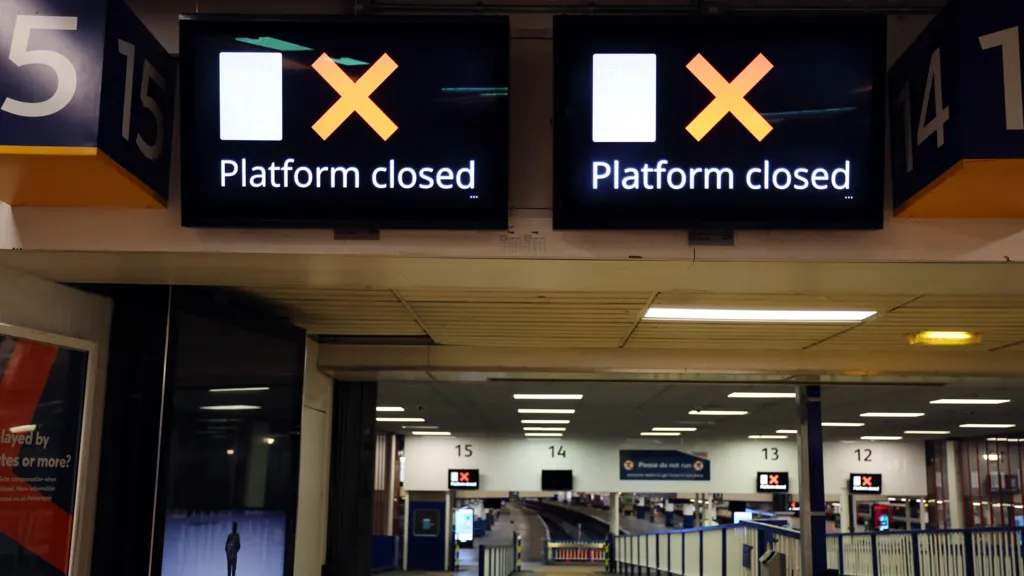
At the center of the disruption is London Euston—one of the UK’s busiest rail hubs—which will see almost no mainline services between April 3 and April 8. The closure is part of a major engineering programme on the West Coast Main Line, a critical artery connecting London with cities like Manchester, Liverpool, and Glasgow.
Six-day shutdown at Euston and nationwide ripple effect
During the six-day window, Avanti West Coast trains will not run between London Euston and Milton Keynes Central. Instead, long-distance services from northern cities will terminate at Milton Keynes, forcing passengers to complete journeys via replacement buses to Bedford and then onward trains into London St Pancras.
Rail authorities confirmed tickets will be accepted across alternative operators including East Midlands Railway and Thameslink at no extra cost.
The disruption stems from extensive infrastructure upgrades, including bridge replacement, signalling improvements, and track renewals—work that officials say can only be completed during extended holiday closures.
Even within London, transport networks will feel the strain. The Bakerloo line will face partial disruption, the Hammersmith & City line will not operate during the Easter weekend, and parts of the Docklands Light Railway will be suspended between Bank, Tower Gateway, and West India Quay.
A limited London Overground service will still operate from Euston on select days, but capacity will be significantly reduced.
North West services severely disrupted
Beyond London, the knock-on impact is widespread—especially across the North West, where multiple operators are adjusting or cancelling services.
Northern services will be heavily affected by engineering works between Preston, Lancaster, and Oxenholme Lake District on April 4 and 5. Key changes include:
– Leeds to Lancaster/Morecambe trains running only as far as Skipton
– Replacement buses operating between Skipton, Carnforth, and Morecambe
– No direct trains between Lancaster, Morecambe, and Heysham Port
– Suspension of Oxenholme to Windermere services
– Reduced stops on the Lancaster to Barrow-in-Furness route
Late-night services to and from Manchester Piccadilly will also be altered or replaced by buses.
TransPennine Express will face line closures between Preston and Oxenholme in both directions, with revised timetables affecting routes linking Manchester Airport, Liverpool Lime Street, and Preston. On Easter Monday, some services will terminate at Manchester Victoria instead of Piccadilly.
Avanti services in the North will also be disrupted, with closures between Warrington Bank Quay and Wigan North Western, as well as Preston to Oxenholme on April 5. In some cases, services will drop to just one train every two hours, including a limited non-stop Preston to Carlisle route.
For passengers traveling between Manchester and London, frequencies will fall to roughly one train per hour between Manchester Piccadilly and Milton Keynes, adding further pressure on already stretched services.
Trams, roads, and holiday pressure add to travel chaos
Manchester’s tram network is also undergoing upgrades, compounding the disruption. No trams will run on the Eccles, Trafford Centre, or Altrincham lines until Easter Monday, while other services will be shortened—such as East Didsbury to Manchester Airport terminating at Firswood and Rochdale services ending at Exchange Square.
Transport for Greater Manchester has also confirmed disruption on the Bury line, with normal service expected to resume on April 7.
Meanwhile, road travel is forecast to hit its busiest Easter period in four years, raising concerns of nationwide congestion as travelers shift away from rail.
Not all networks are affected. Merseyrail services will continue to run normally, offering some relief for local commuters.
Passengers holding advance tickets will be able to use replacement buses where applicable, but journey times are expected to increase significantly across most routes.
The scale of the disruption highlights the complexity of maintaining and upgrading Britain’s ageing rail infrastructure while demand continues to rise. For travelers this Easter, flexibility—and careful planning—will be essential.
You may like: Microsoft (MSFT) Rises on $10B Japan AI Investment

Make Swikblog your go-to source on Google for reliable updates, smart insights, and daily trends.