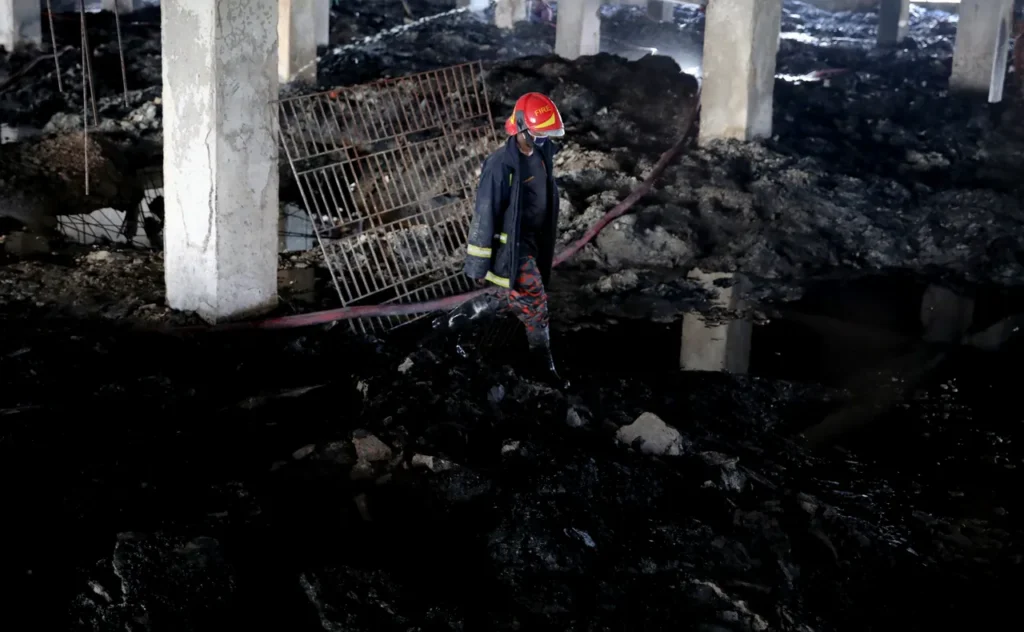

A fire at a gas lighter factory near Bangladesh’s capital killed at least five people on Saturday, turning a routine industrial workday into a deadly emergency and once again putting factory safety near Dhaka under scrutiny. The blaze broke out in the Kadamtali area of Keraniganj, on the outskirts of the capital, and took several hours to bring under control after multiple firefighting units were sent to the scene.
The deaths, confirmed after firefighters recovered bodies from inside the site by evening, are likely to intensify concern over hazardous manufacturing conditions in and around Dhaka, where dense industrial clusters often operate close to residential neighborhoods. With the cause still under investigation, the immediate focus is on identifying the victims, establishing how the fire spread so quickly and determining whether safety systems at the factory were adequate.
The incident is drawing attention because it touches a familiar and painful fault line in Bangladesh’s industrial economy: small and mid-sized factories that supply everyday consumer goods but can also expose workers to serious risk when fire prevention, ventilation, storage practices or emergency exits fall short. In a plant producing gas lighters, even a relatively small ignition source can become deadly if combustible materials or pressurized components are involved.
Why this fire matters beyond the death toll
Saturday’s blaze is not only a local tragedy. It also feeds a broader debate about how Bangladesh manages industrial safety outside its best-known export sectors. International attention often centers on large garment factories, but dangerous conditions can also exist in smaller manufacturing units that receive less scrutiny while handling flammable materials or heat-intensive production.
That is why the investigation will matter almost as much as the death toll itself. If authorities find lapses in storage, equipment maintenance, electrical systems or worker protection, the case could become another example of how industrial growth can outpace enforcement. For families in Keraniganj and across greater Dhaka, the deeper concern is whether such fires remain treated as isolated accidents rather than warnings of systemic weakness.
The authorities have not yet publicly identified the victims, and that leaves another difficult reality hanging over the story: in factory disasters, families are often forced into hours of uncertainty before formal confirmation arrives. That human toll extends well beyond the factory floor, particularly in communities where one wage earner may support an entire household.
The response on the ground showed the scale of the challenge. Several firefighting units were deployed and worked for hours before the blaze was controlled, suggesting either the intensity of the fire, the nature of the materials inside the factory, or both. In industrial fires, the difference between a contained emergency and a mass-casualty event often comes down to minutes, access routes and whether workers can evacuate quickly.
For Bangladesh, which has spent years trying to improve workplace standards while sustaining manufacturing growth, the fire is a reminder that safety oversight cannot remain selective. Stronger inspections, better training and tougher compliance measures remain central to reducing risk, particularly in facilities handling flammable goods. Broader workplace safety standards promoted by the International Labour Organization underscore how prevention, not just emergency response, determines whether industrial accidents become national tragedies.
As investigators examine what caused the Keraniganj fire, the political and public pressure is likely to center on a simple question: whether five deaths will lead to meaningful enforcement, or whether this blaze will join the long list of preventable factory disasters that briefly shock the country before fading from attention.
You may also like: Storm Dave to Bring 90mph Winds, Snow Before 24C Heat Next Week in UK

Make Swikblog your go-to source on Google for reliable updates, smart insights, and daily trends.