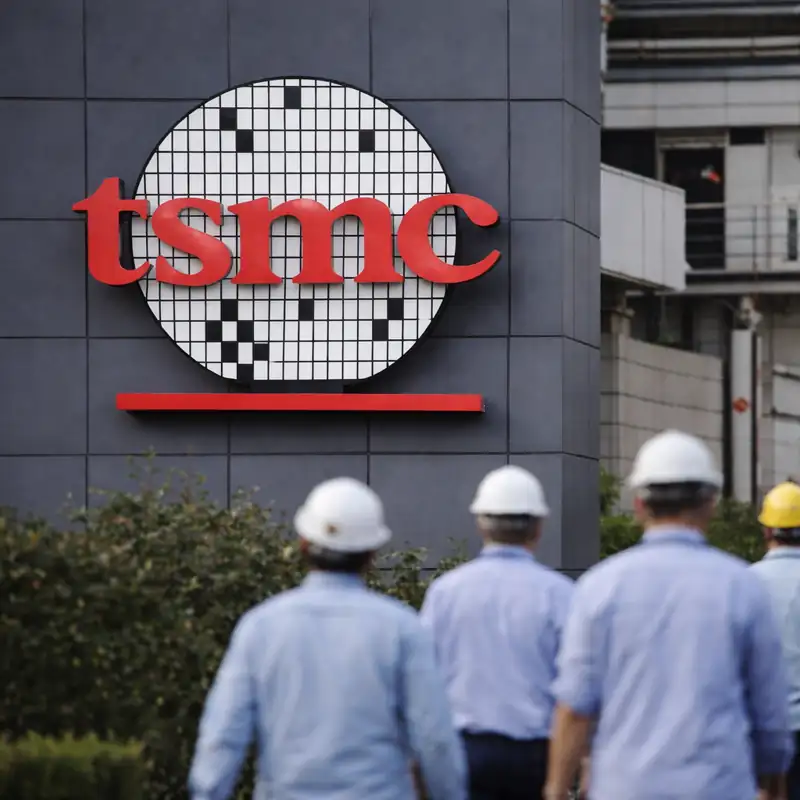

TSMC shares fell 1.26% after the company reported blockbuster quarterly earnings, as investors shifted focus from record profit growth to rising geopolitical risks tied to the Iran war. The stock reaction highlighted a growing concern in markets: even strong AI-driven growth may not fully offset cost pressures and global supply disruptions.
Taiwan Semiconductor Manufacturing Co. (TSMC), the world’s largest contract chipmaker and a critical supplier to Apple and Nvidia, posted a record net profit of NT$572.5 billion ($18.1 billion) for the January–March quarter. That marked a 58.3% jump year-over-year compared with NT$361.6 billion in the same period last year, and a 13.2% increase quarter-over-quarter from the October–December period.
Revenue also showed steady momentum, rising 8.4% sequentially to $35.9 billion in the first quarter. Looking ahead, TSMC expects second-quarter revenue to come in between $39 billion and $40.2 billion, signaling continued strength in demand, particularly from artificial intelligence applications.
Despite these strong numbers, the stock declined as management flagged rising costs linked to the Iran war. The conflict has begun to disrupt global supply chains, pushing up prices for key semiconductor inputs, including specialty chemicals and industrial gases. Among these, helium has emerged as a critical concern due to its essential role in chip manufacturing processes.
Chief Financial Officer Wendell Huang said the company has taken steps to mitigate near-term disruptions by building up safety stock, including helium reserves. While TSMC does not expect any immediate operational impact, the warning around cost pressures was enough to weigh on investor sentiment, particularly as markets remain sensitive to margin outlook.
The earnings report reinforced TSMC’s central role in the ongoing AI boom. CEO C.C. Wei emphasized that demand linked to artificial intelligence remains “extremely robust,” adding that the company continues to see a multi-year growth opportunity driven by increasing semiconductor usage across industries.
This demand surge is being fueled by rapid adoption of advanced chips used in AI servers, data centers, and next-generation consumer devices. TSMC has been expanding its production capabilities globally, with a strong focus on cutting-edge 3-nanometer technology, which is widely used in high-performance computing and premium smartphones.
To meet this demand, the company is significantly increasing its capital investments. TSMC has committed approximately $165 billion toward expanding manufacturing capacity in Arizona, alongside additional facilities in Taiwan and Japan. The company also indicated that its capital spending over the next three years will be “significantly higher” than in the previous cycle.
For 2026, TSMC expects capital expenditure to reach the higher end of its previously announced $52 billion to $56 billion range, up from around $40 billion in 2025. While this aggressive investment strategy underscores confidence in long-term demand, it also raises questions about near-term returns and margin pressure, especially in a volatile geopolitical environment.
Investor reaction suggests a shift in focus from pure growth to sustainability of earnings. While the 58% profit surge and strong revenue outlook confirmed the strength of AI-driven demand, the market appeared more concerned about rising input costs and the potential for supply chain disruptions to impact profitability.
The modest 1.26% decline in TSMC shares reflects caution rather than a negative outlook. Investors are increasingly weighing multiple factors, including global conflict risks, cost inflation, and the pace of capital spending, alongside strong earnings performance.
Looking ahead, TSMC’s ability to manage rising costs while maintaining growth will be closely watched. The company’s dominant position in advanced semiconductor manufacturing, combined with its deep ties to leading technology firms like Apple and Nvidia, continues to provide a strong foundation for long-term growth.
However, geopolitical developments such as the Iran war remain a key variable. Any prolonged disruption to supply chains or further increases in input costs could impact margins, even as demand remains strong. At the same time, continued strength in AI-related orders could help offset these pressures.
For broader market insights and semiconductor sector updates, investors can follow ongoing coverage on Yahoo Finance, which continues to track global chip demand trends and earnings performance.
In the near term, TSMC’s outlook remains balanced. The company is delivering record earnings and maintaining strong demand visibility, but rising geopolitical risks and cost pressures are creating uncertainty. The latest results highlight both the strength of the AI-driven growth story and the challenges that come with operating in an increasingly complex global environment.
You may also like: Bluesky outage leaves thousands without feeds as global disruption hits users
Make Swikblog your go-to source on Google for reliable updates, smart insights, and daily trends.