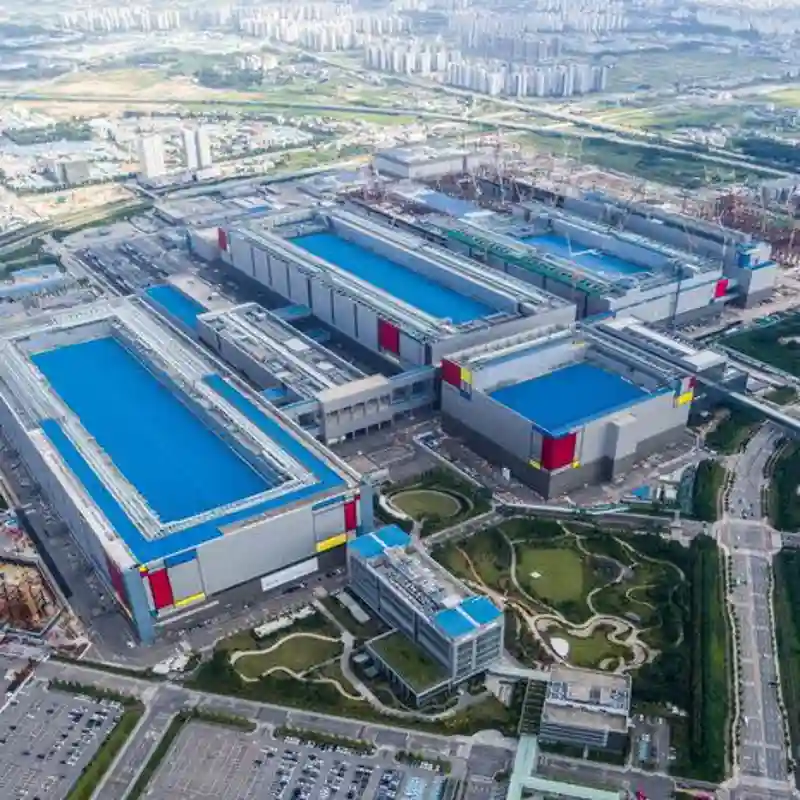

Samsung Electronics is heading into a tense stretch in South Korea after a major worker protest at its Pyeongtaek chip complex put fresh attention on pay, bonuses and the company’s ability to hold on to skilled semiconductor staff. The demonstration, which union organisers said drew about 40,000 people, has become the biggest labour rally seen at Samsung so far and reflects how sharply employee frustration has grown inside one of the world’s most important chipmakers.
The immediate pressure point is a threatened 18-day strike from May 21 if the wage dispute remains unresolved. That warning matters far beyond Samsung’s campuses. The company sits at the centre of global memory chip manufacturing, and any disruption tied to semiconductor production would be closely watched by customers already dealing with a highly competitive AI hardware market.
What makes this dispute especially significant is the backdrop. Samsung has benefited from the broader artificial intelligence boom, with strong profit momentum helping restore confidence in parts of its chip business. But inside the company, many workers argue that those gains have not translated into compensation that matches the demands of the job or the rewards being offered by rival SK Hynix.
The gap with SK Hynix has become the emotional and financial core of the standoff. Samsung workers say the comparison is no longer theoretical. It is influencing career decisions, internal morale and how employees view the company’s future. At the rally, workers repeatedly pointed to colleagues leaving for SK Hynix, where compensation linked to memory-chip performance has become a major attraction. In a sector that depends on highly trained engineers, technicians and line specialists, even a slow outflow of talent can create strategic pressure over time.
The debate is centred on bonus policy. According to the labour union, a Samsung employee in the chip division earning a base salary of 76 million won would receive roughly 38 million won in bonus pay for 2025. The union says that is less than one-third of what a similarly paid employee at SK Hynix could qualify for. That contrast has become difficult for Samsung workers to ignore, particularly after SK Hynix strengthened its position in high-bandwidth memory, or HBM, a product that has become critical to the AI supply chain because it is used with advanced processors from companies such as Nvidia.
Samsung’s employees are not only asking for a larger payout this year. They are pushing for a structural change in how compensation works. One of the union’s main demands is the removal of the current cap on bonus pay, which is set at 50% of annual base salary. Labour representatives argue that the cap leaves Samsung at a disadvantage when it competes for talent in a market where memory specialists are increasingly valuable. The union is also asking for 15% of annual operating profit to be distributed as bonus pay, along with a 7% increase in base salaries.
Management has offered a different path. Samsung has proposed 10% of operating profit for performance pay and has also suggested additional support to ensure memory-division employees receive higher payouts than competitors this year. That offer shows the company recognises the sensitivity of the issue, but it has not been enough to calm worker anger. The disagreement now goes beyond annual pay and touches on whether Samsung’s reward system still fits the reality of the AI-driven semiconductor race.
The labour backdrop helps explain why this moment feels different from past disputes. Samsung was long associated with tough resistance to organised labour, but that image has changed. Workers first walked out in 2024, a historic step for the company. Since then, union influence has expanded quickly. Membership has now climbed above 90,000, representing more than 70% of Samsung’s workforce in South Korea. That shift gives labour groups more weight in negotiations and raises the stakes for management if the conflict drags on.
The timing is difficult for Samsung because the company is operating in a semiconductor market where reliability matters almost as much as technology leadership. Customers buying advanced memory products want stable supply, especially as AI server demand rises worldwide. A strike does not need to shut down every facility to cause concern. Delays in shipments, lower output or uncertainty around fulfilment schedules can all affect customer confidence, and once that confidence weakens, competitors have an opening.
That is why the threatened strike has implications beyond wages. A prolonged stoppage could tighten chip supply, add to pricing pressure and give rivals another edge in a market already being reshaped by AI spending. Samsung officials have acknowledged that even one strike carries reputational risk if customers begin to worry about production stability. In semiconductors, trust is not rebuilt overnight. It can take years to recover lost ground, especially when rivals are moving quickly.
The bigger concern for Samsung may be the message this sends about internal confidence. Workers are not protesting during a downturn alone; they are protesting while AI excitement is lifting the sector. That makes the dispute more damaging from a perception standpoint. Employees are effectively saying that the company’s gains are visible, but the reward-sharing model still feels too limited. In a business where long product cycles and engineering depth matter, unresolved frustration can linger well beyond one round of negotiations.
For investors and industry watchers, the next few weeks will be critical. If Samsung reaches a compromise, it could steady nerves and show the company is willing to modernise compensation to protect its semiconductor workforce. If not, the May 21 strike threat could become a test of how much operational and reputational strain the company can absorb while competing in the global AI memory market.
The dispute also says something broader about the semiconductor industry in 2026. The battle is no longer only about who can manufacture the most advanced memory products. It is also about who can attract, retain and motivate the people needed to keep those production lines running at world-class scale. Samsung still has enormous manufacturing strength, but this episode shows that labour policy is becoming part of the competitive equation.
Readers tracking the broader semiconductor race can also explore our coverage of Samsung vs SK Hynix in the AI chip race. For a wider industry view on memory demand and AI infrastructure, the Reuters technology section remains a useful reference point.
Whether this confrontation ends in compromise or an extended stoppage, Samsung is under pressure on two fronts at once: it must protect production during an AI boom while convincing workers that staying with the company is worth it. That balance may shape not just the next wage deal, but Samsung’s standing in the semiconductor market over the next several quarters.
You may like: Samsung One UI 8.5 Update: 4 AI Features Coming to Galaxy S24

Make Swikblog your go-to source on Google for reliable updates, smart insights, and daily trends.