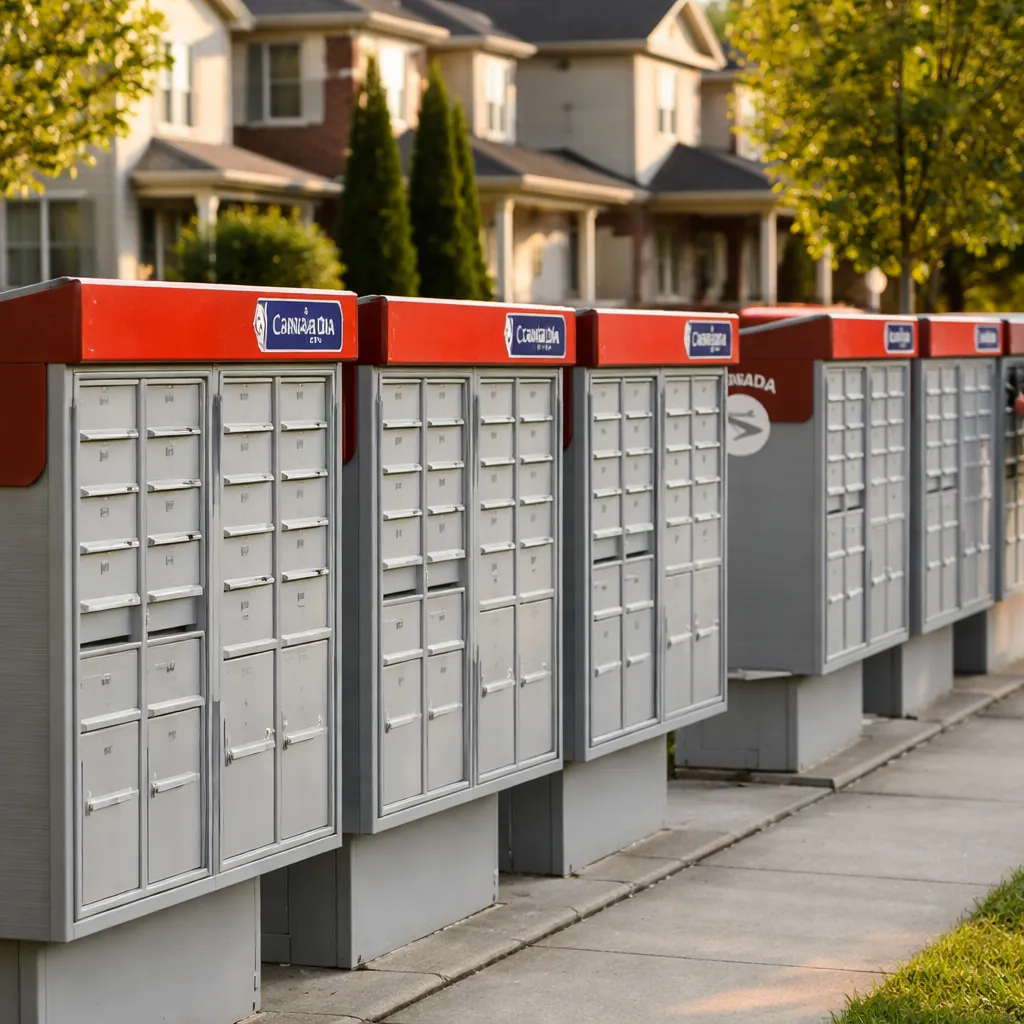

Canada Post is set to phase out door-to-door mail delivery for the remaining 4 million Canadian addresses over the next five years, beginning a nationwide shift that reflects deep financial pressures and changing consumer habits. The transition will start this year in 13 municipalities, including Sept-Îles, La Prairie and Candiac in Quebec, with larger cities such as Montreal expected to follow at a later stage.
The move, which replaces home delivery with community mailboxes, marks a significant change for households that have long relied on receiving letters at their doorstep. It comes as Canada Post attempts to stem annual losses of around C$1 billion and modernise a network built for a different era of communication.
By the end of 2026 and into early 2027, approximately 136,000 addresses will begin the conversion process. In the initial rollout alone, around 13,000 homes in Quebec — including 6,000 in La Prairie and Candiac and 7,000 in Sept-Îles — will lose doorstep delivery.
Financial pressure drives overhaul
The decision is rooted in a sharp decline in traditional mail usage. Fewer Canadians are sending letters, while visits to post offices have dropped and revenues from those locations have fallen by roughly 30% since 2021. Last year, the federal government was forced to provide an emergency loan of about C$1 billion to prevent the organisation from running out of funds.
Canada Post says the transition to community mailboxes, combined with a broader restructuring of its operations, could generate savings of up to C$700 million once fully implemented. Company officials describe the plan as essential to ensuring long-term sustainability.
Nearly three-quarters of Canadian addresses already receive mail through community boxes, which the company says provide secure, locked compartments for letters and parcels. Items that do not fit or require signatures will continue to be delivered to the door or made available at nearby post offices.
Alongside the delivery shift, Canada Post is also reviewing its network of roughly 5,900 post offices. Urban and suburban areas, in particular, are considered “overserved,” and the company has signalled that closures or consolidations are likely as it adapts to lower foot traffic and changing customer behaviour.
Further details about the transformation strategy can be found on the Canada Post website, where the organisation outlines its plan to modernise operations and reduce costs.
Impact on households and accessibility
For many Canadians, the change will alter a routine that has remained largely unchanged for decades. Collecting mail will now mean travelling to a shared location, a shift that may be minor for some but more challenging for others, particularly in harsh weather conditions or for those with limited mobility.
Canada Post says accommodations will continue for people unable to access community mailboxes. Around 17,000 addresses across the country already receive special arrangements, including weekly or seasonal home delivery, and similar measures are expected to remain in place.
The broader transformation reflects a postal system adjusting to the realities of a digital economy. While parcel volumes have increased with online shopping, the decline in letter mail — once the backbone of postal revenue — has forced operators worldwide to rethink how services are delivered.
In Canada, the gradual disappearance of doorstep delivery signals not just a cost-cutting exercise, but a structural shift in how a national service operates. What was once a daily convenience is becoming a shared utility, as Canada Post reshapes itself to match the way Canadians now send and receive information.
You may also like: Black Hole Jets Reach 540 Million km/h with Power Equal to 10,000 Suns

Make Swikblog your go-to source on Google for reliable updates, smart insights, and daily trends.