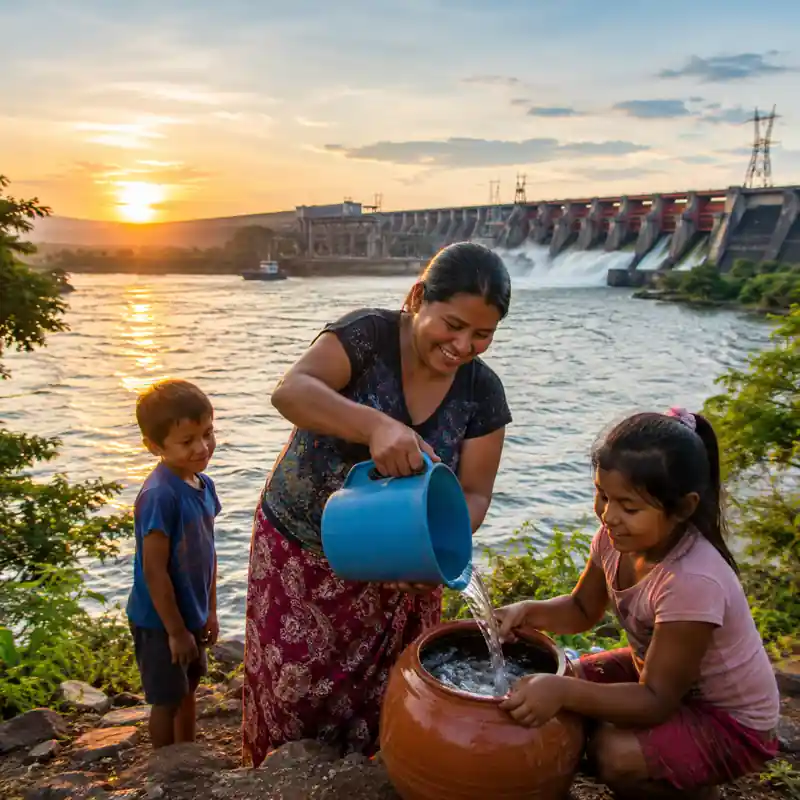

Paraguay Day 2026 puts fresh attention on a resource that has shaped the country for generations: water. With the 2026 World Water Day theme focusing on “Where Water Flows, Equality Grows,” Paraguay offers a strong example of how rivers, hydropower, agriculture and community life are deeply connected.
Observed every year on March 22, World Water Day reminds the world that freshwater is not only a natural resource but also a foundation for health, food security, education and economic growth. In 2026, the theme highlights the link between water access and gender equality, especially the role women and girls play in managing water in homes, farms and communities.
For Paraguay, the theme carries special meaning. Water is part of the country’s name, geography and national development. The Paraguay River and Paraná River remain central to transport, trade, farming and energy, while major underground reserves make the country one of South America’s important freshwater regions.
Why Paraguay’s Water Story Matters in 2026
Paraguay is located within the Río de la Plata Basin, one of the most important water systems in South America. A significant part of this basin lies within Paraguayan territory, giving the country a strategic position in regional water management.
The country is crossed by two major rivers: the Paraguay River and the Paraná River. These waterways support agriculture, livestock, fishing, river transport and daily life. They are also tied to Paraguay’s economic strength, especially through hydroelectric power.
The Itaipu Dam, shared with Brazil, is one of the world’s largest hydroelectric plants. The Yacyretá Dam, shared with Argentina, is another major clean-energy project. Together, these dams have helped Paraguay build a reputation as a hydropower-driven economy.
Paraguay also benefits from major aquifers, including the Guaraní Aquifer, Pantanal Aquifer and Yrenda Aquifer. These underground water reserves are vital for long-term water security, farming and rural communities.
Water Abundance Does Not Mean Equal Access
Although Paraguay is rich in water resources, access to safe drinking water is not equal everywhere. The Eastern Region generally has better access to water than the Western Region, especially the Chaco. Rural and indigenous communities still face serious challenges with clean water, sanitation and reliable services.
This is why the 2026 theme is important. “Where Water Flows, Equality Grows” is not only a campaign message. It reflects the daily reality of families whose health, education and income depend on clean and nearby water.
Women and girls are often most affected when water access is poor. In many communities, they carry greater responsibility for household water, hygiene and family care. When water systems improve, girls are more likely to stay in school, women have more time for work, and families face fewer health risks.
The theme also calls for more women to be included in water leadership. Engineers, farmers, scientists, local leaders and community organizers all have a role in building fairer and more sustainable water systems.
Read More
Pollution, Drought and Flooding Remain Key Challenges
Paraguay’s water future faces growing pressure from pollution, climate change and uneven development. Agricultural chemicals, mining, industrial activity and urban waste can affect rivers and aquifers. If not managed properly, these risks can damage ecosystems and reduce water quality for nearby communities.
Flooding is another serious issue, especially in areas close to major rivers. At the same time, droughts can affect crops, livestock and rural livelihoods. This makes water management one of Paraguay’s most important long-term priorities.
Protecting water resources will require stronger regulation, public awareness, better sanitation, modern infrastructure and cooperation between government, businesses and local communities. Water policy cannot be treated only as an environmental issue. It is also a public health, economic and social equality issue.
Paraguay’s agriculture and livestock sectors depend heavily on water. Its clean-energy profile depends on hydropower. Its rural communities depend on safe access. That makes water one of the strongest links between Paraguay’s past, present and future.
World Water Day 2026 gives Paraguay a chance to highlight both its strengths and challenges. The country has powerful natural advantages, but the next stage of progress depends on making water access more equal, cleaner and more resilient.
The message behind “Where Water Flows, Equality Grows” is clear. Water can support stronger schools, healthier families, better farms and more inclusive communities. But only if it is protected and shared fairly.
For Paraguay, water has always been a driving force. In 2026, it also becomes a reminder that true development is not measured only by rivers, dams and energy output, but by how many people can benefit from them in everyday life.

Make Swikblog your go-to source on Google for reliable updates, smart insights, and daily trends.