
Indonesia is facing renewed scrutiny over aviation safety after a helicopter carrying eight people crashed in the forests of Borneo island, killing everyone on board just minutes after takeoff — a tragedy that has quickly gained attention due to the speed of the incident and the remote location of the crash.
The Airbus H130 helicopter, operated by PT Matthew Air Nusantara, lost contact on Thursday roughly five minutes after departing from Melawi district in West Kalimantan province. The aircraft was en route to another palm oil plantation in Kubu Raya district when communication was suddenly cut off.
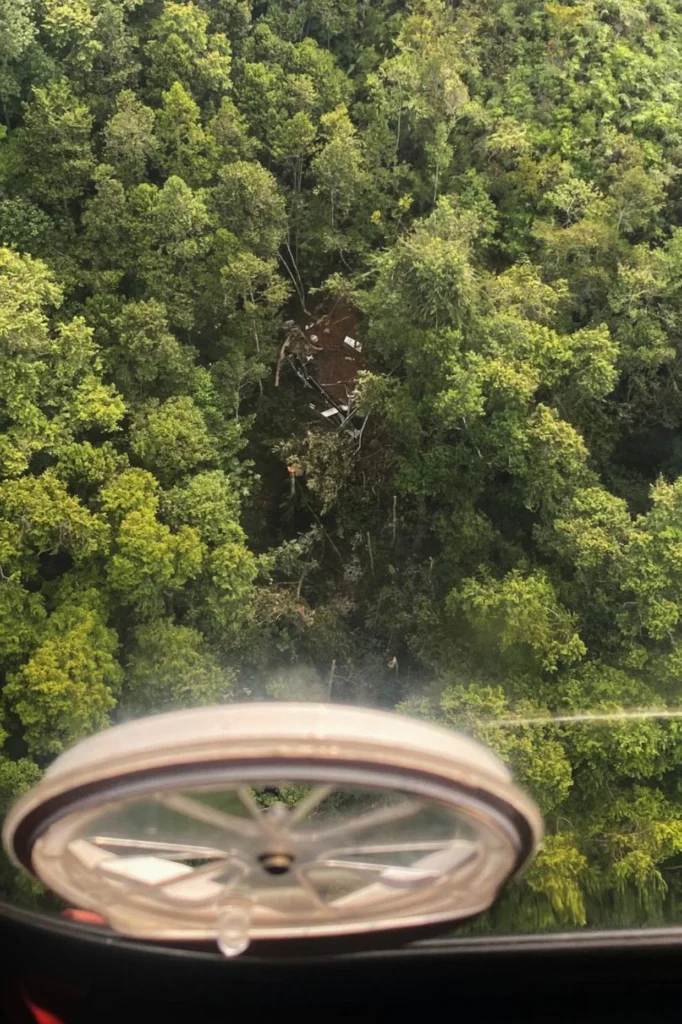
Search and rescue teams later located the wreckage deep in the dense forests of Sekadau district. Authorities confirmed that all eight people on board — including two crew members and six passengers — were killed. Among the victims was one Malaysian national, according to officials.
The crash, which occurred during a routine short-distance flight between plantation sites, highlights the heavy reliance on helicopter transport in Indonesia’s remote industrial regions, where infrastructure remains limited and air travel is often the only practical option.
Challenges of flying in remote plantation regions
In areas like West Kalimantan, helicopters frequently operate over vast stretches of rainforest, connecting isolated palm oil plantations and business hubs. These flights are typically short but carry significant operational risks, including rapidly changing weather, limited navigation landmarks, and minimal emergency landing options.
The fact that the aircraft lost contact within minutes of takeoff raises immediate questions about what may have gone wrong in the early phase of the flight — a critical window where pilots are most vulnerable to technical or environmental factors.
Rescue operations in such terrain are also inherently difficult. Dense forest cover can obscure wreckage from aerial searches, while ground access is often slow and physically demanding, delaying recovery efforts even after a crash site is identified.
Broader safety concerns in Indonesia’s aviation sector
Indonesia, an archipelago of more than 270 million people, has long struggled with transportation safety challenges. The country has seen a series of aviation and maritime incidents over the years, often linked to infrastructure gaps, regulatory oversight issues, and the complexities of operating across vast and diverse geography.
While helicopters like the Airbus H130 are widely used globally and are considered reliable, accidents in remote regions tend to shift focus toward operational conditions — including maintenance practices, pilot decision-making, and environmental hazards — rather than the aircraft model itself.
This latest crash is likely to intensify scrutiny on aviation practices tied to industries such as palm oil, where frequent short-haul flights are essential but operate under demanding conditions. Investigators are expected to examine the aircraft’s flight path, weather data, and communication records to determine the cause of the crash.
For now, the tragedy serves as another stark reminder of the risks associated with air travel in some of Indonesia’s most inaccessible regions, where even routine journeys can quickly turn fatal. Broader aviation safety standards and practices can be explored through the International Air Transport Association, which provides global guidance on flight operations and risk management.
You may also like: Miley Cyrus engagement with Maxx Morando

Make Swikblog your go-to source on Google for reliable updates, smart insights, and daily trends.