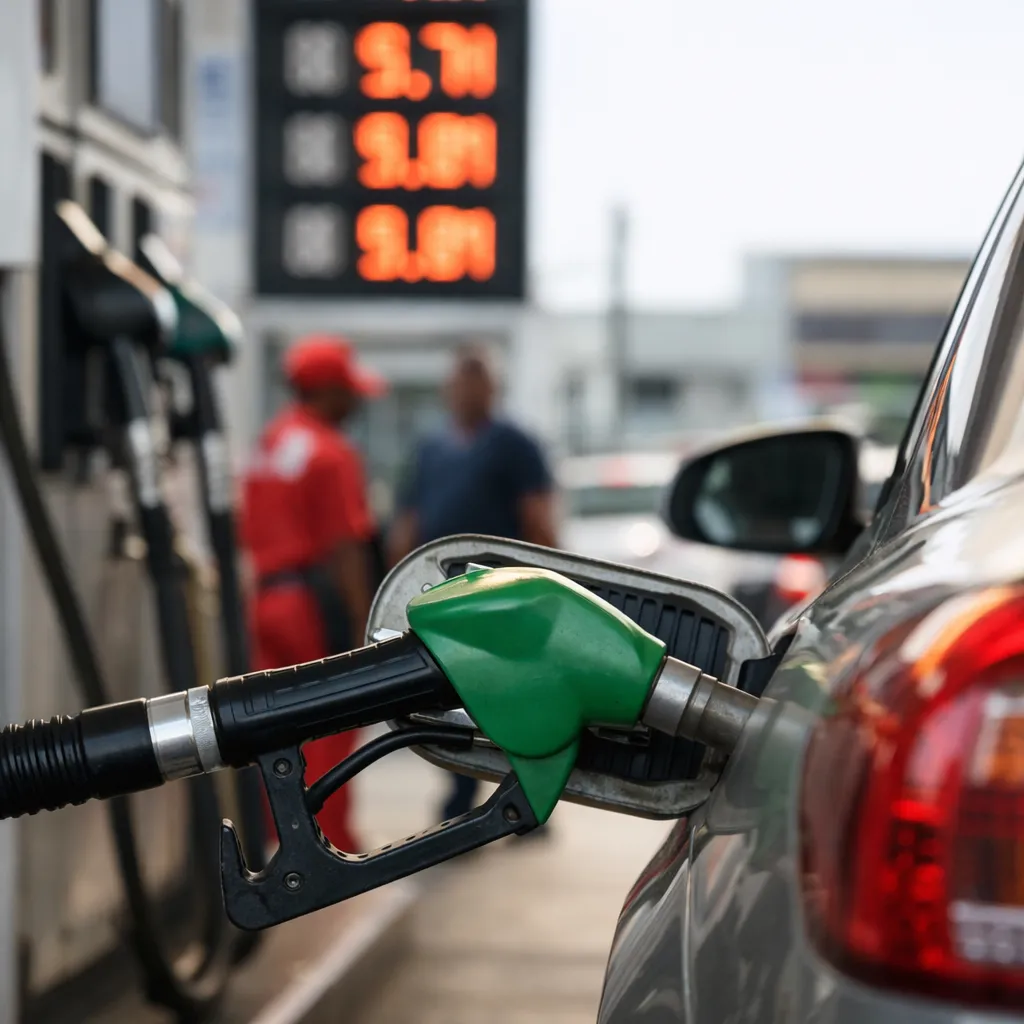

South African motorists are seeing a shift in the fuel price outlook mid-April, as new data points to a sharp easing in petrol price pressure — but not enough to avoid another increase in May. The latest snapshot from the Central Energy Fund (CEF) shows that while earlier fears of extreme hikes have moderated, fuel prices are still on track to rise when the next adjustment takes effect on 6 May.
The update comes at a crucial point in the monthly pricing cycle, with just over two weeks remaining before final price changes are locked in. Early April projections had signalled a severe shock, with under-recoveries reaching as high as R7.88 per litre for petrol and an alarming R17.57 per litre for diesel. Those figures have now dropped significantly, easing concerns but not eliminating them.
According to the latest mid-month data, petrol under-recoveries have fallen by roughly 67%, now sitting between R2.29 and R2.63 per litre. Diesel has also improved, but remains under heavier pressure, with under-recoveries still around R8.05 per litre — a 54% reduction from earlier levels.
If these trends hold, current projections point to increases of about R2.29 per litre for Petrol 93 and R2.63 for Petrol 95. Diesel, however, remains the biggest concern, with expected wholesale increases of just over R8.00 per litre. Illuminating paraffin is also tracking a significant rise of around R6.52 per litre, highlighting the broader impact across energy costs.
Oil prices still driving the outlook
The dominant factor behind these movements remains global oil prices, which account for more than 95% of the current under-recovery, according to the CEF. The surge was initially triggered by escalating conflict in the Middle East, particularly around key supply routes, which pushed crude prices sharply higher at the start of the review period.
Although prices have since eased, the decline has been gradual. Markets remain cautious amid uncertainty over whether a ceasefire will hold, while damaged infrastructure and disrupted logistics continue to constrain supply. This has resulted in a slow downward adjustment in fuel costs, in contrast to the rapid spike seen when tensions escalated.
For South Africa, the situation is compounded by a weaker rand and reliance on imported fuel, which limits the speed at which global price relief translates into local pump prices.
Relief measures and economic impact
The government has already intervened with a temporary R3.00 per litre cut to the fuel levy for both petrol and diesel, aimed at cushioning consumers from the oil shock. That measure, however, is due to lapse soon, and economists say further intervention may be needed if high prices persist.
There are growing indications that authorities are considering extending relief. Analysts suggest South Africa has the fiscal space to continue support for another one to two months, although this would come at a cost of between R10 billion and R12 billion to the national budget.
The stakes extend beyond motorists. Diesel prices, in particular, are critical for transport, agriculture and industry, meaning sustained increases could feed into higher food prices and broader inflation. Consumer inflation, currently near 3%, is already expected to rise towards 4.3% in the coming months, partly driven by energy costs.
Officials have stressed that while fuel supply remains stable, price remains the central concern. With global oil markets still volatile and geopolitical risks unresolved, the final outcome for May will depend heavily on developments over the next two weeks, as well as any further policy action from the National Treasury.
For now, the data points to a clear shift: the worst-case scenario has eased, but South Africans are not yet out of danger. Motorists may be spared an extreme shock, but another increase at the pumps remains firmly on the horizon.
You may also like Manchester Piccadilly disruption today: train cancellations and delays.

Make Swikblog your go-to source on Google for reliable updates, smart insights, and daily trends.