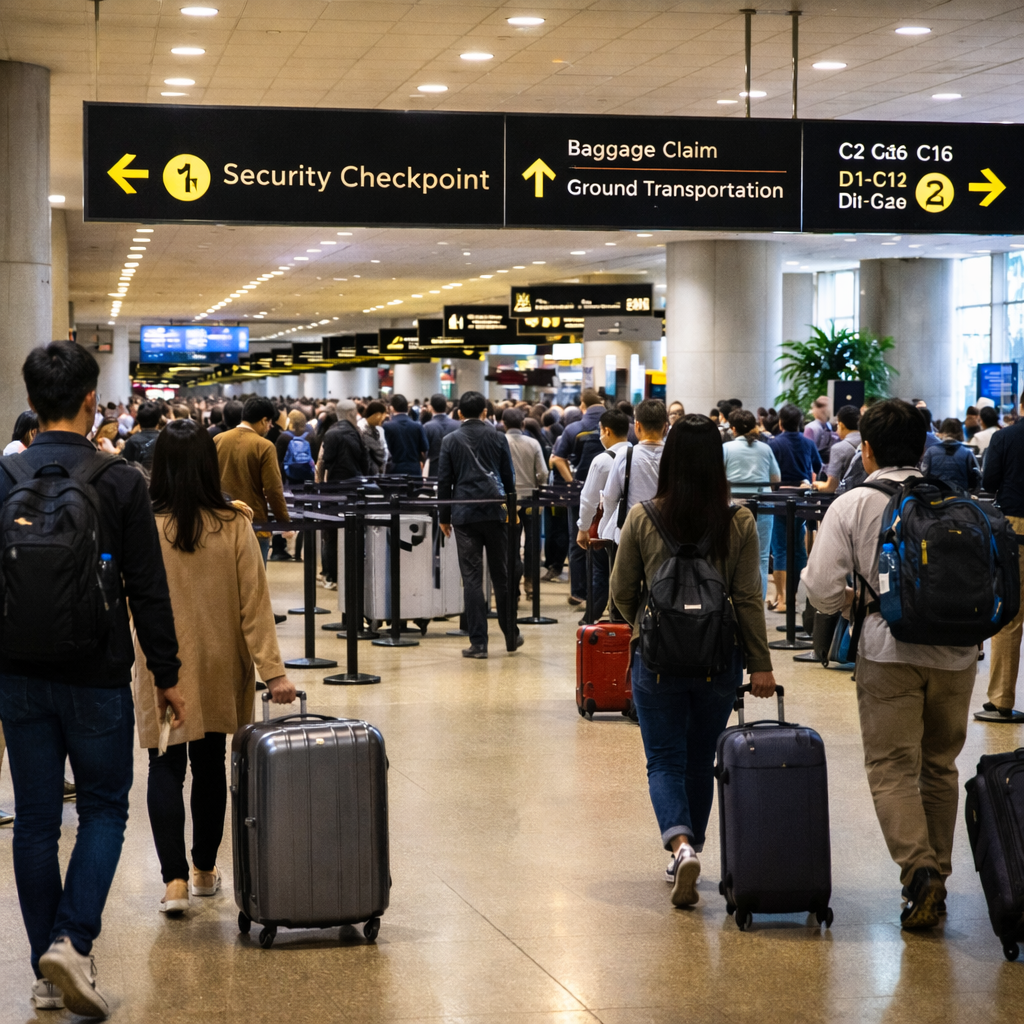

China has urged its citizens to avoid entering the United States through Seattle-Tacoma International Airport after about 20 Chinese scholars were denied entry despite holding valid visas, in a case that has drawn sharp attention and added fresh strain to already tense relations between the two countries.
The warning, issued by China’s foreign ministry and consular affairs office, followed what officials described as “unreasonable questioning” and repeated incidents of harassment by U.S. Customs and Border Protection (CBP) officers at the Seattle airport. The group of scholars had traveled to attend an academic conference but were ultimately refused entry, according to Chinese authorities.
In a public statement, Beijing advised nationals planning to visit the United States to strengthen their safety awareness, familiarize themselves with U.S. entry procedures, and avoid using Seattle as a point of arrival. It also urged travelers who encounter questioning by U.S. law enforcement personnel to remain calm and respond rationally.
The incident has quickly moved beyond a routine immigration dispute, becoming part of a broader diplomatic narrative at a time when U.S.-China relations are already under pressure from trade tensions, geopolitical conflicts, and ongoing security concerns.
Concerns over repeated incidents and treatment of scholars
Chinese officials did not present the Seattle case as an isolated event. Instead, they pointed to what they called “repeated incidents of malicious questioning and harassment” targeting Chinese scholars at Seattle-Tacoma International Airport. That framing has amplified the seriousness of the warning and raised concerns among students, researchers, and academic institutions with ties to the United States.
The scholars involved in the latest case were reportedly carrying valid U.S. visas, highlighting a key point in the immigration process: visa approval does not guarantee entry. U.S. border officials retain final authority to admit or deny travelers after inspection at the port of entry, a policy that often becomes controversial when applied in high-profile cases involving academics or professionals.
So far, U.S. Customs and Border Protection has not publicly provided detailed reasons for the denial of entry in this specific case. The lack of immediate clarification has allowed competing narratives to take shape, with Chinese officials portraying the incident as part of a broader pattern, while U.S. authorities have yet to respond in detail.
The Port of Seattle, which operates the airport, emphasized that it does not control federal inspection procedures, underscoring the division of responsibilities between local airport authorities and federal border enforcement agencies.
For official U.S. entry guidelines and inspection procedures, travelers can refer to U.S. Customs and Border Protection.
Wider impact on travel, diplomacy, and global perception
Experts say the implications of the Seattle incident could extend well beyond a single group of travelers. Gary Locke, former U.S. ambassador to China and former governor of Washington state, described the situation as puzzling and warned that such actions do not set a positive tone for upcoming high-level discussions between the two countries.
“It makes no sense and does not set a good tone,” Locke said, pointing to the timing of the incident as both nations prepare for sensitive diplomatic engagements involving trade, security, and global conflicts.
Academic experts also caution that if similar cases continue, there could be reciprocal actions. David Bachman, chair of the China Studies Program at the University of Washington, noted that repeated incidents could lead to Chinese authorities imposing stricter entry measures on American travelers, including scholars and tourists.
“If this reflects a broader pattern, we are likely to see reciprocation,” Bachman said, warning that the situation could affect not only individual travelers but also wider academic and cultural exchanges.
The potential economic impact is another concern. With major global events such as the FIFA World Cup expected to attract international visitors to the United States, any perception of stricter or unpredictable entry conditions could discourage travel. Reduced visitor flows would not only affect tourism but also business travel, conferences, and educational programs.
Seattle, in particular, holds strategic importance in this discussion. The city has long served as a major gateway between the United States and Asia and is home to a significant Chinese population. Its role as an academic and business hub makes it especially sensitive to disruptions in international mobility.
The situation also reflects a broader shift in how travel is perceived in the current geopolitical climate. Border checks are increasingly seen not just as security procedures but as extensions of national policy. For travelers, this means greater uncertainty, even when documentation appears to be in order.
At its core, the Seattle airport case highlights a growing tension between established travel norms and evolving political realities. While immigration rules have always allowed for discretion at the border, incidents involving scholars and professionals tend to carry symbolic weight, raising questions about openness, trust, and the future of cross-border exchange.
For now, China’s warning ensures that the issue remains in focus. What happens next will depend on whether similar cases emerge and how both governments respond. If the situation escalates, it could reshape not only travel patterns but also the broader relationship between two of the world’s most influential nations.
You may like reading this guide to St George’s Day 2026 UK flag rules and fines.

Make Swikblog your go-to source on Google for reliable updates, smart insights, and daily trends.