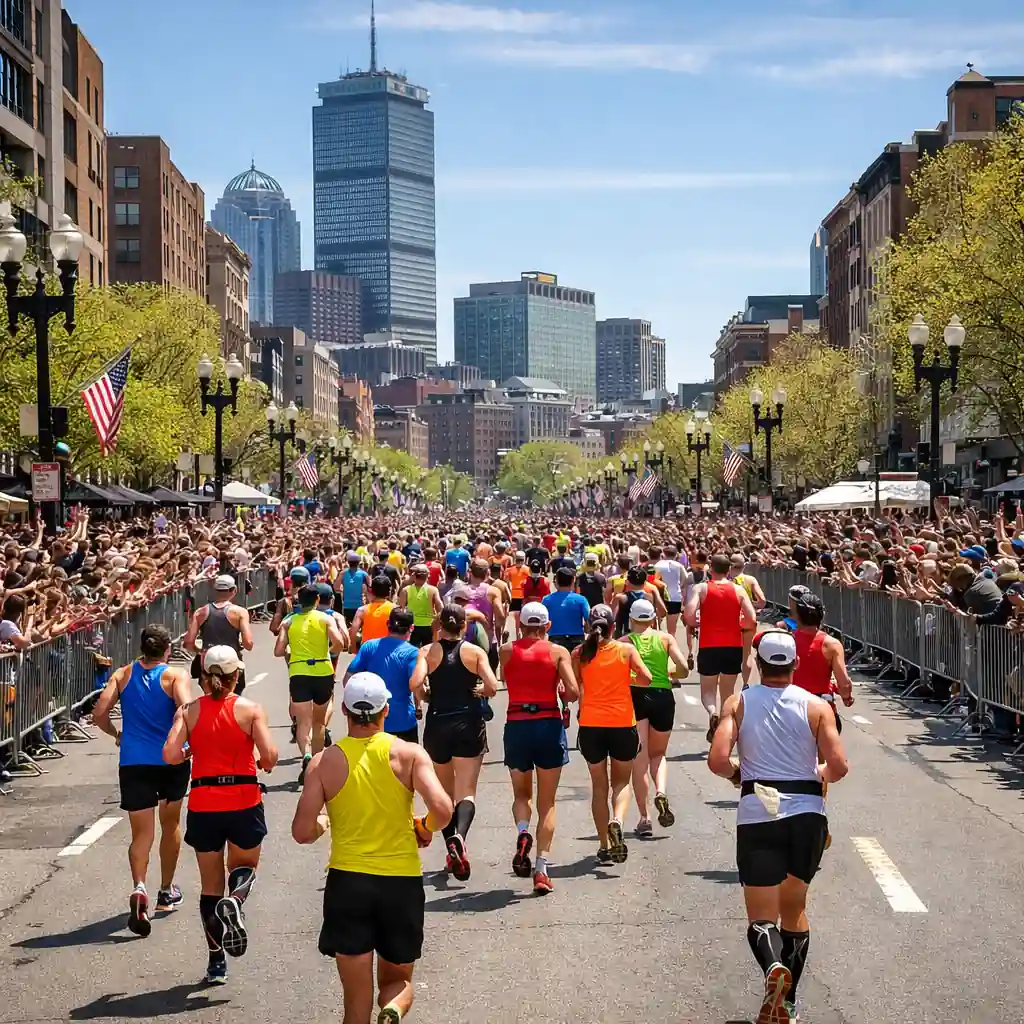

Boston Marathon Day 2026 arrives on Monday, April 20, bringing the 130th running of the world’s oldest annual marathon back to Massachusetts. With 24,362 qualified runners confirmed for this year’s race, the event once again reflects the extraordinary demand, prestige and competitive standard that make Boston one of the most respected races in global distance running.
Held each year on Patriots’ Day, the Boston Marathon remains far more than a major road race. It is a defining date on the international running calendar, a celebration of endurance sport, and a race that blends history with difficulty in a way few events can match. From the start in Hopkinton to the finish on Boylston Street, the 26.2-mile course offers one of the sport’s most recognizable and most demanding tests.
What separates Boston from many other marathons is not only its legacy, but the standard required to even reach the starting line. Entry for the 2026 edition once again underlined that reality. Runners needed to beat their official qualifying standards by 4 minutes and 34 seconds to secure a place, a figure that shows just how competitive the application process has become as interest in the race continues to grow year after year.
Why the 2026 field stands out
The depth of the field is one of the main reasons this year’s race carries so much attention. Boston consistently brings together elite athletes, experienced marathoners and accomplished qualifiers from around the world, but the 2026 edition stands out for both the returning champions and the wider mix of recognizable names.
In the men’s race, defending champion John Korir returns after his 2025 victory and is expected to line up against serious challengers including Alphonce Simbu, Cybrian Kotut and leading American contender Conner Mantz. That combination gives the men’s field both proven championship experience and the kind of competitive balance that can make the race unpredictable deep into the final miles.
The women’s race also carries strong intrigue. Defending champion Sharon Lokedi returns to a field that is expected to include Fiona O’Keeffe, Dakotah Popehn and Emily Sisson. With proven class and strong American representation in the lineup, the women’s race has the ingredients for one of the day’s most closely watched contests.
Beyond the elite competition, the broader participant list adds another layer to the event’s appeal. Notable entrants include 1968 champion Amby Burfoot, former Boston Bruins captain Zdeno Chara, Chelsea Clinton, former NBA player Chris Herren, soccer legend Kristine Lilly, 2018 Boston champion Des Linden and astronaut Sunita Williams. Their presence reflects the marathon’s wider cultural pull and its place as an event that resonates well beyond the running community.
A course that rewards discipline and punishes mistakes
The Boston course remains one of the most discussed in marathon running because it demands patience, experience and tactical control. It begins with a downhill opening that can feel inviting, especially for runners eager to establish rhythm early. That opening stretch, however, can also punish those who go out too aggressively, as the race gradually shifts into rolling terrain that wears down the legs over time.
The most famous section remains the Newton Hills, with Heartbreak Hill near mile 20 standing as the course’s defining point. By that stage, the race has already taken a physical toll, and even accomplished marathoners can lose momentum there. That is one reason Boston is often viewed not simply as a fast marathon, but as a race that exposes pacing errors and rewards resilience.
The 2026 race day schedule follows the event’s familiar structure. Activities begin early, with the Military March at 6:00 a.m., followed by wheelchair divisions and elite competition shortly after 9:00 a.m.. The mass participation field begins around 10:00 a.m., with runners sent out in organized waves to manage the size and flow of the field.
This year’s edition also carries added significance through its commemorative finisher medal. Designed for the 130th anniversary, the medal features the race’s iconic unicorn logo alongside a special inscription marking the milestone running. Its gold finish and blue-and-gold ribbon give it a distinctive look, but for most finishers the value goes far beyond design. It represents qualification, preparation and the achievement of completing one of the sport’s most prestigious races.
The medal is being produced by Ashworth Awards, the Massachusetts-based company long associated with the event. That local connection adds another layer of identity to a race that has always been closely tied to the region.
Boston Marathon Day is also defined by its atmosphere. Organizers expect close to 500,000 spectators along the course, turning the route into one of the biggest live sporting stages in New England. The support in towns and neighborhoods along the way, from the early miles to the famous cheers in Wellesley and the final push toward Boylston Street, is a central part of what makes Boston such a distinctive experience for runners and fans alike.
As part of the 2026 World Marathon Majors calendar, Boston follows Tokyo and continues to hold a central place in the season. Its blend of tradition, competitive depth and course difficulty ensures that every edition matters, not only to the athletes racing it but to the wider sport. For live runner tracking, schedule details and official event updates, viewers can follow coverage through the Boston Athletic Association’s official marathon page.
With more than 24,000 runners set to take part, Boston Marathon Day 2026 once again brings together elite competition, personal ambition and a sporting tradition that continues to define marathon running at the highest level. Few races carry this combination of pressure, history and prestige, which is exactly why Boston remains one of the most meaningful tests in the sport.

Make Swikblog your go-to source on Google for reliable updates, smart insights, and daily trends.