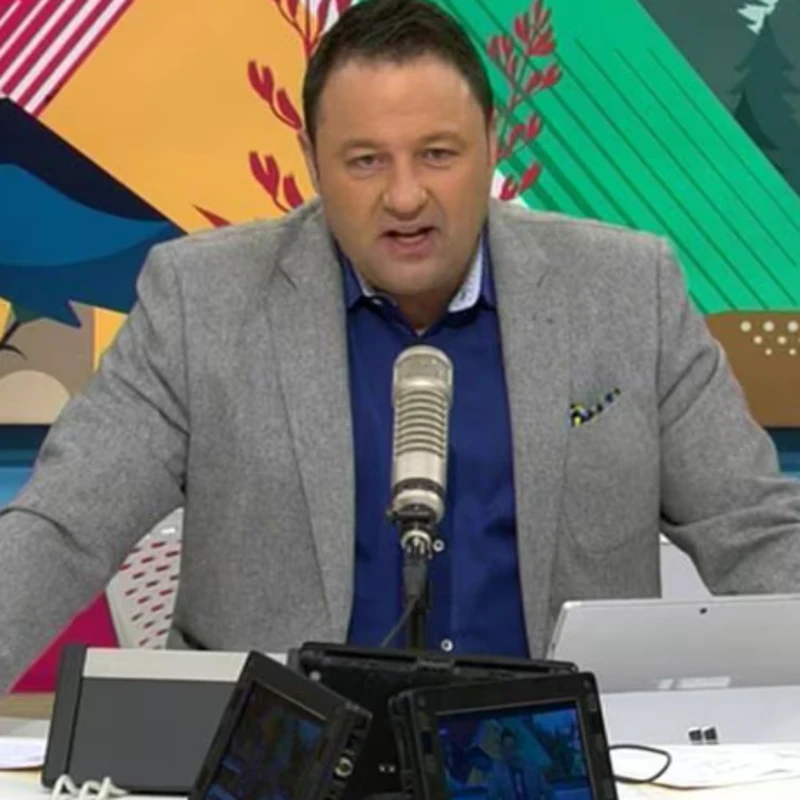

New Zealand broadcaster Duncan Garner has pleaded not guilty to a driving charge in Auckland, a case that has quickly drawn national attention due to his long-standing presence in the country’s media industry.
The former TV3 AM Show host appeared before the Auckland District Court on April 21, 2026, where he entered a not guilty plea to a charge of driving while suspended. Garner, who did not seek name suppression, now faces a legal process that could carry serious consequences if the court rules against him.
According to police, Garner had previously been suspended from driving for three months in December after accumulating excess demerit points. The charge relates to an incident on March 10, when officers stopped a vehicle in central Auckland.
Authorities said the vehicle was first located around 5.21pm on Symonds Street before being stopped on Rutland Street. Following the traffic stop, a 51-year-old man was summonsed to appear in court on a charge of driving while suspended.
Garner, 52, appeared in court on Tuesday and was remanded on bail. As part of his bail conditions, he has been ordered not to drive until the case is resolved. His next court appearance has been scheduled for June 10.
Outside the courtroom, Garner declined to comment in detail on the case, telling reporters he was “just going through the process” and thanking them for their interest.
Legal risk and potential penalties
Driving while suspended is treated as a serious offence under New Zealand law, particularly when it follows a prior suspension linked to demerit points. If convicted, Garner could face a penalty of up to three months’ imprisonment, a fine of up to $4,500, or both.
While such cases are not uncommon in district courts, the involvement of a high-profile media personality has brought wider public attention. The legal process will now determine whether the charge is proven, with the not guilty plea indicating that Garner intends to contest the allegation rather than resolve it immediately.
New Zealand’s road rules around licence suspensions and demerit points are clearly defined by transport authorities, with repeated or serious breaches leading to temporary driving bans. More information on how suspensions work can be found through the New Zealand Transport Agency.
At this stage, the court has not heard the full details of the defence, and it remains unclear what arguments will be presented when the case returns in June. In many cases of this nature, disputes can focus on the circumstances of the stop, awareness of the suspension, or procedural aspects of enforcement.
Public profile adds attention to case
Garner’s career in broadcasting is a key reason why the case has quickly moved beyond routine court reporting. He has been a prominent figure in New Zealand journalism for years, serving as a political editor for 3News before becoming the host of The AM Show. More recently, he has remained active in the media space through his podcast, Duncan Garner: Editor in Chief.
His visibility has meant that developments in the case are being followed more closely than similar charges involving members of the public. Stories involving well-known figures often generate higher interest because audiences are already familiar with the individual, making even straightforward legal matters more widely discussed.
The fact that Garner did not apply for name suppression also means the case is being reported openly, with details available across major New Zealand news platforms. That transparency has contributed to the speed at which the story has circulated.
For now, the case remains at an early stage. A not guilty plea does not determine the outcome but sets the direction for a defended hearing. The court will ultimately decide whether the charge is proven based on evidence presented by both sides.
Garner’s bail condition not to drive will remain in place until his next appearance, adding a practical restriction as the legal process continues. While the timeline is still developing, the June hearing is expected to provide more clarity on how the case will proceed and whether it moves toward trial.
Until then, the situation highlights how even relatively common traffic-related charges can take on broader significance when they involve a well-known public figure. The combination of legal risk, public visibility and a clear court timeline is likely to keep attention on the case in the weeks ahead.
You may like the latest NBA Draft 2026 order update featuring the Raptors at No. 19 and the Jazz protected pick.

Make Swikblog your go-to source on Google for reliable updates, smart insights, and daily trends.