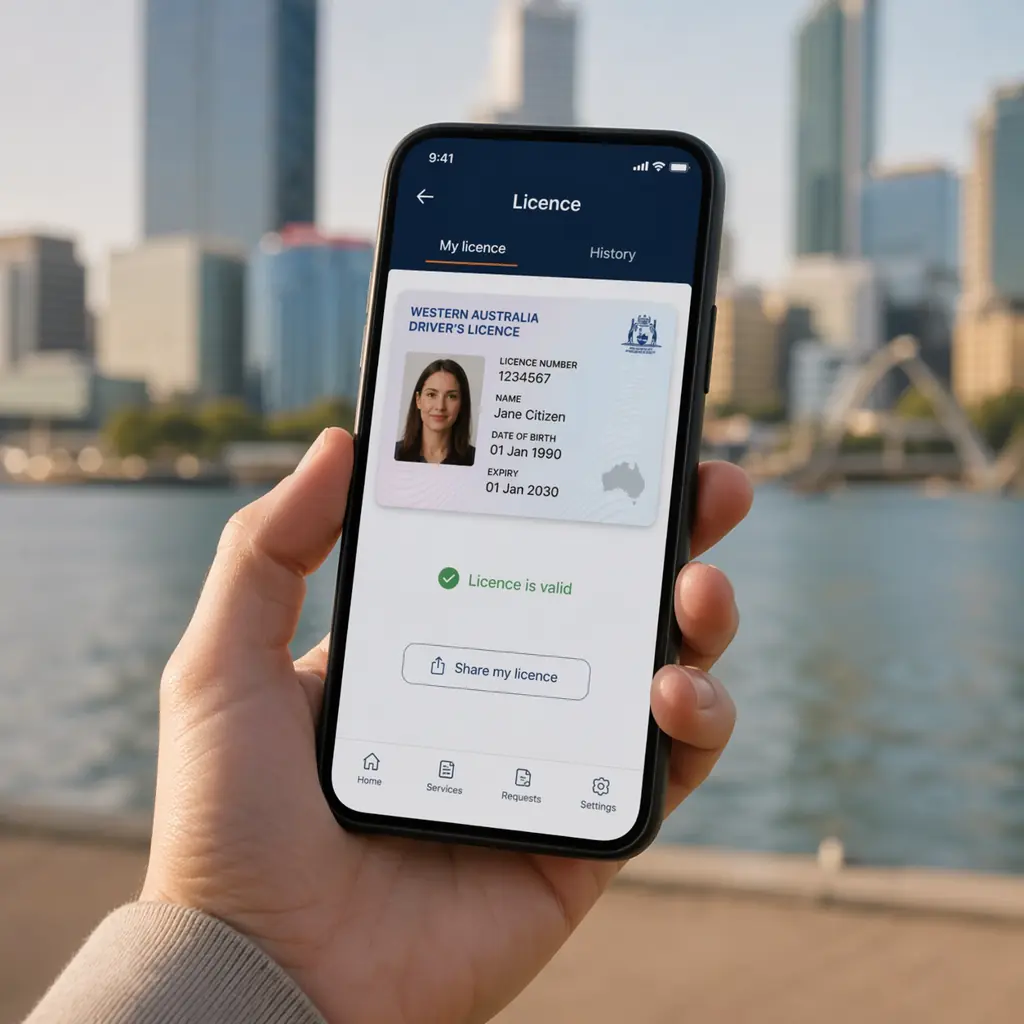

Western Australia is preparing for a major shift in how drivers carry and present identification, with the state government confirming that digital driver’s licences will be trialled from mid-2027 before a wider rollout by the end of that year. The change will give West Australians the option of storing their licence on a smartphone instead of relying only on a physical card, while the traditional licence format will remain available for the foreseeable future.
The announcement, made in Perth on Thursday, puts a firm timeline around a reform that has been discussed for some time as governments across Australia move more services into secure digital platforms. In WA’s case, the government has committed $28 million to deliver the program, with the first version of the digital licence set to be housed inside the ServiceWA app. Officials are also working toward making the credential available through Apple Wallet and Android wallets, which could make adoption easier for people already used to keeping tickets, payment cards and boarding passes on their phones.
What stands out in WA’s approach is that the government is not trying to force an overnight behavioural shift. Assistant Transport Minister Jessica Stojkovski said drivers will be able to choose the format that suits them. That means anyone comfortable with a physical licence can continue using one, rather than being pushed into a digital-only system before they are ready. In practical terms, that flexibility matters. Not every driver wants to rely on a phone battery, a mobile app or a digital interface for something as important as proving identity on the road or in day-to-day life.
That optional approach may also prove important in building trust. Digital identification systems often succeed or fail on public confidence rather than on technology alone. A smooth rollout depends on whether people believe the system is secure, accepted and easy to use in the real situations that matter — from traffic stops to venue entry and age checks.
Why WA is pitching digital licences as a privacy upgrade
The WA government is framing the new licence not just as a convenience tool, but as a safer way to verify age and identity. That argument is central to the rollout. At present, when someone hands over a physical driver’s licence at a pub, club or other licensed venue, they often reveal far more information than is actually needed. A venue may see a person’s full name, home address, date of birth and licence number, even if the only question that needs answering is whether that person is legally old enough to enter.
Under the new system, the government says digital licences will be designed to reduce that level of data exposure. Rather than sharing all the details shown on a plastic card, the licence could confirm only that a person is over the legal age threshold. That would mark a meaningful change in how identity checks are handled. It also speaks to a broader concern that many people now have about who collects their data, how long it is stored and what happens to it after it has been scanned or recorded.
Stojkovski said this is one reason the digital option could be safer than existing physical licences in some venue settings. Her point was straightforward: when a person presents a card today, information can be captured and retained, often with little visibility for the person handing it over. A digital verification system that limits disclosure could cut down that risk by sharing only the minimum information required.
To make that work in practice, the WA Office of Digital Government will work with licensed venues on how digital licences can be used for proof-of-age checks. That part of the rollout may be just as important as the technology itself. A digital ID is only useful if businesses know how to accept it, staff understand how to verify it and customers feel the process is simple rather than awkward. If the venue ecosystem is not prepared, even a well-designed licence can struggle to gain traction.
The government has also made it clear that security concerns are a major reason WA has taken longer than some other states to reach this point. Stojkovski acknowledged that other parts of Australia moved earlier, but said Western Australia’s focus has been on handling the risks that come with storing sensitive identification in digital form. That cautious pitch is likely to resonate with many users. Convenience matters, but when the subject is identity, most people would rather see a careful rollout than a rushed one.
That caution is not without logic. A digital driver’s licence is not like a retail loyalty app or a travel booking platform. It sits much closer to the heart of legal identity. If something goes wrong — whether through weak protections, system outages or unclear verification rules — the consequences are more serious. That is why the government says the WA system will be built to strong national and international standards. For readers interested in the broader privacy framework around digital government services, the Office of the Australian Information Commissioner provides detailed guidance on privacy expectations for organisations and agencies handling personal information.
The timeline also gives WA room to test how the licence performs in ordinary life before expanding access. A mid-2027 trial should help reveal whether people can use the system easily, whether age verification works smoothly and whether support for Apple and Android wallets can help make the experience feel less like a government workaround and more like a normal part of digital life. By the time a full rollout is attempted at the end of 2027, the government will need to show that the new licence works not just in theory, but in crowded venues, busy households and everyday roadside interactions.
For drivers, the bigger picture is simple. This is not just about replacing a card with a screen. It is about giving people more control over how they prove who they are, while keeping a familiar backup in place. WA’s message is carefully balanced: modernise the system, but do not force people to abandon what already works. In a reform that touches privacy, identity and routine public interactions, that balance may end up being the most important detail of all.

Make Swikblog your go-to source on Google for reliable updates, smart insights, and daily trends.