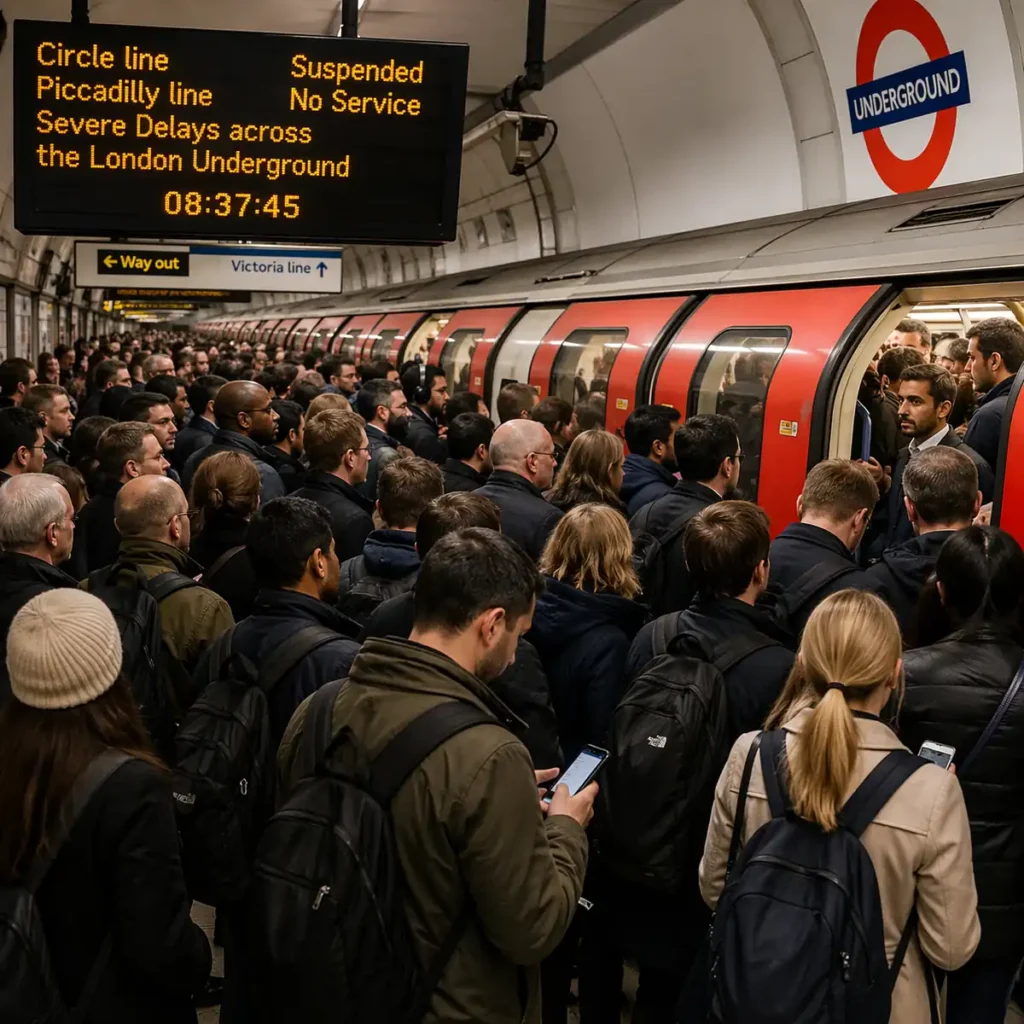

London is heading into another difficult day of travel after a fresh 24-hour Tube strike began at noon on Thursday, extending a dispute that is now becoming a wider test of how the capital’s transport system balances flexibility for staff with reliability for passengers. The walkout, led by drivers in the RMT union, is the second stoppage this week and is set to affect services across the Underground through Thursday afternoon, Thursday evening and into the start of Friday.
For many people travelling across the city, the immediate concern is not the details of the labour row but whether they can get to work, home or an appointment without spending hours changing routes. Yet the industrial action is rooted in a larger disagreement over a proposed voluntary four-day working pattern on London Underground. TfL says the move would modernise working arrangements and give drivers more choice. The RMT says the proposal risks creating longer duties, more fatigue and uncertainty over existing terms.
The latest strike officially runs from 12:00 on Thursday until 12:00 on Friday, but the real impact on passengers stretches beyond those exact hours. Services are being scaled back from midday, and TfL has said trains are expected to finish by around 8pm on Thursday on affected lines. Friday morning is also likely to be disrupted, with the first services not expected to begin until about 7:30am, meaning early commuters may still face delays, crowding and uneven service levels even after the strike period ends.
Not every line is affected in the same way. Some routes are expected to have no service for much of the strike window, while others will operate with a thinner timetable. Most of the Piccadilly, Waterloo & City and Circle lines are expected to be shut during the industrial action. The Metropolitan line is also due to be closed between Baker Street and Aldgate, and part of the Central line is not expected to run between White City and Liverpool Street. Elsewhere, trains that do operate are likely to be much less frequent than normal, leaving passengers to deal with longer waits and busier platforms.
That said, this week’s disruption has not hit the entire network with the same force as some past strikes. A major reason is that the Aslef union, which represents just over half of Tube drivers, is not taking part. Aslef has backed the four-day week proposal, creating a split in the workforce that has allowed TfL to run at least part of the service. That has reduced the likelihood of a total shutdown, but it has also produced a patchy network where some journeys remain possible and others become far harder than usual.
The uneven service has changed commuter behaviour. Rather than wait to see whether their usual route is running, many Londoners have adjusted plans earlier in the day. Some offices have relaxed attendance rules and allowed more people to work remotely. Others have turned to alternatives such as buses, the Elizabeth line, London Overground and the Docklands Light Railway, all of which continue to operate. Cycling has also become an important fallback. TfL said Santander bike hires were up 60% during earlier disruption, while shared e-bike and e-scooter usage also jumped sharply, reflecting how quickly travellers shift habits when confidence in the Tube drops.
The dispute itself centres on the structure of the working week rather than headline pay. TfL says most drivers under the new proposal would move from a 36-hour week to a 35-hour week over four days, with no reduction in salary. The authority argues that this would bring London Underground closer to working arrangements already seen at other train operators. It has repeatedly said the plan is optional and that drivers who prefer the traditional five-day pattern would be able to stay on it.
RMT strongly disputes the idea that the plan is straightforwardly voluntary. The union says it has asked for written guarantees that members can remain on current shift patterns and maintain agreed terms and conditions, but believes TfL has not provided a satisfactory response. Union officials have described the proposal as a “fake four-day week”, arguing that the current offer does not go far enough and could leave staff working longer shifts that increase the risk of fatigue. The union instead wants a 32-hour week over four days with no loss of pay, a demand that highlights how far apart the two sides still are.
Safety has become the most sensitive part of the disagreement. When a transport union links scheduling changes to fatigue, the argument moves beyond a workplace issue into a broader public concern. RMT says its objections are rooted in how shift patterns could affect alertness and wellbeing. TfL rejects that view and insists there would be no reduction in contractual protections. Officials have urged the union to return to negotiations and avoid further disruption to passengers.
The disagreement has also been shaped by a breakdown in talks. The union claims TfL initially signalled a willingness to negotiate on all elements of the proposal before stepping back, while TfL maintains that its offer remains fair and voluntary. The lack of fresh discussions ahead of the second strike suggests both sides remain firmly apart.
For London, the consequences extend beyond delayed journeys. Tube disruption can affect office attendance, retail activity and the broader service economy, particularly in central areas that depend heavily on daily commuter flows. While remote working has helped soften the immediate impact, repeated disruption can still affect productivity and business confidence.
There is also a wider debate emerging about the future of work in essential services. A four-day week has gained traction across multiple industries, but applying it to a complex, round-the-clock transport system presents unique operational challenges. Balancing staff welfare with consistent public service remains a difficult equation for transport authorities.
Passengers now face the prospect that disruption may continue beyond this week. The RMT has announced four additional 24-hour strikes scheduled for 19–20 May, 21–22 May, 16–17 June and 18–19 June if the dispute is not resolved. This raises the likelihood of ongoing disruption into the summer period.
For now, travellers are being advised to plan ahead, allow extra time and check live updates before starting their journeys. While parts of the network remain operational, services are far from normal, and conditions may change throughout the day. Until an agreement is reached, London’s transport system is likely to remain under pressure.
You can also check real-time service updates on the official TfL strike information page and read the union’s latest position on the RMT official website.
You may like: London Tube Strike Today April 2026: Affected Lines, Timings and Travel Updates

Make Swikblog your go-to source on Google for reliable updates, smart insights, and daily trends.