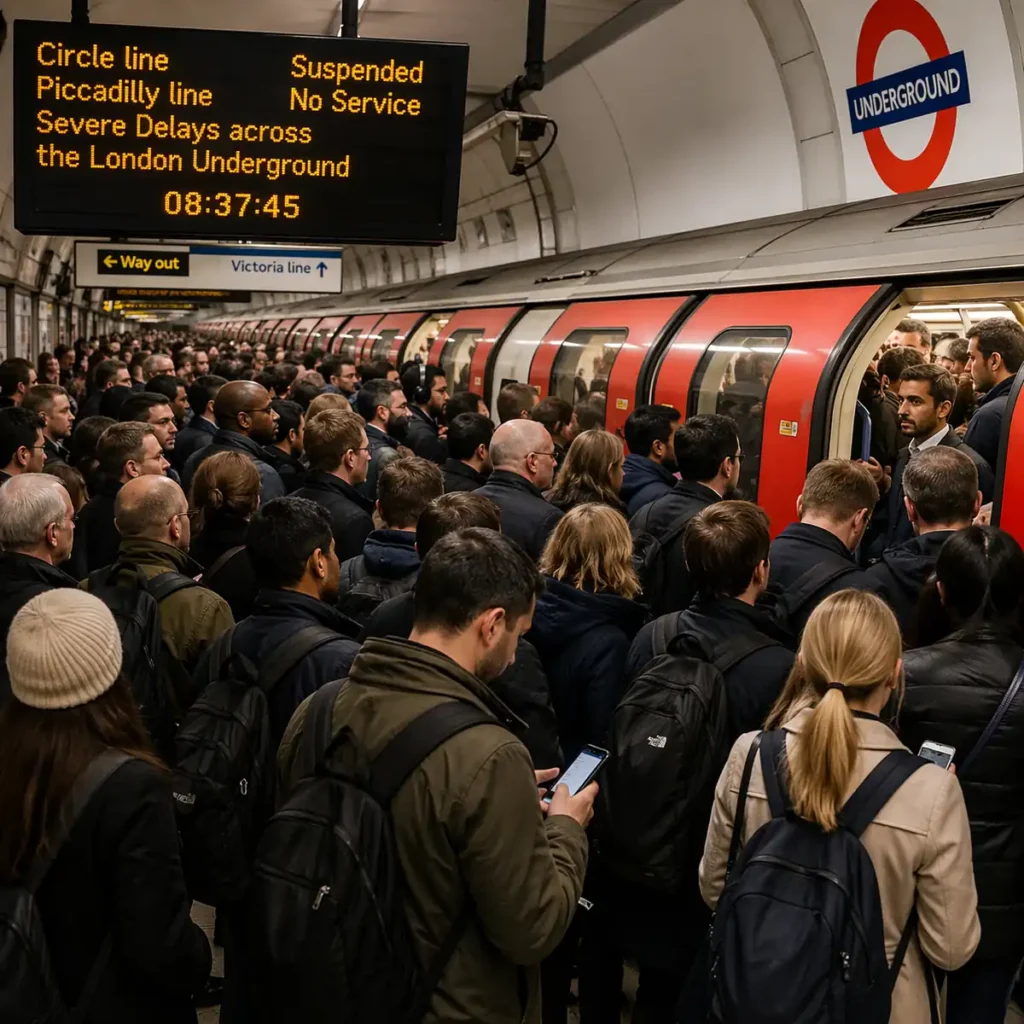

London’s latest Tube strike has turned an ordinary weekday into a difficult one for commuters, office workers, tourists and anyone trying to cross the city on time. The industrial action began at 12pm on Tuesday, April 21, and is due to run until 11:59am on Wednesday, April 22, but for many passengers the disruption is unlikely to feel neatly contained within those hours. On strike days, London Underground services often begin thinning out before the official walkout window fully bites, and the return to normal can take much longer than people expect.
That is why today’s travel problem is bigger than a simple start-and-stop timetable. A commuter checking routes this morning may still have found some services running, but by the afternoon the network is expected to be under much heavier pressure, with reduced frequency, busier interchanges and longer waiting times at stations. Even once the strike period ends on Wednesday, TfL expects disruption to continue into the afternoon and evening while services recover and train movements are restored across the network.
This latest walkout is also part of a broader programme of planned strike dates, which means Londoners are not only reacting to today’s disruption but also looking ahead to how future travel could be affected. The confirmed strike schedule stretches beyond April, with further action due on April 23–24, May 19–20, May 21–22, June 16–17 and June 18–19. That repeated pattern matters because it changes how regular passengers plan work, school runs, meetings, airport trips and even nights out in the capital.
What travellers across London should know today
The practical reality is that the strike affects the whole Tube network, even if some lines are harder hit than others. Current expectations suggest that the Piccadilly line and Circle line will see no service, while parts of the Central line and Metropolitan line are also expected to be severely disrupted. Other Underground lines may continue to run in some form, but passengers should be prepared for reduced service, overcrowded platforms and gaps between trains that make even familiar journeys feel unpredictable.
That kind of uneven disruption often causes more confusion than a full shutdown. A line may appear open on paper, but if trains are scarce or carriages are already full when they arrive, the effect for passengers is still severe. Anyone travelling during the busiest periods may find themselves letting one or two trains pass before they can board. For older passengers, parents with children, people carrying luggage or anyone working to a strict arrival time, that is more than an inconvenience.
There are alternatives, but none will be especially quiet. The official TfL strike updates page remains the strongest source for live service information, route planning and status checks. Outside the Underground, the Elizabeth line, London Overground and DLR are not expected to be directly shut down by this action, yet they are likely to be significantly busier because thousands of people will switch onto those services instead. Buses and National Rail routes will also carry extra demand, and central London walking routes typically become more crowded as passengers try to bridge gaps between available services.
For many commuters, the safest assumption is that every journey will take longer than usual. A route that normally feels simple may require a change of line, part of the trip by bus, or a final stretch on foot. In a city as large and interconnected as London, Tube strikes rarely stay contained underground. They spill onto roads, pavements and rail hubs, changing the rhythm of the whole day.
Why the strike is happening and what comes next
The dispute behind the strike is rooted in proposed changes to drivers’ working arrangements. TfL has been pushing plans linked to a compressed four-day working pattern. Under the proposal, drivers would still work around the same weekly hours, but those hours would be organised differently, with longer shifts over fewer days and paid meal breaks included for the first time. TfL says the changes are voluntary and argues that they would offer greater flexibility while aligning working patterns more closely with other rail operators.
The RMT union sees the issue differently. Union leaders have raised concerns about fatigue, safety and work-life balance, arguing that longer working days could place more pressure on drivers even if the total number of working days falls. That disagreement has become the centre of the dispute, and until it is resolved, passengers are left dealing with the consequences on platforms and in ticket halls rather than in negotiating rooms.
There is another reason this strike has attracted so much attention: people know it may not end with today. The series of planned strike dates over April, May and June means the current disruption is being viewed as part of a wider transport story rather than an isolated incident. That matters for employers deciding on office attendance, for tourists trying to move between hotels and attractions, and for residents who depend on regular travel to manage everyday life.
London has handled Tube strikes before, and seasoned commuters often respond the same way: leave earlier, check updates repeatedly, avoid rigid plans and keep a backup route ready. That remains the best advice now. Passengers travelling today should allow extra time, expect crowding and be cautious about assuming that a route shown as open will feel normal in practice.
For readers following transport disruption, commuter changes and other UK travel developments, you can also explore more coverage on our UK news section. On days like this, the real challenge is not only whether a train is running, but whether London’s wider transport network can absorb the pressure created when the Underground slows down all at once.
You may like Meta vs Microsoft stock comparison ahead of the April 29 AI earnings spotlight.

Make Swikblog your go-to source on Google for reliable updates, smart insights, and daily trends.