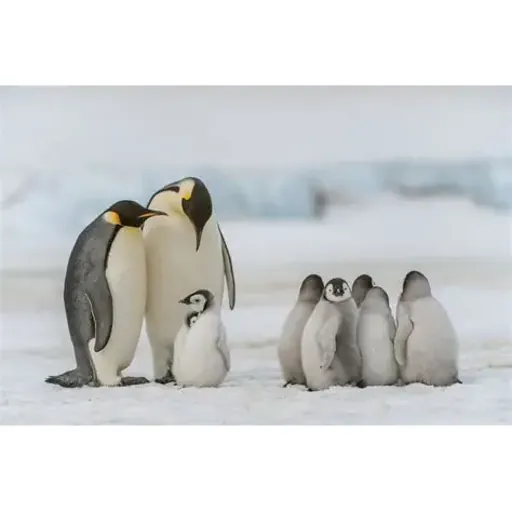

World Penguin Day 2026, observed on April 25, arrives at a time when these iconic seabirds are no longer just symbols of the polar wilderness but indicators of a rapidly changing planet. While penguins have long fascinated scientists and wildlife enthusiasts alike for their resilience and adaptability, new research and conservation updates suggest that their future is becoming increasingly uncertain.
Penguins are unique among birds. There are 18 species spread across the Southern Hemisphere, from the icy expanses of Antarctica to the warmer coasts of South America and Africa. Built for water rather than air, they are exceptional swimmers, using powerful flippers to move swiftly through the ocean in search of fish, squid, and krill. Their social behaviour is equally remarkable—many species form long-term pair bonds, recognise each other through distinct vocal calls, and share parenting duties.
But despite these strengths, penguins are now facing a convergence of environmental pressures that are testing the limits of their survival.
A turning point marked by science and data
World Penguin Day was originally linked to the migration of Adélie penguins, but its relevance has evolved. It now serves as a global checkpoint for the state of marine ecosystems. Scientists increasingly classify penguins as “sentinel species,” meaning their population trends reflect broader changes in ocean health.
That signal is becoming harder to ignore. Conservation data shows that nearly half of all penguin species are now considered threatened with extinction, reflecting a widespread decline driven by climate change, overfishing, and habitat disruption.
Climate change is rewriting the rules of survival
The most significant pressure facing penguins today is climate change. In Antarctica, rising global temperatures are reducing the extent and stability of sea ice, which is essential for breeding, feeding, and moulting.
In 2026, the emperor penguin was officially classified as endangered, highlighting the scale of environmental change. Stable sea ice is critical for raising chicks, and when it breaks apart too early, entire colonies can collapse. According to World Wildlife Fund, population declines could reach dramatic levels in the coming decades if warming continues.
Without stable ice, chicks that have not yet developed waterproof feathers can drown, while adults lose key breeding platforms. Climate change is also shifting breeding cycles, creating mismatches between chick hatching and food availability, further reducing survival rates.
Overfishing is shrinking their food supply
While climate change reshapes habitats, human activity at sea is limiting access to food. Penguins depend heavily on krill and small fish, but industrial fishing is placing increasing pressure on these resources.
In many regions, penguins are now competing directly with commercial fisheries. This overlap reduces food availability and increases the risk of accidental capture in fishing gear. Research also shows that reduced prey forces penguins to travel farther, expending more energy and lowering breeding success.
In southern Africa, for example, penguin populations have declined sharply due to a combination of warming oceans and overfishing, with food shortages emerging as a key driver.
Multiple threats, one fragile outcome
Penguins are not facing a single challenge but a combination of interconnected threats. Pollution continues to damage coastal habitats, while oil spills and plastic waste pose direct risks. Human activity, including tourism in sensitive breeding areas, can also disrupt nesting behaviour.
Scientific evidence suggests that these pressures often work together. Warmer oceans reduce food availability, while fishing removes what remains—creating a compounded effect that accelerates population decline.
This layered pressure explains why penguin populations are declining even in remote regions once thought to be protected from human impact.
Why penguins matter beyond the polar regions
Penguins play a critical role in marine ecosystems. As mid-level predators, they help maintain balance within the food web, linking smaller organisms like krill to larger predators.
Their decline is therefore not just about one species—it signals broader disruptions in ocean systems. The IUCN Red List highlights penguins as key indicators of biodiversity health, reinforcing their importance in global conservation efforts.
Changes in penguin populations provide valuable insight into ocean temperatures, food availability, and ecosystem stability, making them crucial for scientific monitoring.
A global response is still possible
Despite the challenges, conservation efforts are underway. Marine protected areas are expanding, and international initiatives aim to regulate fishing and reduce pressure on marine ecosystems.
However, reducing greenhouse gas emissions remains the most critical step. Without addressing climate change at its source, many conservation efforts may only slow current trends rather than reverse them.
At the same time, public awareness continues to grow. World Penguin Day serves as a reminder that protecting penguins is inseparable from protecting the oceans. Actions such as reducing plastic use, supporting sustainable seafood, and backing conservation organisations can collectively make a difference.
In 2026, the message is clearer than ever. Penguins are not just adapting to change—they are struggling to keep pace with it. Their future will depend on how quickly global systems respond to the environmental pressures shaping their world.