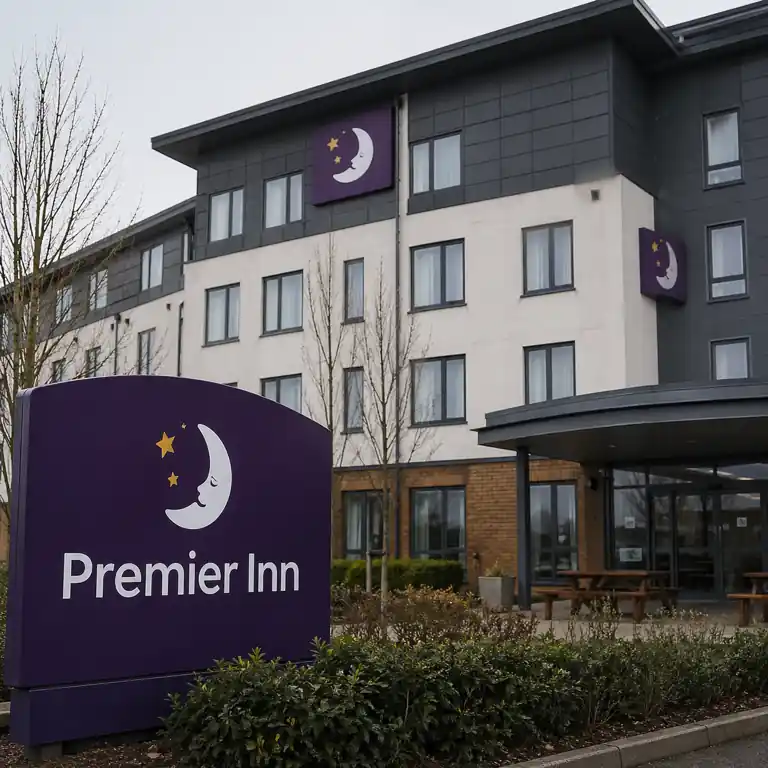

Whitbread, the company behind Premier Inn, has set out a major restructuring plan that could reshape one of the UK’s best-known hotel businesses over the next five years. The group plans to cut around 3,800 jobs across the UK and Ireland after reporting weaker annual profit and facing a tougher cost environment.
The proposed job reductions form part of a wider savings programme targeting £250 million in efficiencies. Whitbread said the changes are designed to make the business leaner, simplify operations and focus more heavily on its core Premier Inn hotel brand.
The announcement comes after the company reported pre-tax profit of £298 million for the year to 26 February, a 19% decline from the previous year. Higher labour costs, business rates and employer National Insurance contributions have added pressure across the hospitality sector, where hotels, pubs and restaurants are already dealing with inflation in energy, food and wages.
Whitbread Pushes Premier Inn Toward a Leaner Model
Premier Inn remains the centre of Whitbread’s strategy. The hotel chain has around 86,000 rooms in the UK, making it the country’s largest hotel operator by scale. But the company is now moving away from some of the extra complexity that has traditionally sat around the hotel business, especially its standalone restaurant operations.
A key part of the plan is the replacement of restaurants at 197 hotel locations with a more integrated food and drink service. Instead of running separate restaurant brands alongside Premier Inn sites, Whitbread wants food and beverage to work more directly as part of the hotel guest experience.
This marks a significant shift for brands such as Beefeater, Brewers Fayre, Bar + Block, Cookhouse + Pub, Thyme and Table Table, which have long been associated with Whitbread’s hotel estate. The company has already agreed to sell 51 branded restaurants and has reached terms for another 60 sites.
Some locations are expected to be converted into additional hotel rooms, allowing Whitbread to strengthen Premier Inn while reducing exposure to lower-margin restaurant operations. The company says the integrated model is more efficient and better aligned with what hotel guests now prefer.
Further details on the company’s latest financial position and investor updates are available through the official Whitbread results and presentations page.
Why Whitbread Is Cutting Jobs
Whitbread has linked the restructuring to a combination of rising costs and weaker profitability. The company said increased business rates and higher employer National Insurance contributions have made its operating environment more difficult. Inflation has also pushed up the cost of running hotels and restaurants, from staffing to supplies.
The proposed 3,800 job cuts represent a sizeable reduction in a workforce of about 30,000 people. However, Whitbread said the plans remain subject to consultation and that it expects to retain a significant proportion of affected employees through redeployment.
The group also pointed out that it hires around 15,000 people each year, giving it some flexibility to move workers into alternative roles where possible. Even so, the scale of the announcement makes it one of the most significant job-cut plans in UK hospitality this year.
Whitbread has already been slimming parts of its business in recent years. The company cut around 1,500 jobs in 2024 and made 88 roles redundant last year after moving a call centre operation to Egypt. The latest plan is broader because it combines workforce reductions, restaurant restructuring, capital spending cuts and property changes under one long-term strategy.
£1.5bn Property Move and Lower Capital Spending
Alongside the job cuts and restaurant overhaul, Whitbread also plans to sell and lease back around £1.5 billion of properties in the UK and Ireland. This would allow the company to release cash from its property portfolio while continuing to operate from those locations.
The move is important because Whitbread is unusual compared with many hotel operators: it owns a large part of its estate. Ownership gives the company asset backing, but it also ties up capital. A sale-and-leaseback strategy can improve financial flexibility, although it also creates long-term rental commitments.
Whitbread also plans to reduce its capital building programme by around £1 billion. That signals a more disciplined approach to expansion, with the company prioritising returns and efficiency rather than heavy upfront investment.
For investors, the restructuring will likely be judged on whether it can improve margins without damaging Premier Inn’s customer experience. Cost savings may support earnings over time, but execution risk remains, especially during staff consultation, restaurant conversions and property transactions.
The wider story also reflects a bigger shift in UK hospitality. Restaurants and pubs have become harder to run profitably as wages, tax bills and overheads rise. Hotel-led models can offer more predictable revenue, especially when backed by a recognised budget brand like Premier Inn.
Whitbread’s strategy suggests the company wants to become simpler, more focused and less exposed to labour-heavy dining formats. That may help protect long-term profitability, but it also underlines the pressure facing workers and operators across the sector.
For more business and market updates, visit our finance and stock market news section.
Whitbread’s latest plan is not just a short-term cost-cutting move. It is a clear attempt to rebuild the business around Premier Inn, reduce complexity and unlock capital from property assets. The coming months will show how smoothly the company can manage the transition while balancing savings, staff redeployment and service quality across its hotel network.
You may like: Woolworths Stock Falls as Milk and Bread Prices Surge

Make Swikblog your go-to source on Google for reliable updates, smart insights, and daily trends.