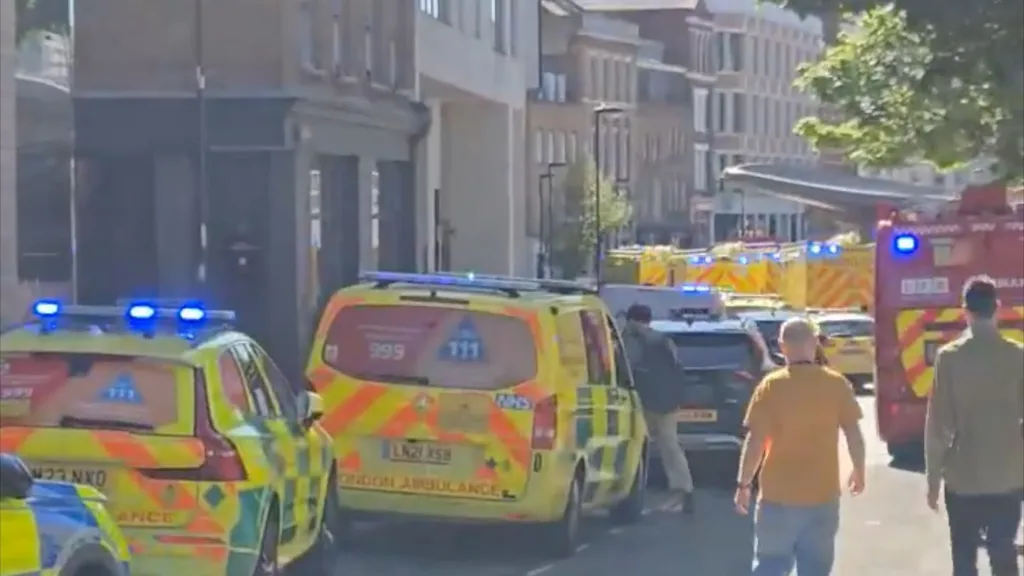

Commuters travelling through central London faced a difficult Thursday morning after Farringdon station was shut and evacuated following reports of a suspected gas leak. The incident affected one of the capital’s most important interchange points, causing disruption on the Elizabeth Line, Thameslink and nearby rail connections.
British Transport Police said officers were called to Farringdon at 9:42am on Thursday, 30 April, after reports of a suspected gas leak inside the station. A small number of passengers were said to have felt unwell, prompting a precautionary evacuation while emergency teams assessed the situation.
Paramedics, firefighters and police attended the scene, with London Fire Brigade deploying two fire engines, two fire rescue units and specialist officers. People nearby were advised to avoid the area as checks continued.
The closure quickly created wider travel problems because Farringdon sits at the centre of several major routes. National Rail said Elizabeth Line and Thameslink trains would not stop at the station while emergency services dealt with the incident. Disruption was expected until at least midday, with delays and cancellations reported on services between London St Pancras International and London Blackfriars.
Elizabeth Line passengers were also affected, with Farringdon not being served and some services subject to diversion. Tottenham Court Road was also listed as affected during the disruption, adding further pressure on central London travel routes.
Passengers were told to use alternative stations where possible. Thameslink advised customers to travel via City Thameslink, using the Holborn exit, or London St Pancras International. Elizabeth Line passengers were advised to use London buses to and from Farringdon at no extra cost to complete their journeys.
The disruption came at a busy time of day, making the impact more severe for workers, students and visitors travelling across London. Farringdon is not just a local stop; it is a strategic hub linking east-west Elizabeth Line services with Thameslink’s north-south route through the capital. When a station of that size closes suddenly, the effect is felt far beyond the platforms.
Although the cause had not been confirmed at the time of the emergency response, the decision to evacuate reflected standard safety practice. A suspected gas leak in an enclosed transport environment is treated seriously because passengers may be exposed before the source is identified. Symptoms such as feeling faint, dizzy or nauseous can trigger a full safety response, especially in a busy underground or enclosed station setting.
Guidance from the Health and Safety Executive stresses the importance of acting quickly around suspected gas risks, including removing people from danger and ensuring the area is made safe before normal activity resumes.
For passengers, the main advice was to check live journey updates before travelling and avoid assuming that services would return to normal immediately after the station reopened. Even short closures at major London stations can leave trains and crews out of position, meaning delays may continue after the original incident has been resolved.
Perth Dense Fog Triggers Major Road Warnings as Visibility Drops Across Key Highways
International Labour Day 2026: Theme, Meaning and Global Significance Explained
Those travelling between north and south London faced particular disruption because Thameslink services through the central core rely heavily on Farringdon and nearby stations. Passengers heading towards Blackfriars, St Pancras, City Thameslink or stations further north and south were urged to consider alternative routes.
The Elizabeth Line impact was also significant because Farringdon is one of the line’s most useful central London stops, offering connections towards Paddington, Liverpool Street, Canary Wharf, Heathrow and Shenfield. Any interruption at this point can quickly affect both local journeys and longer cross-London trips.
Emergency incidents at major stations are often disruptive, but transport operators must balance service recovery with public safety. Reopening a station after a suspected gas leak usually depends on checks by emergency crews, confirmation that the air is safe, and coordination between police, fire services and rail operators.
Thursday’s closure also showed why passengers are encouraged to follow official travel alerts rather than relying only on planned timetables. During incidents involving emergency services, train movements can change quickly, with some services skipping stations, terminating early or being redirected.
Anyone affected by the Farringdon closure was advised to keep hold of tickets and follow operator guidance on alternative travel. In many disruption cases, valid rail tickets may be accepted on selected Underground, bus or other rail services, helping passengers complete journeys without paying again.
The response at Farringdon underlined how quickly London’s transport network can be reshaped by a single safety alert. With emergency services on site and passengers moved away from the station, the priority remained clear: protect the public first, then restore services when it is safe to do so.
Further updates were expected from transport operators as safety checks progressed and services worked back towards normal. Until then, passengers using the Elizabeth Line, Thameslink or routes through central London were urged to allow extra time and check the latest station information before setting off.
Related: Read more UK transport and London breaking updates on London Now.
Read More: Port Talbot Fire: Huge Blaze Triggers Road Closures as Thick Smoke Covers Area

Make Swikblog your go-to source on Google for reliable updates, smart insights, and daily trends.