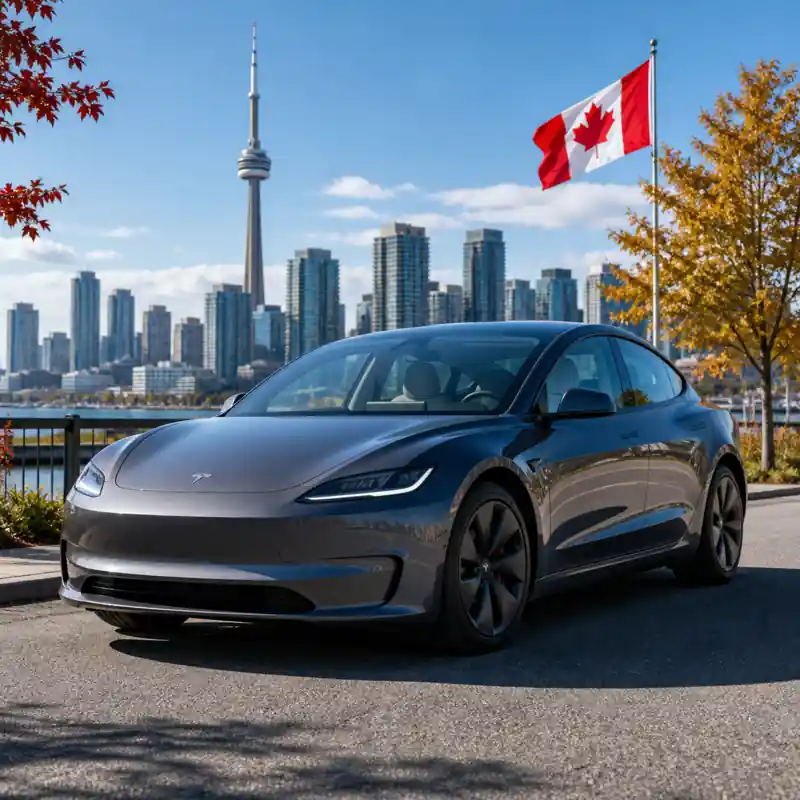

Tesla’s Model 3 is back in Canada with a much lower entry price, giving EV shoppers a new option below the C$40,000 mark. The sedan now starts at C$39,490 for the Premium Rear-Wheel Drive version, a price point that makes it one of Tesla’s most affordable offerings in the Canadian market.
The lower price is likely to attract buyers who had been waiting for Tesla to become more competitive again. However, the headline number does not tell the full story. The new Model 3 is imported from China, which means it does not qualify for Canada’s federal EV incentive of up to C$5,000.
That detail matters because several rival electric vehicles still qualify for the rebate, making the final purchase comparison more complicated than the sticker price suggests.
Why the Model 3 is suddenly cheaper in Canada
The new pricing is closely tied to where Tesla is sourcing the car. Instead of relying on U.S.-built Model 3 vehicles from Fremont, California, Tesla is now bringing Canadian-market units from its Shanghai factory.
This supply shift comes after a turbulent period for EV imports in Canada. Chinese-built electric vehicles were previously hit with a 100% surtax, which made them difficult to price competitively. Tesla then shifted more Canadian Model 3 supply from the United States, but that created another issue after Canada placed tariffs on U.S.-built vehicles.
The result was a sharply more expensive Model 3 lineup, with some versions priced close to C$80,000. That weakened the car’s value appeal in a market where affordability has become one of the biggest barriers to EV adoption.
Canada has since opened a quota-based path for Chinese-made EVs at a much lower tariff rate. That appears to have given Tesla room to reset the Model 3 price and return with a more aggressive entry point.
The new Premium Rear-Wheel Drive Model 3 offers an estimated 463 kilometres of range and a 0 to 100 km/h time of about 4.2 seconds. For most daily drivers, that combination of range, speed and price will be more than enough, especially for buyers who do not need all-wheel drive.
Tesla has also changed the rest of the Canadian lineup. The Model 3 Performance now starts at C$74,990, down from C$89,990. Meanwhile, the Long Range version has been removed from the configurator, leaving a much wider gap between the entry model and the high-performance trim.
That gap is now more than C$35,000. For buyers, the question becomes whether all-wheel drive, faster acceleration and higher top speed justify spending nearly double the price of the base version.
No C$5,000 incentive could change the buying decision
The biggest catch is the missing federal rebate. Canada’s EV incentive rules are tied to manufacturing origin and trade agreement requirements. Because the new Canadian Model 3 is built in China, it does not qualify for the federal C$5,000 incentive.
That means the C$39,490 price is effectively the buyer’s real starting point before delivery fees, taxes and other costs. Tesla’s price is still low by Model 3 standards, but competing EVs that qualify for rebates may become more attractive once incentives are included.
For example, vehicles from brands such as Hyundai, Chevrolet and other automakers may carry higher list prices but can still benefit from government support, depending on trim and eligibility. For budget-focused buyers, the final out-the-door price will matter more than the headline price.
Still, Tesla has advantages that are not always reflected in the purchase price. The company’s Supercharger network remains one of the strongest reasons many drivers choose a Tesla, especially in a large country like Canada where long-distance charging access can influence buying decisions. Tesla also benefits from strong brand recognition, regular software updates and a mature ownership ecosystem.
According to the International Energy Agency’s Global EV Outlook, affordability and charging infrastructure remain two major factors shaping electric vehicle adoption. Tesla’s latest Canadian move touches both sides of that equation: a lower sticker price paired with access to one of the better-known charging networks.
The timing also matters. Gas prices, financing costs and household budgets continue to shape how Canadians shop for new vehicles. A Model 3 below C$40,000 could pull in buyers who were previously looking at gasoline sedans, compact SUVs or lower-priced EV alternatives.
At the same time, the move could increase pressure on other automakers. Canada’s lower-tariff quota for Chinese-built EVs may encourage more brands to bring competitively priced models into the country. BYD and other China-linked automakers have been preparing for a larger presence in global markets, and Canada could become a more active battleground if import rules remain favorable.
For Tesla, the new Model 3 price is not just a discount story. It is a sign of how quickly global manufacturing decisions can reshape local car prices. A vehicle that had become difficult to position in Canada because of tariffs is now back with a price that puts pressure on both EV rivals and traditional gasoline cars.
Deliveries of the updated Model 3 lineup are expected to begin as early as May or June. Once vehicles reach customers, the real test will be whether Canadians view the lower price as enough to offset the missing C$5,000 incentive.
For now, the C$39,490 Model 3 gives Tesla a stronger entry point in Canada. But buyers should compare the full cost, rebate eligibility, charging access and trim differences before deciding whether this is the best EV deal available.
For more Tesla market coverage, read our latest analysis on Tesla Model Y pricing trends and demand outlook.
Author: Swikriti Dandotia
You may like: Iran Earthquake Today: 4.3 Magnitude Quake Strikes Gerash at Shallow 10km Depth

Make Swikblog your go-to source on Google for reliable updates, smart insights, and daily trends.