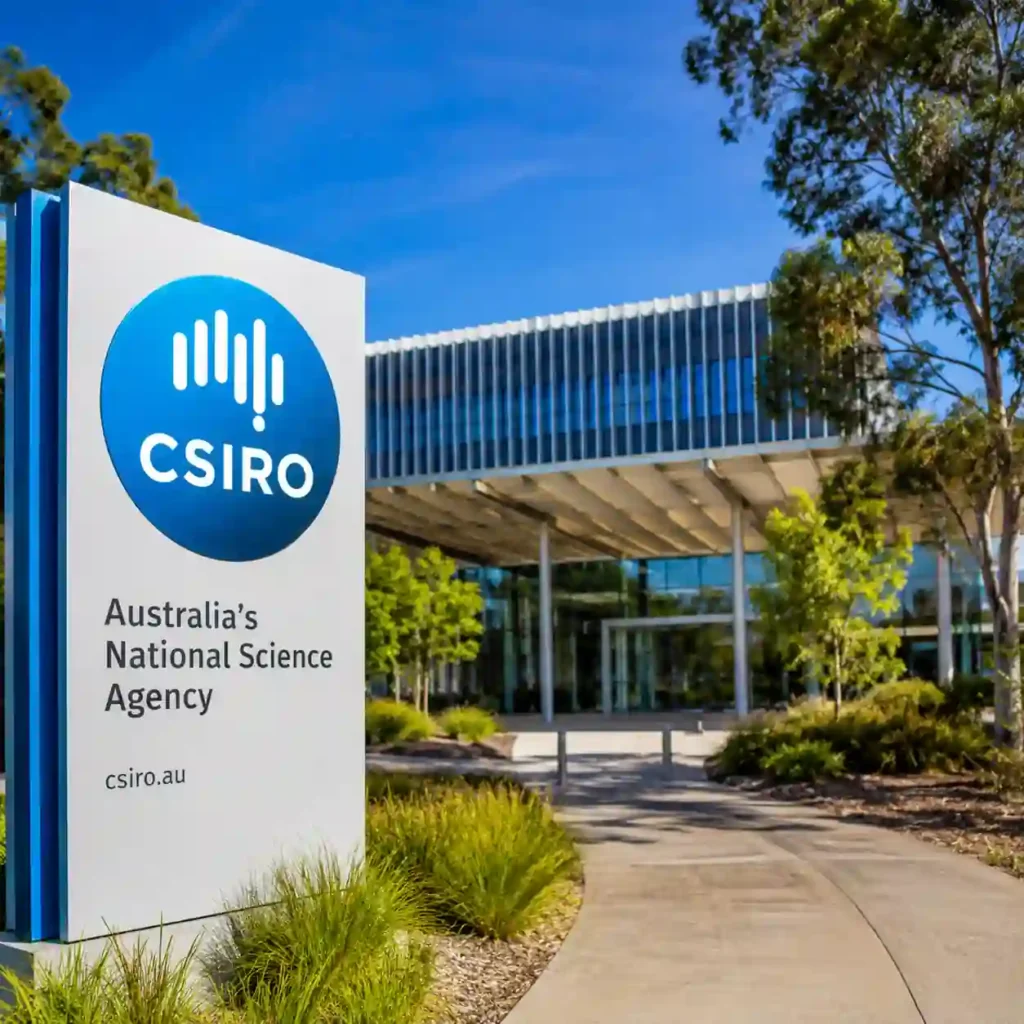

Australia’s national science agency is set to push ahead with cutting up to 350 jobs, even after the federal government announced a fresh $387.4 million funding boost over four years for the Commonwealth Scientific and Industrial Research Organisation.
The decision has sharpened a national debate over public science funding, research capability and the future of one of Australia’s most important innovation institutions. CSIRO says the planned job reductions are already well underway and remain necessary to support the long-term sustainability of the organisation.
The new money comes on top of an earlier $278 million funding announcement and CSIRO’s existing annual public funding allocation of nearly $1 billion. But the agency has made clear that the additional support will not automatically stop the workforce changes announced last November.
CSIRO chief executive Doug Hilton described the funding as a major vote of confidence in Australian science, saying the organisation welcomed the government’s support during a period of global uncertainty. The agency said the investment would help it continue work across medical research, pandemic preparedness, advanced technology and national science infrastructure.
Key update: CSIRO is receiving an additional $387.4 million over four years, but planned cuts of up to 350 roles are still expected to continue.
Funding boost fails to halt planned CSIRO job cuts
The announcement creates a striking contrast: one of Australia’s most recognised scientific bodies is receiving hundreds of millions in new federal funding while still reducing its workforce. CSIRO has argued that the cuts are part of “essential strategic research shifts” designed to keep the agency financially sustainable over the long term.
The organisation has already faced deep staffing pressure. More than 800 positions have reportedly been cut over the past two years, while union representatives say total recent losses are higher when earlier reductions are included.
The CSIRO Staff Association, part of the Community and Public Sector Union, said the extra funding would be “cold comfort” for workers whose jobs have already been lost. CPSU national president Beth Vincent-Pietsch said the government’s funding boost was welcome but should mean there are no further job cuts at the agency.
The staff association has argued that repeated cuts risk weakening CSIRO’s ability to remain a world-renowned research institution at a time when science is central to public health, climate resilience, agriculture, biosecurity and emerging technology.
Government says investment backs Australian science
Federal Science Minister Tim Ayres said the funding was designed to strengthen CSIRO’s future and support the national science agency’s work for modern challenges. He said publicly funded science was crucial for Australia’s health, welfare, prosperity and resilience.
Part of the package includes additional support for the Australian Centre for Disease Preparedness in Geelong, with $38 million a year directed toward upgrading the facility. The centre plays a key role in protecting Australia from biological threats, animal diseases and future pandemic risks.
The government has framed the funding as a long-term investment in national resilience. More detail on CSIRO’s public science role is available through the official CSIRO website.
Science advocates have also welcomed the scale of the package, while warning that years of funding pressure cannot be reversed quickly. Public debate around the announcement has focused on whether the money is enough to stabilise the agency after a long period of restructuring and staff losses.
According to Guardian Australia, the funding follows months of advocacy from scientists, staff and supporters who pushed for stronger investment in public research.
CSIRO faces pressure over long-term research capacity
CSIRO’s history gives the current dispute extra weight. The agency has been linked to major Australian innovations, including wi-fi technology, polymer banknotes, Aerogard and the Hendra virus vaccine. Its work spans health, agriculture, climate, minerals, biosecurity, energy, manufacturing and data science.
That broad mission is also part of the challenge. Maintaining laboratories, specialist facilities and national research infrastructure is expensive, while scientific work often requires long-term investment before delivering commercial or public benefits.
CSIRO says its research portfolio changes are intended to focus resources on areas where the agency can deliver the greatest national impact. But unions and science advocates argue that job cuts could reduce the very expertise needed to respond to future crises.
The latest funding announcement may ease some pressure around facilities and future programs, but it does not remove the immediate uncertainty for affected staff. For researchers, technicians and support teams, the central issue remains whether CSIRO can rebuild confidence after successive rounds of reductions.
The clash now sits at the heart of Australia’s wider science policy debate. The federal government wants to show it is backing research and innovation, while CSIRO leaders say internal savings remain necessary. Staff representatives, meanwhile, are pressing for the new funding to translate into workforce stability rather than another period of uncertainty.
For investors in Australia’s innovation economy, universities, medical researchers and science-led industries, the outcome matters beyond CSIRO itself. A stronger national science agency can support pandemic preparedness, agricultural security, advanced manufacturing and technology development. A shrinking workforce, however, raises questions about whether Australia is preserving enough scientific capability for the next decade.
The funding boost gives CSIRO fresh financial support, but the job cuts show the agency’s reset is not over. The coming months will test whether the government’s investment can restore confidence inside Australia’s flagship science institution while protecting the expertise that made it globally respected.

Make Swikblog your go-to source on Google for reliable updates, smart insights, and daily trends.