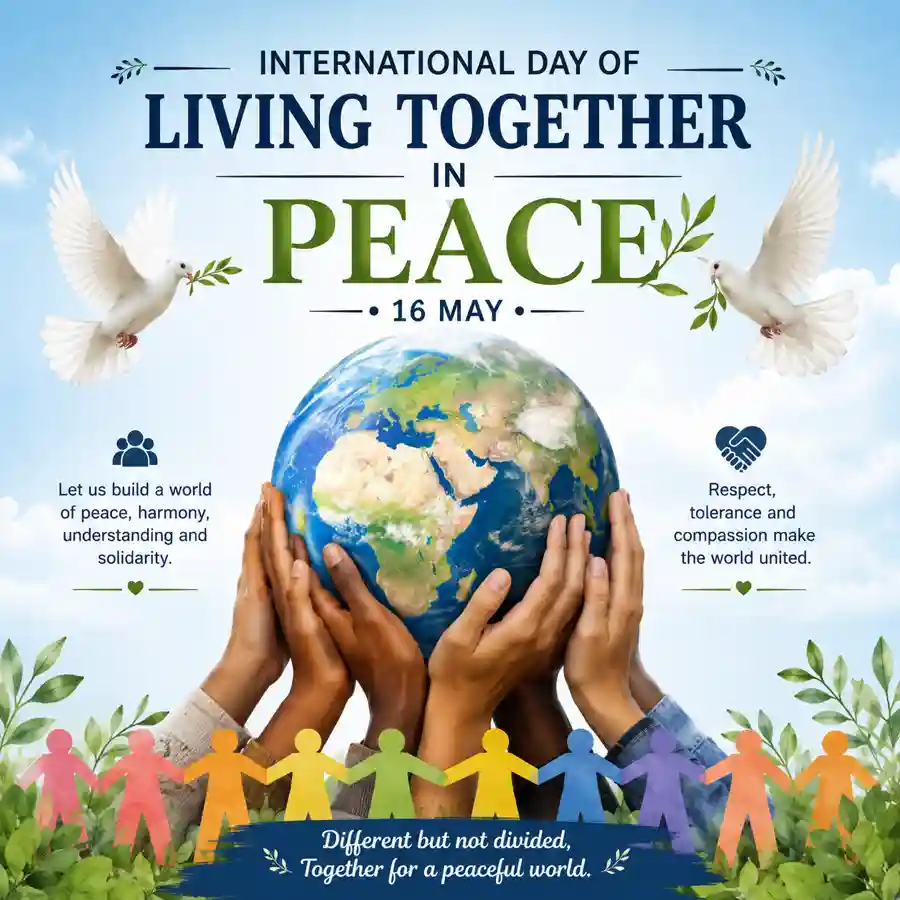

International Day of Living in Peace 16 May 2026 is a global reminder that peace is not only about ending wars. It is also about how people live with one another every day — in families, schools, workplaces, communities and online spaces.
Observed every year on May 16, the day is officially recognized by the United Nations as the International Day of Living Together in Peace. It encourages people across the world to accept differences, listen with respect and build relationships based on tolerance, inclusion and understanding.
The United Nations General Assembly declared May 16 as this international observance in 2017 through Resolution 72/130. The goal was to regularly mobilize global efforts toward peace, solidarity, reconciliation and harmonious coexistence among people of different cultures, faiths and backgrounds.
In 2026, the message feels especially important. Many societies are dealing with distrust, polarization, hate speech, discrimination and conflict. Against this backdrop, the day asks a simple but urgent question: how can people live together without fear, exclusion or hatred?
International Day of Living in Peace 2026 Theme and Meaning
The 2026 theme is “Building Trust through Dialogue, Inclusion and Reconciliation.” This theme highlights three ideas that are essential for any peaceful society.
Dialogue helps people understand each other instead of making assumptions. Inclusion ensures that no community feels ignored or pushed aside. Reconciliation allows individuals and societies to heal after conflict, injustice or division.
The United Nations explains that living together in peace means accepting differences and having the ability to listen, recognize, respect and appreciate others. It is not about forcing everyone to think the same way. It is about creating a society where diversity does not become a reason for fear or violence.
According to the United Nations, the day aims to promote peace, tolerance, inclusion, understanding and solidarity. It also invites countries to support reconciliation through communities, faith leaders, service activities, forgiveness and compassion.
The 2026 theme also connects with the wider UN message of peace, development and human rights. It reflects the belief that trust is one of the strongest foundations of social stability. When trust breaks down, communities become vulnerable to anger, misinformation and division. When trust is rebuilt, people are more willing to cooperate and solve problems together.
The background of this observance goes back to the creation of the United Nations after the Second World War. The UN was founded to protect future generations from the destruction of war and to promote human rights and fundamental freedoms for all people, regardless of race, sex, language or religion.
Before May 16 became an international day, the UN had already taken several steps to promote a culture of peace. The year 2000 was declared the International Year for a Culture of Peace. The years 2001 to 2010 were observed as the International Decade for a Culture of Peace and Non-Violence for Children of the World.
In 1999, the UN adopted the Declaration and Programme of Action on a Culture of Peace. This document made an important point: peace is not simply the absence of conflict. Real peace requires justice, dialogue, equality, cooperation and respect for human dignity.
That idea remains central to International Day of Living in Peace 2026. The day is not only symbolic. It encourages practical action — from community conversations and educational programs to intercultural events, peace workshops and campaigns against hate.
Why May 16 Matters for Communities and Future Generations
International Day of Living in Peace matters because division often begins in everyday life. A careless word, a stereotype, an online insult or a refusal to listen can slowly damage trust between people. On the other hand, small acts of respect can help repair relationships and create a more peaceful environment.
Schools can use the day to teach students about empathy, conflict resolution and respect for different cultures. Community groups can organize discussions on local issues. Faith leaders can encourage forgiveness and compassion. Families can talk about how to handle disagreements without anger or aggression.
Social media also has a role. Instead of spreading hate or misinformation, people can use May 16 to share stories of kindness, unity and reconciliation. Peace messages, awareness posts and cultural stories can help remind others that differences should not divide humanity.
The day also supports sustainable development. A society cannot grow in a healthy way if people live with fear, discrimination or hostility. Peaceful communities are more likely to support education, protect human rights, improve public safety and create opportunities for children and young people.
UNESCO’s long-standing work on education, culture, science and information also reflects the same belief: peace must be built in people’s minds. Laws and institutions are important, but lasting peace also depends on how people think, communicate and treat one another.
International Day of Living in Peace 16 May 2026 is therefore more than a date on the calendar. It is a call to action for individuals, communities and nations. It reminds the world that peace is built through daily choices — choosing patience over anger, dialogue over silence, inclusion over exclusion and compassion over hate.
As the world observes May 16, the message is clear: humanity does not need to erase its differences to live together. It needs the courage to respect those differences and the wisdom to build trust across them.

Make Swikblog your go-to source on Google for reliable updates, smart insights, and daily trends.