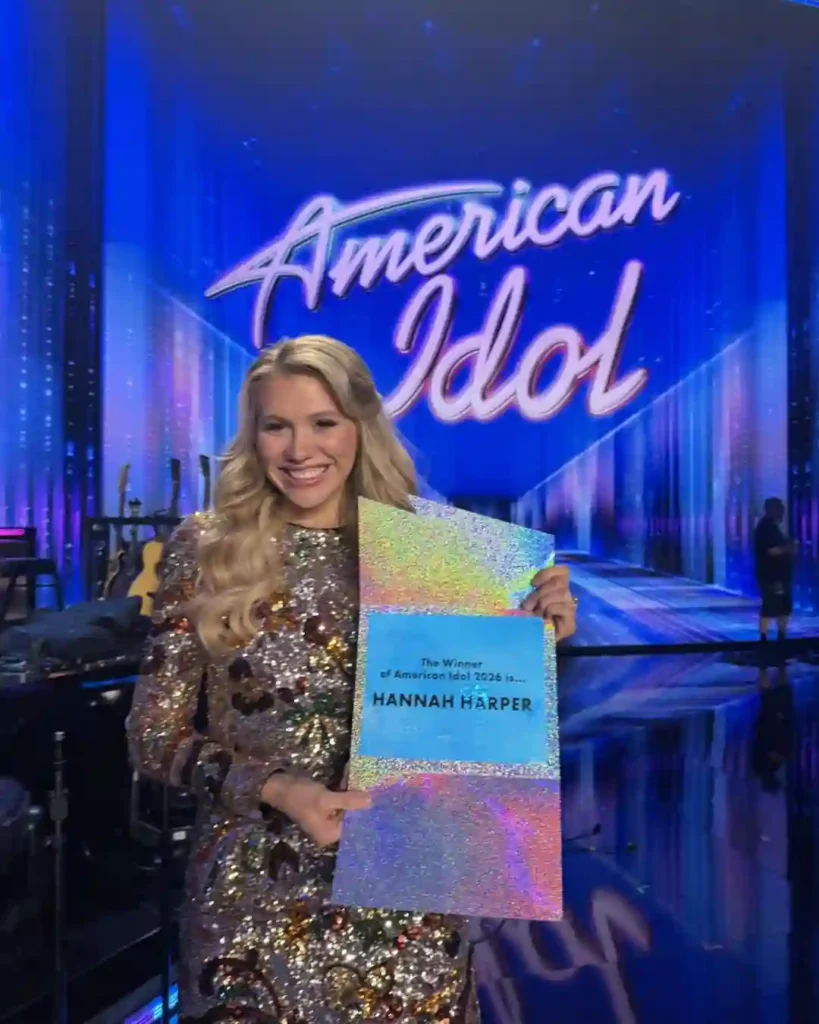

Hannah Harper’s win on American Idol Season 24 was not just another reality-TV result. It was the payoff to a season-long story built on motherhood, faith, country roots and one original song that turned a private struggle into a national talking point.
The Missouri singer was crowned the winner during the live finale on Monday, May 11, 2026, after viewers voted her ahead of Jordan McCullough and Keyla Richardson. According to People, Harper ended the night by singing Chris Tomlin’s “At the Cross (Love Ran Red)” while visibly emotional after her name was announced as the new champion.
That closing moment worked because it matched the artist viewers had been watching all season. Harper never came across as a contestant trying to chase every genre or deliver the loudest performance in the room. Her appeal was quieter and more specific. She leaned into country storytelling, gospel influence and songs that sounded connected to her own life.
Hannah Harper wins American Idol Season 24! #AmericanIdol pic.twitter.com/mQgbVfddky
— Drew Smith (@DrewDisneyDude) May 12, 2026
Why Hannah Harper’s Finale Performances Connected
Harper’s finale set gave viewers a clear reminder of why she had become one of the season’s most talked-about contestants. She performed Alicia Keys’ “No One,” but reshaped it with a country-bluegrass feel and dedicated the song to her husband. That choice helped separate her from a standard cover performance. Instead of copying a famous pop hit, she made it sound closer to her own musical world.
She also performed her original song “Married Into This Town,” a performance that reportedly moved the audience and judge Carrie Underwood. The song continued a theme that had followed Harper throughout the season: her best moments came when she sang about real life rather than trying to sound like a generic singing-show finalist.
The biggest full-circle moment came when Harper returned to “String Cheese,” the original song that first made her go viral during auditions. On paper, the title sounds unusual for a song that could help win a national competition. In practice, it became the most important piece of Harper’s American Idol identity.
During her audition, Harper explained that “String Cheese” was written after a difficult period with postpartum depression following the birth of her youngest child. She described sitting on the couch, emotionally drained, while her son repeatedly asked her to open his cheese. What seemed like a small parenting moment became a turning point for her.
Harper said she realized that being present in her own home and caring for her children was not a distraction from her purpose, but part of it. That story gave the song its emotional force. It was not written to sound clever. It was written from a moment many parents could understand but may not often hear described so plainly on national television.
Carrie Underwood’s reaction during the audition helped push Harper’s story even further. Underwood became emotional and called the song deeply relatable, while also praising Harper’s natural voice and presence. From that point on, Harper was not simply another promising singer. She became one of the contestants viewers expected to follow closely.
Swikblog previously covered another memorable Harper moment involving Underwood’s support during the season, when the judge sent Tiffany & Co. gifts and handwritten notes to contestants. You can read that related coverage here: Carrie Underwood’s Tiffany gift to the American Idol Top 11.
How Harper Turned Authenticity Into an Idol Victory
Harper’s win also stood out because the Season 24 finale was not short on strong competitors. Jordan McCullough finished as runner-up, while Keyla Richardson placed third after reaching the Top 3. Both finalists brought powerful voices and clear stage identities, making Harper’s victory feel less like an easy coronation and more like a result earned through consistent connection with viewers.
What separated Harper was the way she made her background central to her performances. She is a stay-at-home mother of three from Missouri who grew up singing with her family’s gospel and country group, The Harper Family. That background was not just a biography line. It shaped her sound, her phrasing and the stories she chose to tell.
Her performances carried a mix of church, country and front-porch honesty. That is why comparisons to artists such as Dolly Parton and Kacey Musgraves made sense to many fans. Like those artists, Harper’s strongest work came from plainspoken storytelling rather than vocal decoration alone.
The finale also featured Harper in a duet performance of Lee Ann Womack’s “I Hope You Dance,” a fitting selection for a contestant whose season had often centered on family, hope and perseverance. By the time Ryan Seacrest announced the final result, Harper had already reminded viewers of every side of her appeal: the wife, the mother, the believer, the songwriter and the country singer with a viral original that still felt personal months later.
Her reaction after winning quickly became another major part of the night. Harper appeared stunned and emotional as the result was announced, and fans online praised the moment for feeling genuine rather than rehearsed. In an era when reality-TV moments are often clipped, packaged and debated within minutes, Harper’s reaction gave viewers one last reason to believe in her story.
The win now gives Harper a difficult but meaningful next step. Many American Idol winners leave the show with visibility, but not all leave with a clear artistic lane. Harper already has one. Her audience knows her as a country-gospel storyteller who writes from personal experience and is not afraid to bring faith, motherhood and vulnerability into her music.
Read More
That does not guarantee long-term success, but it gives her a stronger foundation than many contestants have at the end of a reality competition. “String Cheese” proved she can write a song people remember. “Married Into This Town” showed she has more original material connected to her own life. Her finale performances showed she can adapt familiar songs without losing her identity.
For American Idol, Harper’s victory is also a reminder of what still works on the show after more than two decades. Viewers may enjoy celebrity guests, dramatic staging and big vocal moments, but they still respond most strongly to contestants who make them feel something real.
Hannah Harper did that from her first audition to her final performance. She turned an ordinary moment with her child into the song that launched her season, carried that honesty through the competition and finished the finale as the new American Idol winner. Her victory was not just about hitting the right notes. It was about making people believe the story behind them.

Make Swikblog your go-to source on Google for reliable updates, smart insights, and daily trends.