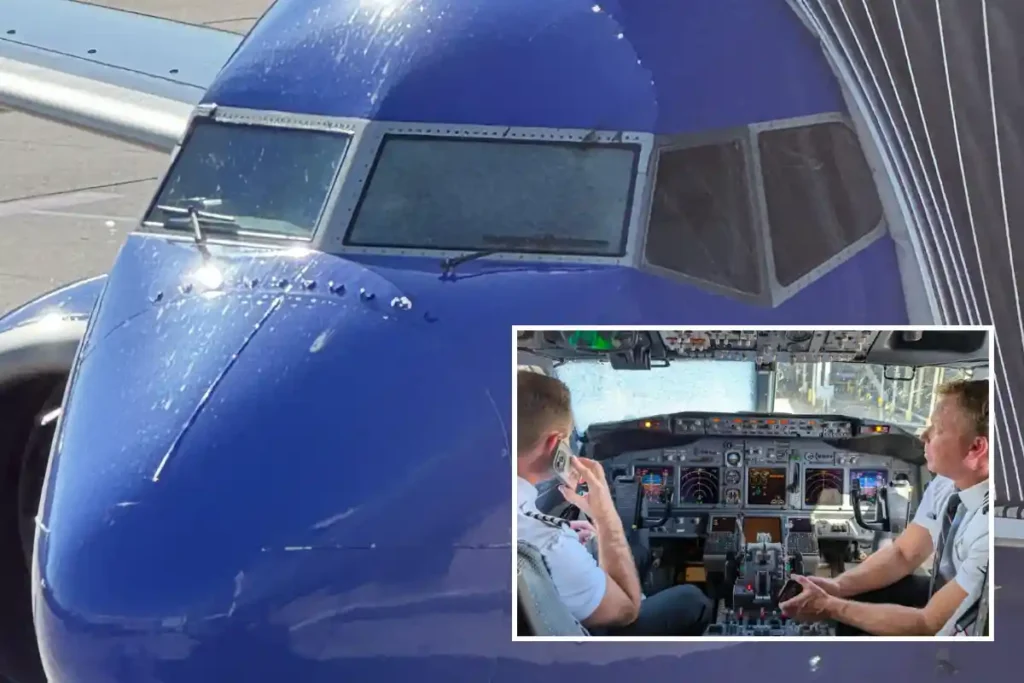

A Southwest Airlines flight from Albuquerque to Baltimore ended with an unexpected diversion to Oklahoma after the aircraft’s cockpit windshield cracked while the Boeing 737 was flying at cruising altitude.
The incident involved Southwest Airlines Flight 2665, which left Albuquerque International Sunport in New Mexico on Monday, May 11, at around 2 p.m. local time. The plane was scheduled to continue east toward Baltimore/Washington International Thurgood Marshall Airport, but the crew changed course after noticing damage to the windshield.
According to the Federal Aviation Administration, the aircraft landed safely at Tulsa International Airport at about 4:20 p.m. local time after the crew reported the cracked windshield. No injuries were reported.
The FAA said it will investigate the incident, which is routine when a commercial aircraft diverts because of a reported in-flight equipment or structural issue.
Flight tracking information cited in reports showed the aircraft had climbed to around 37,000 feet before it turned south toward Tulsa. The flight had been in the air for just over an hour when the diversion began.
Southwest Airlines confirmed the aircraft diverted safely and said the landing was uneventful. The airline also said customers were placed on another aircraft to continue to Baltimore. The replacement flight reached Baltimore around 11:30 p.m., roughly four hours later than passengers had originally expected.
The aircraft involved was identified as N265WN, a Boeing 737 that is more than 19 years old. While the age of the aircraft may draw attention, commercial planes commonly remain in service for decades when they continue to meet federal maintenance and inspection requirements.
Why a cracked windshield does not always mean a major failure
A cracked cockpit windshield sounds serious, especially at 37,000 feet, but modern passenger aircraft are designed with several layers of protection. Airplane windshields are built from multiple layers of tempered glass and other reinforced materials, allowing the window to keep functioning even if one layer is damaged.
That layered design is important because aircraft windshields must handle pressure changes, temperature shifts, wind force, moisture, and possible impact from debris. When damage appears, pilots follow established procedures, assess the aircraft’s condition, coordinate with air traffic controllers and choose a safe airport for landing.
In this case, Tulsa became the safe diversion point. The aircraft landed without injuries, passengers were transferred to another plane, and the damaged aircraft was removed from normal passenger service for inspection.
The exact cause of the crack has not been determined. Possible causes in such cases can include pressure stress, temperature change, material fatigue, a manufacturing issue, maintenance-related factors or impact from an outside object. Investigators will likely examine the damaged windshield, maintenance records, pilot reports and flight conditions before reaching a conclusion.
Southwest has not publicly released additional technical details about the aircraft after landing.
FAA review comes during heightened attention on aviation safety
The Southwest diversion comes at a time when airline safety incidents are receiving closer public scrutiny across the United States. Most diversions and mechanical alerts end safely, but they still matter because each one gives regulators and airlines another opportunity to check maintenance, crew response and aircraft reliability.
Windshield-related diversions are not common, though they have happened before. Last year, a United Airlines jet reportedly suffered windshield damage after a weather balloon strike while flying at about 36,000 feet. In another separate case, a government aircraft carrying Pete Hegseth reportedly turned back over the Atlantic Ocean after its windshield cracked.
Bird strikes are more common in aviation than weather balloon or space debris encounters, but experts say it remains unusual for those impacts to seriously damage a commercial aircraft windshield.
The Southwest incident is different from the most severe windshield failures in aviation history because there has been no report of cabin pressure loss, cockpit injury or loss of aircraft control. The crew detected the issue, diverted and landed safely, which is exactly how aviation safety systems are intended to work.
Read More
- Latest News on Swikblog
- Hannah Harper wins American Idol 2026 after string cheese finale moment
- Spring & Mulberry chocolate recall over salmonella risk
- Lamb of God and Trivium announce Australia tour 2026
- Heytesbury buys 11 live export ships from Vroon
- Israel Eurovision 2026 controversy grows amid Gaza boycott calls
For passengers, the biggest impact was the delay. After landing in Tulsa, travelers had to wait for another aircraft before continuing to Baltimore. While frustrating, the decision to divert helped avoid unnecessary risk and allowed the aircraft to be inspected before any further operation.
Swikblog recently covered another U.S. aviation safety incident involving a United Boeing 767 at Newark, where federal investigators reviewed a landing collision involving airport ground equipment. You can read that related report here: United Boeing 767 Newark incident.
The FAA investigation into Southwest Flight 2665 will now focus on what caused the windshield crack and whether any maintenance, environmental or operational factor contributed to the diversion.
For now, the confirmed outcome is that the flight landed safely, no one was hurt, passengers were rebooked, and federal officials are reviewing the incident. The event may have been unsettling for those on board, but it also showed why commercial aviation relies on redundancy, pilot training and conservative decision-making when a problem appears midflight.

Make Swikblog your go-to source on Google for reliable updates, smart insights, and daily trends.