
US alcohol exports to Canada have fallen sharply as a widening “Buy Canadian” boycott keeps American spirits off shelves and pushes consumers toward local alternatives. The decline has become one of the clearest business consequences of the trade dispute between Washington and Ottawa, with U.S. spirits producers now warning that the damage has moved beyond politics and into lost sales, broken supply lines and weakened brand loyalty.
The Distilled Spirits Council of the United States said exports to Canada fell 63% last year, a dramatic slide for a market that has long been one of the most important international buyers of American whiskey, bourbon and other spirits. Globally, American spirits exports declined 3.8%, with the Canada boycott named as one of the main reasons behind the drop.
Industry leaders have described the impact as severe. Chris Swonger, president and CEO of the Distilled Spirits Council, said American distillers are “suffering” and called the Canadian boycott “devastating” for producers that had built dependable demand across provincial liquor systems. The council has also argued that, if Canada is excluded from the numbers, U.S. spirits exports would have risen 2.5%, showing how heavily the Canadian pullback weighed on the broader export picture.
Canadian shelves shift away from American alcohol
The boycott began as part of Canada’s response to the U.S. trade war, with several provinces removing American alcohol from government-controlled liquor stores. In Nova Scotia, the NSLC pulled American products from shelves in March 2025 and later resumed selling only the stock it already had on hand. The corporation has not ordered additional American product, leaving U.S. brands dependent on remaining inventory rather than fresh demand.
That matters because provincial alcohol retailers are not ordinary stores. In much of Canada, government-run liquor boards control access to the market, giving shelf removals a direct and immediate effect on sales. When products disappear from those systems, brands do not simply lose a display position; they can lose access to entire regional markets.
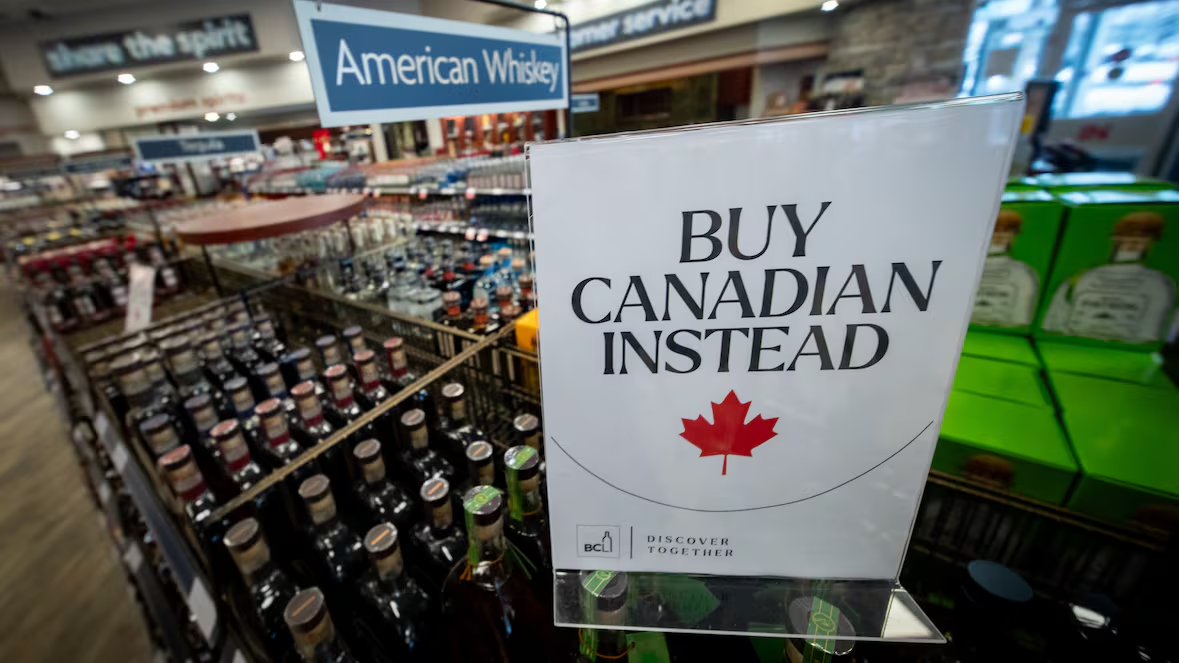
Consumer behaviour has added another layer of pressure. Some Canadian shoppers have deliberately moved away from U.S. alcohol, replacing bourbon with scotch whisky, Canadian wine, Ontario labels, British Columbia producers and Nova Scotia bottles. The movement has been emotional as well as economic, with “Buy Canadian” signs turning the liquor aisle into a visible symbol of the wider trade dispute.
The Distilled Spirits Council has published analysis on the removal of U.S. spirits from Canadian stores, noting the sharp sales decline after provincial action and consumer resistance combined. Its position has been that tariffs and retaliatory measures are harming producers on both sides of the border, while weakening a cross-border alcohol trade that had grown over decades through premium whiskey, wine and spirits demand. The council’s analysis of the Canada spirits dispute shows how quickly the market changed once U.S. products were removed from shelves.
Jack Daniel’s and bourbon brands face a loyalty test
The boycott has been especially difficult for American whiskey brands, which had enjoyed strong recognition in Canada. Jack Daniel’s, bourbon labels and other U.S. spirits were once familiar fixtures in Canadian liquor stores, but the dispute has created space for competitors. Scotch, Canadian whisky and local wines have all benefited from consumers looking for alternatives that do not carry the political weight of a U.S. label.
For producers, the larger concern is not only the current sales decline. Alcohol brands rely heavily on habit, shelf presence and repeat purchases. If Canadian consumers spend months replacing American products with local or non-U.S. alternatives, some may not return even if the trade dispute cools. That makes the boycott a longer-term brand risk rather than a short disruption.
The numbers suggest the damage is already material. A 63% fall in exports to Canada points to a market that has not merely slowed, but fundamentally changed. The global decline of 3.8% also shows that Canada’s pullback was large enough to affect the entire U.S. spirits export performance, despite stronger demand elsewhere.
There is also a timing issue for distillers. Some producers had already adjusted shipments around tariff risks, including front-loaded shipments to the European Union in late 2024 ahead of possible retaliatory measures. That created a complicated export picture in which trade uncertainty affected multiple markets at once. Canada, however, stands out because the decline was driven not only by policy but by consumer sentiment.
Trade politics turn into a retail problem
The alcohol dispute shows how quickly political tensions can reshape everyday consumer choices. Unlike industrial tariffs, which often feel distant to shoppers, alcohol boycotts are visible. A bottle removed from a shelf, a “Buy Canadian” sign, or a shopper choosing Nova Scotia wine over California wine turns trade policy into a personal purchase decision.
For Canada, the boycott has also highlighted domestic producers. Local wineries and distillers have gained attention from shoppers who might previously have reached for U.S. brands without much thought. That shift supports Canadian producers in the short term, but it also shows how fragile export markets can become when national sentiment changes.
For American alcohol companies, the path back is uncertain. Swonger has urged Canadian retailers to put American spirits back on shelves, describing it as a possible “olive branch.” But the decision does not rest only with producers. Provincial policy, federal trade negotiations and public mood will all shape whether U.S. brands regain their previous position.
The dispute also connects with broader pressure across the alcohol industry, where tariffs, consumer caution and changing drinking habits have already made growth harder. Swikblog has also covered related alcohol-market pressure, including Canada’s tax cap extension and relief for brewers in a changing policy environment. Readers can find more context in Canada Alcohol Tax Cap Extended 2% Till 2028 — Brewers Get Big Relief.
A sharp warning for U.S. exporters
The Canada boycott has become a warning for U.S. exporters that political disputes can damage even familiar, long-established consumer markets. American spirits producers are not dealing with a simple one-month slowdown. They are facing lost shelf space, changed buying habits and a trust problem that may take time to repair.
If relations improve, some consumers may return to American whiskey and bourbon. But the longer the boycott continues, the more Canadian alternatives become normal rather than temporary. For U.S. alcohol brands, the 63% export collapse is no longer just a trade statistic. It is a sign that one of their closest markets has become far less dependable, and that the cost of a trade war can be counted bottle by bottle.

Make Swikblog your go-to source on Google for reliable updates, smart insights, and daily trends.