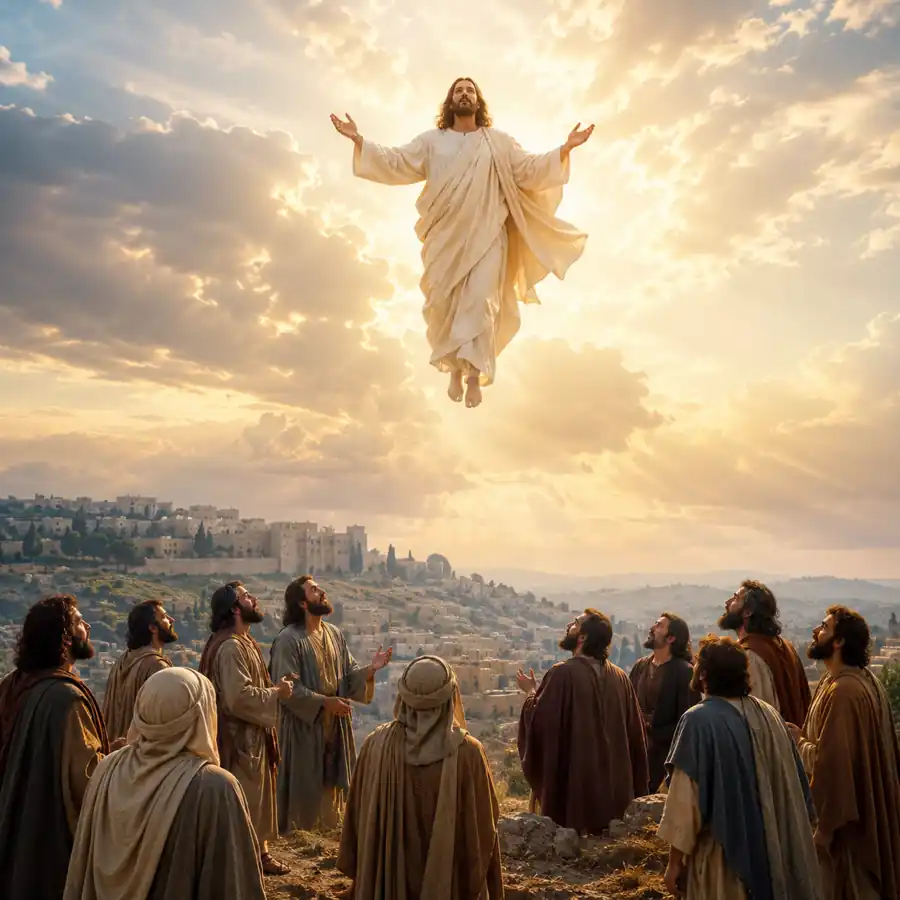

Ascension Day 2026 will be observed on Thursday, May 14, by millions of Christians across the world. The holy day commemorates the moment Christians believe Jesus Christ ascended into heaven 40 days after his resurrection on Easter Sunday. While Christmas and Easter often receive greater public attention, Ascension Day remains one of the most significant feasts in the Christian calendar because it marks the completion of Jesus’ earthly ministry and the beginning of the Church’s mission.
The event is described mainly in the New Testament’s Book of Acts, where Jesus appears before his disciples after the resurrection and is then taken up into heaven. According to Christian teaching, the Ascension happened 40 days after Easter and 10 days before Pentecost, the day Christians commemorate the coming of the Holy Spirit upon the disciples.
In 2026, the celebration falls on May 14 for Catholics, many Protestants and Orthodox Christians following their respective liturgical calendars. The date changes every year because it depends on the timing of Easter. Ascension Day is traditionally observed on a Thursday, exactly 40 days after Easter Sunday, reflecting the biblical timeline described in Acts.
The Meaning Behind Ascension Day
For Christians, Ascension Day represents more than Jesus physically leaving Earth. The event symbolizes Christ’s return to God after fulfilling his mission through crucifixion and resurrection. Christian theology teaches that Jesus ascended bodily into heaven and promised that he would return again. This belief became a foundational part of Christian doctrine and remains central to the faith today.
The Ascension also carries deep symbolic meaning. Christians believe it confirms Jesus’ divine authority and his victory over death. It explains what happened after Easter and why the disciples later began spreading Christianity throughout the world. Before ascending, Jesus instructed his followers to continue teaching his message, which Christians see as the beginning of the global Church.
The period between Easter, Ascension and Pentecost forms an essential sequence in Christianity. Good Friday commemorates Jesus’ crucifixion, Easter celebrates the resurrection, Ascension Day marks his return to heaven, and Pentecost celebrates the arrival of the Holy Spirit. Together, these events shape the core narrative of Christian belief.
Swikblog recently explained the importance of Holy Week and Easter traditions in its coverage of Good Friday 2026 and the meaning behind Holy Week, which connects directly to the events remembered during Ascension Day.
Read More
Why Ascension Day Remains Important Today
Ascension Day continues to hold religious and cultural importance across Europe and other Christian-majority regions. In France, the holiday has remained an official public holiday since the concordat agreement signed between Napoleon Bonaparte and Pope Pius VII in 1801. Countries such as Germany, Austria, Belgium and Switzerland also continue to observe Ascension Thursday as a national holiday.
Not every country celebrates the feast in the same way. During the 1970s, bishops in countries including Italy and Spain decided to move the celebration to the following Sunday to avoid adding another weekday public holiday. However, many churches still maintain the traditional Thursday observance because of its biblical connection to the 40th day after Easter.
Church services on Ascension Day often include scripture readings, hymns and prayers focused on hope, mission and renewal. In some communities, outdoor processions and local customs continue, particularly in parts of Europe where the feast has been observed for centuries.
The themes connected to Ascension Day have also inspired wider conversations beyond religion. Modern discussions about technology, artificial intelligence and digital identity have led some writers and theologians to reflect on humanity’s long fascination with immortality, resurrection and life beyond death. Ancient civilizations, including those centered around Osiris in Egypt or beliefs in reincarnation in Hinduism and Buddhism, also explored ideas about life after death long before Christianity emerged.
In Christianity, however, Ascension Day specifically focuses on Jesus’ bodily ascent into heaven and the promise of his eventual return. That belief remains one of the defining elements separating the feast from broader spiritual or philosophical ideas about the afterlife.
Today, Ascension Day often sparks renewed online interest as people search for the meaning behind the holiday appearing on calendars across Europe. Some are curious about why businesses close in countries like France and Germany, while others want to understand the biblical story itself. The feast continues to bridge faith, history and culture in ways that remain relevant even in an increasingly digital world.
For practicing Christians, Ascension Day remains a message of hope and continuity. It reminds believers that the resurrection story did not end at Easter. Instead, according to Christian teaching, the Ascension opened a new chapter in which the disciples carried the message of Christianity to the world.
More than two thousand years later, that story still shapes global religious traditions, public holidays and Christian worship practices every year. Ascension Day 2026 will once again bring churches and communities together to commemorate one of Christianity’s most enduring and symbolic events.

Make Swikblog your go-to source on Google for reliable updates, smart insights, and daily trends.