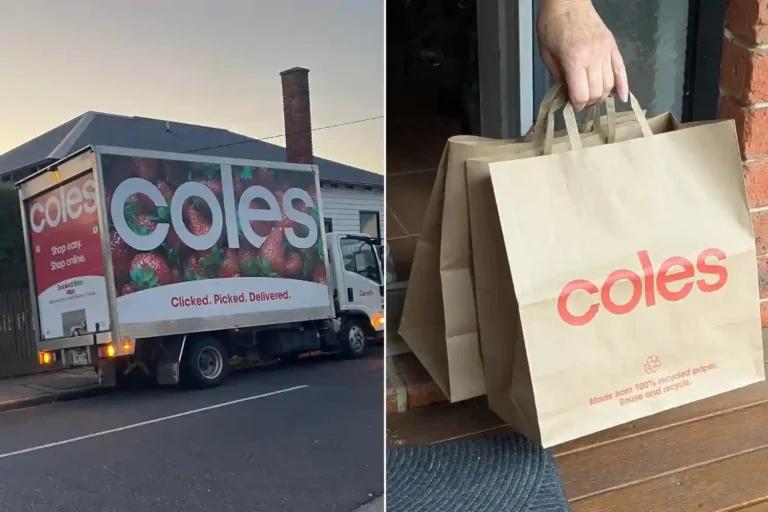

Coles customers ordering groceries online are facing a higher checkout charge after the supermarket lifted its paper bag fee for digital orders to $2. The change affects online purchases made through Coles’ delivery and Click & Collect services, adding another small but noticeable cost for shoppers who rely on the supermarket’s online platform.
The updated fee is not a charge on individual grocery items. Instead, it is applied per online order when bags are used to pack groceries. Coles previously charged $1.50 for the service, meaning the latest increase adds 50 cents to the final bill. In percentage terms, the fee has risen by about 33%.
The supermarket has said the revised charge is shown to customers at checkout before an order is placed. That detail is important because grocery pricing and extra service costs have become a sensitive issue for Australian households, particularly as food, fuel and delivery-related expenses remain under pressure.
Coles confirmed the change followed a review of its online shopping offer. The company said the bagging fee had not been updated for more than seven years, suggesting the rise reflects the growing cost of running a larger online grocery operation.
Online grocery shopping has become a much bigger part of the business for Coles. Digital sales now represent 13.1% of its supermarket operations, covering standard home delivery, Click & Collect and grocery purchases made through Uber Eats. As more customers shift to online ordering, even a small fee adjustment can affect a large number of households.
For regular online shoppers, the extra 50 cents may feel minor on one order but more meaningful over time. A household placing weekly online orders could now pay $104 a year in bagging fees if the $2 charge applies each time. That is before delivery fees, service charges or any increase in grocery prices themselves.
Coles says some customers may still be able to avoid the charge by choosing bagless delivery options where available. However, that depends on the delivery type and location, so not every shopper will have the same opportunity to remove the fee from their order.
Why the fee increase matters now
The timing of the change is likely to draw attention because Coles and other major supermarkets are under heavy scrutiny over pricing transparency. Australian shoppers have become more alert to checkout costs, promotional claims and the difference between advertised savings and real savings.
Coles recently reported supermarket sales of $9.8 billion for the three months to March. At the same time, chief executive Leah Weckert warned that the company was seeing higher supplier costs, especially across fuel, freight and packaging. Those cost pressures are directly linked to online grocery fulfilment, where products must be picked, packed and moved through delivery networks.
Packaging is a key part of the online grocery model. Unlike in-store shopping, where customers can bring their own bags, online orders often need to be sorted, protected and packed before they reach the customer. That creates extra handling and material costs for retailers.
Still, the higher fee may frustrate customers who feel supermarket bills are already rising. For many households, the concern is not only the cost of bags but the steady build-up of small charges across everyday services. A few dollars added to checkout can feel larger when grocery budgets are already stretched.
The fee change also comes after the Federal Court found Coles had misled shoppers through parts of its “Down Down” discount campaign. The Australian Competition and Consumer Commission said the court ruled that some price claims gave customers a misleading impression about the value of discounts.
Read More
That ruling has placed supermarket pricing under an even brighter spotlight. Swikblog covered the case in detail here: Coles faces huge fines after Federal Court finds ‘Down Down’ discounts misled shoppers.
What shoppers can do
Customers using Coles Online should check the checkout page carefully before confirming payment. If a bagless option is available, selecting it may remove the $2 charge. If not, the fee should be treated as part of the total cost of ordering groceries online.
The increase shows how supermarket costs are shifting beyond shelf prices. Delivery fees, packing charges and platform costs are now part of the weekly grocery decision for many Australians. For Coles, the challenge is to explain those costs clearly. For shoppers, the challenge is to compare the real final price of online convenience against the cost of shopping in-store.
The new $2 bagging fee may not be the largest cost in a grocery order, but it arrives at a time when customers are closely watching every added charge. That makes the change more than a simple bag fee update — it is another sign of how online supermarket shopping is becoming more expensive for Australian households.

Make Swikblog your go-to source on Google for reliable updates, smart insights, and daily trends.