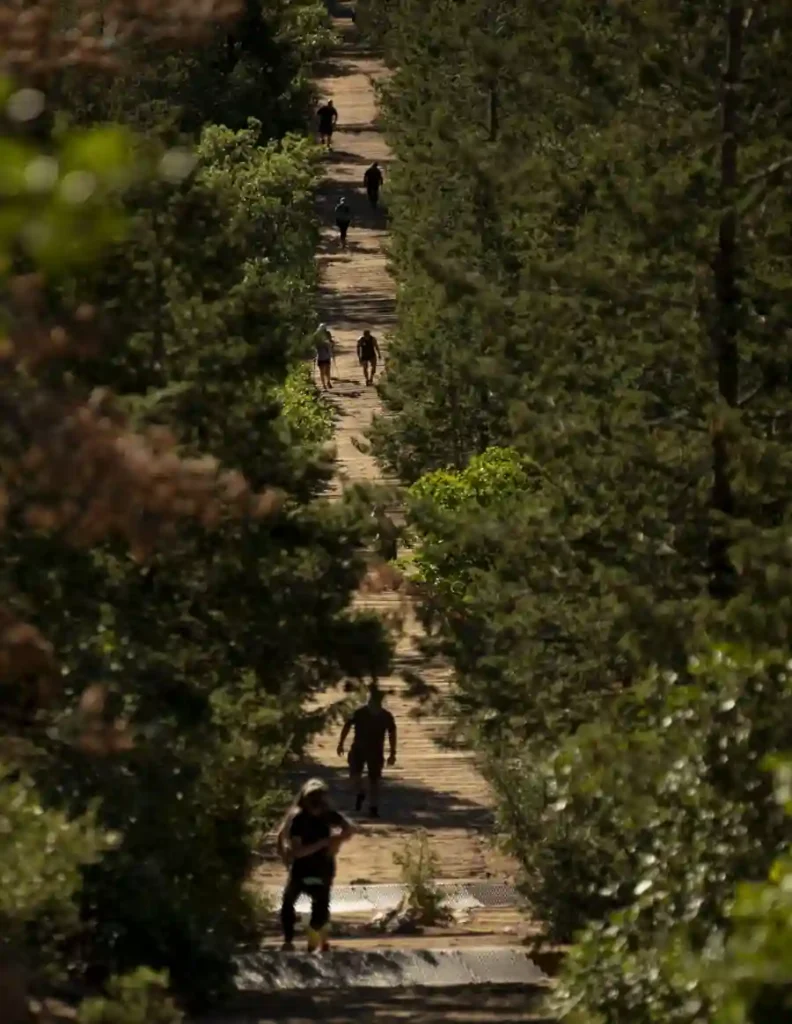

A weekend climb on Colorado’s Manitou Springs Incline ended in tragedy after a hiker suffered a medical emergency and later died despite rescue efforts, officials said.
The incident was reported Saturday morning, May 23, 2026, when the El Paso County Sheriff’s Office said emergency crews were responding to a person having breathing problems on the steep trail. The response centered near the 1,000-step rest area, a well-known stopping point on the Incline where many hikers pause during the demanding ascent.
Authorities temporarily closed the Manitou Incline while first responders and law enforcement worked at the scene. People already on the trail were told to avoid the area around the 1,000th step so crews could safely reach and assist the person in distress.
At first, city officials warned that the closure could last for about eight hours because of the rescue response. The shutdown affected hikers planning to use the trail during one of the busier parts of the day, as Saturday mornings often bring heavy foot traffic to the popular outdoor destination near Colorado Springs.
The closure, however, ended earlier than expected. The City of Manitou Springs later issued an all-clear and said the Incline had reopened after emergency operations were completed.
The update brought difficult news. The El Paso County Sheriff’s Office confirmed that the person involved in the medical emergency had died, despite efforts made during the rescue attempt. Officials thanked the emergency responders and others who helped during the incident.
The person’s identity has not been publicly released. Authorities also have not shared further details about the individual’s age, hometown, or underlying medical condition. In fatal incidents, names are often withheld until family members have been notified.
The Manitou Incline is one of Colorado’s most famous hiking challenges. Built on the path of a former cable railway, the route is known for its relentless climb, narrow steps and sharp elevation gain. According to official Manitou Springs visitor information, the Incline includes 2,744 steps and gains roughly 2,000 feet of elevation in less than one mile.
That difficulty is a major reason the trail attracts athletes, tourists, military personnel and fitness-focused hikers. But it also means the route can quickly become risky for anyone dealing with breathing problems, dehydration, fatigue, heart-related symptoms or altitude stress.
The emergency near the 1,000-step rest area highlights how challenging rescues can be on the Incline. Unlike a flat park trail, responders must navigate steep terrain, heavy trail traffic and limited space while trying to reach someone in need of urgent medical help.
Saturday’s fatal incident is a reminder that the Incline should be treated as a serious physical challenge, not just a sightseeing stop. Hikers are advised to bring water, wear proper footwear, start slowly and turn back if they experience dizziness, chest pain, unusual shortness of breath or weakness.
Read More
Visitors coming from lower elevations should be especially careful. Colorado’s altitude can make intense exercise harder, even for people who are normally active. Warm weather and crowded conditions can also make the climb more demanding.
Public safety alerts across Colorado often affect residents and travelers with little warning. Swikblog recently reported on major emergency disruptions near Denver, as officials continue urging people to pay attention to local warnings during travel and outdoor activities.
As of the latest update, the Manitou Springs Incline has reopened to the public, and officials have not reported any continuing danger on the trail. The death remains a tragic outcome from what began as a medical emergency during a busy hiking day.
For many visitors, the Incline represents endurance and achievement. After Saturday’s incident, it also stands as a reminder that even familiar and heavily used trails can carry serious risks when health problems develop far from easy access points.

Make Swikblog your go-to source on Google for reliable updates, smart insights, and daily trends.