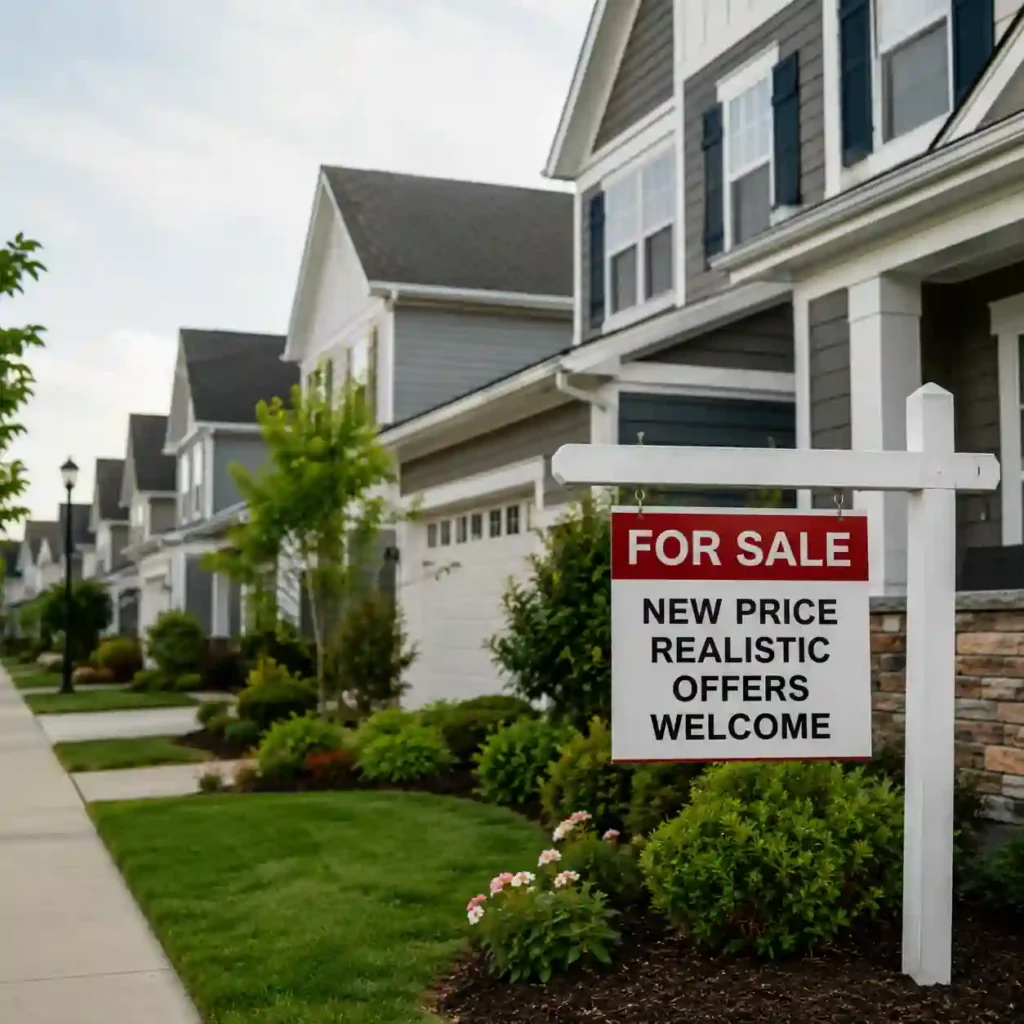

The U.S. housing market is not racing back to the boom years, but it is showing something that has been missing for a long time: discipline. Buyers are no longer chasing homes at any price, and sellers are slowly adjusting to the reality of higher mortgage rates and tighter household budgets.
That shift is helping the spring housing market regain some momentum. Contract signings have improved for three consecutive months and are now running 3.2% above last April’s level, a sign that demand remains alive even though affordability is still stretched. Completed home sales also managed a small monthly increase, showing that more deals are making it across the finish line.
The recovery is not being driven by cheaper mortgages or a sudden surge in confidence. Instead, the market appears to be benefiting from a more practical reset in pricing. Sellers who once waited for peak-pandemic offers are increasingly listing homes closer to what buyers can actually afford.
Price Expectations Are Finally Moving Closer
For much of the past two years, the housing market was stuck because buyers and sellers were looking at two different markets. Buyers saw high monthly payments, rising insurance costs and fewer reasons to overbid. Sellers saw years of home-price gains and were reluctant to lower expectations.
This spring, that gap has narrowed. The share of sellers reducing prices in April fell 1.3 percentage points from a year earlier, even as median list prices per square foot also moved lower. That combination suggests many sellers are no longer starting with unrealistic asking prices. They are pricing more carefully from the beginning, which reduces the need for later cuts and helps negotiations move faster.
That matters because price cuts often signal a disconnect. When a home sits too long and is later reduced, buyers may assume the seller misjudged the market or that demand is weak. When a home is priced correctly at the start, buyers are more likely to engage, and sellers are more likely to receive serious offers.
Realtor.com senior economist Jake Krimmel said sellers are increasingly meeting buyers at a level that reflects today’s market. That is an important change from last year, when more listings were pulled and more contracts fell apart because the two sides could not agree.
Contract cancellations and withdrawn listings have now moved back toward more normal seasonal patterns. That does not mean every deal is easy, but it does suggest fewer transactions are collapsing because of unrealistic pricing.
The improvement is especially visible in former pandemic boomtowns. In Jacksonville, Florida, the share of listings with price cuts has dropped 5.1 percentage points from a year ago. In Miami, price cuts are down 4.4 percentage points. Both markets are also seeing stronger contract activity, suggesting that buyers are willing to return when prices better reflect local conditions.
In markets like Raleigh and nearby Apex, North Carolina, agents say buyers are active but selective. Sellers are also more open to concessions, including repairs and other deal sweeteners. That is a clear difference from the pandemic period, when buyers often had little room to negotiate.
Swikblog has also covered how higher borrowing costs continue to shape buyer behavior in its report on U.S. mortgage rates and housing market pressure. That remains one of the biggest factors deciding how far this rebound can go.
Mortgage Rates Still Threaten the Rebound
The market’s biggest weakness is still affordability. Mortgage rates have moved higher in recent weeks, with the 30-year fixed rate staying above levels many buyers hoped to see by spring. Higher rates quickly increase monthly payments, especially for first-time buyers who are already dealing with elevated home prices, property taxes and insurance costs.
The National Association of Realtors continues to show that existing-home sales remain historically limited compared with stronger pre-pandemic periods, even though monthly activity has improved. That makes the current rebound cautious rather than broad-based.
Read More
Supply is another reason the market looks uneven. In Philadelphia and nearby suburbs, buyer demand remains firm because there are still too few homes available. Redfin agents in the area say buyers have to compete for quality listings, even as other parts of the country give buyers more negotiating power.
This creates a divided housing market. Some Sun Belt cities are still adjusting after huge price gains during the pandemic. Some Northeast and Midwest markets remain tight because inventory is limited. In both cases, the homes that move fastest are usually the ones priced closest to current buyer budgets.
For buyers, the message is clear: the market is less overheated than it was, but affordability is still tight. There may be more room to negotiate repairs, credits or seller concessions, but well-priced homes in low-inventory areas can still attract competition.
For sellers, the lesson is just as direct. Pricing too high can still push buyers away, especially when mortgage rates are already doing much of the damage. Homes that reflect today’s financing reality are more likely to receive serious offers and avoid long listing periods.
The U.S. housing market is rebounding because expectations are becoming more realistic, not because the affordability crisis has been solved. If mortgage rates keep rising, demand could weaken again. But for now, buyers and sellers are finally moving closer to the same price range, and that is giving the market its strongest spring footing in months.

Make Swikblog your go-to source on Google for reliable updates, smart insights, and daily trends.