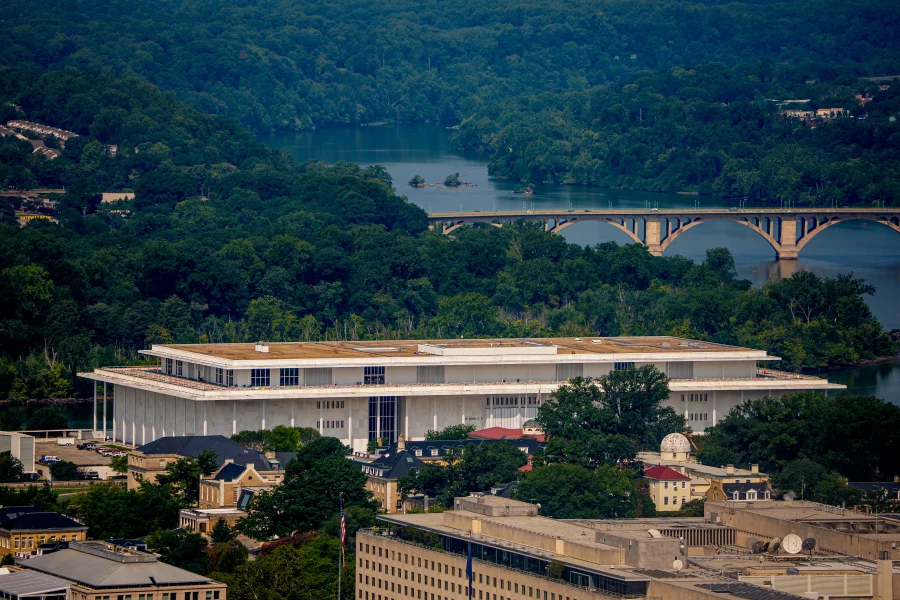

The Kennedy Center has been ordered to pay jazz musician Chuck Redd $252,479.70 in attorneys’ fees and legal costs, a striking reversal in a dispute that began when the institution threatened him with a $1 million lawsuit after he canceled a Christmas Eve performance.
Redd, a drummer and vibraphonist who had hosted the Kennedy Center’s annual holiday jazz concert for nearly 20 years, withdrew from the December 24, 2025 event after President Donald Trump’s name was added to the Washington arts complex. Redd said he would feel “profoundly uncomfortable” performing there while Trump’s name was on the building.
The Kennedy Center later sued Redd for breach of contract. D.C. Superior Court Judge Tanya M. Jones Bosier dismissed that case in June and, on August 10, ordered the center to cover most of Redd’s requested legal expenses. The Kennedy Center says it plans to appeal.
How a Christmas concert became a major legal fight
Redd had been associated with the Kennedy Center’s Christmas Eve jazz tradition for nearly two decades. The 2025 performance was a free concert, but Redd pulled out shortly after Trump’s name was installed on the building’s facade.
Richard Grenell, then president of the Kennedy Center, responded with a letter threatening to seek $1 million in damages, describing Redd’s cancellation as a political stunt.
The center eventually sued, but there was an important difference: its court complaint sought an unspecified amount of damages rather than a specific $1 million judgment.
At the heart of the case was a basic question — had Redd actually entered a binding contract? The judge found that he had not agreed to the contract the Kennedy Center claimed he breached. The fact that the proposed agreement was unsigned became a major problem for the center’s case.
The free nature of the concert also mattered when assessing financial harm. The judge found that the Kennedy Center did not appear to have suffered the financial damage needed to support its claim.
Why the Kennedy Center must pay $252,479.70
Redd challenged the lawsuit under Washington, D.C.’s Anti-SLAPP law, which provides a mechanism for addressing certain claims arising from advocacy on matters of public interest. The official District of Columbia Anti-SLAPP statute also contains provisions covering reasonable attorneys’ fees and costs.
After the lawsuit was dismissed, Redd’s lawyers sought more than $258,000. The Kennedy Center argued that the requested fees were excessive, but Judge Jones Bosier awarded $252,479.70.
The money is not compensation simply for canceling the concert or opposing Trump’s name. It covers attorneys’ fees and other costs Redd incurred defending himself against the unsuccessful lawsuit.
That distinction explains the dramatic reversal: the Kennedy Center initially threatened Redd with potential seven-figure liability, but it is now the institution facing a six-figure legal bill.
Read More
The dispute is part of a bigger Kennedy Center controversy
Redd’s case unfolded during a period of major political and organizational change at the Kennedy Center. Trump reshaped its leadership in 2025, replacing board members and becoming chairman.
His name was subsequently added to the complex, prompting objections from artists and becoming the subject of separate litigation. Trump’s name was removed from the facade in June 2026 following a federal court ruling. An appeals court later declined a request to halt the removal, while Trump remained chairman.
The center has also faced uncertainty over plans for extensive renovations and its future programming. The wider upheaval shows how institutional decisions can create consequences for contracts, employees and operations — issues that can also emerge during major corporate changes, as seen in WPP’s restructuring and job-cut plans.
Similar questions about how large organizations manage workforce and operational changes have surfaced in Coles’ 2026 job cuts and technology restructuring involving Accenture.
What readers need to know now
Three figures clarify the case. $1 million was the amount Grenell initially threatened to seek. More than $258,000 was what Redd’s legal team requested after winning dismissal. $252,479.70 is what the judge ultimately ordered the Kennedy Center to pay in fees and costs.
The Kennedy Center intends to appeal, so the financial outcome could still face further judicial review. For now, however, the order stands as the latest development in a dispute that grew from one musician’s canceled free concert into a wider legal battle involving contracts, public-interest speech and the political transformation of one of America’s most prominent cultural institutions.

Make Swikblog your go-to source on Google for reliable updates, smart insights, and daily trends.