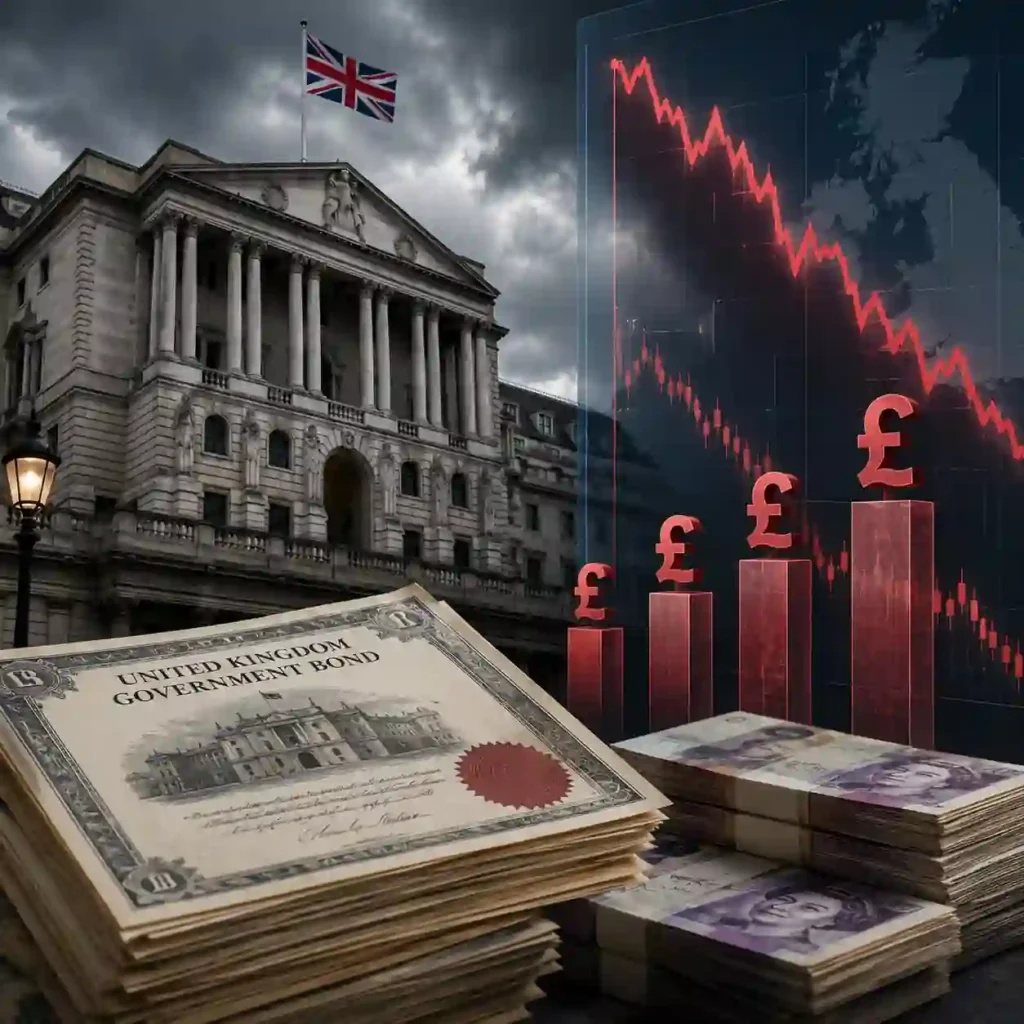

The Bank of England’s policy of actively selling government bonds has cost UK taxpayers an estimated £36 billion since 2022, according to new analysis from Deutsche Bank. The findings have intensified scrutiny of the central bank’s quantitative tightening programme as Britain’s national debt moves closer to the £3 trillion mark.
The issue centres on gilts, the UK government bonds the Bank bought during years of quantitative easing after the financial crisis and during the Covid-19 pandemic. Those purchases helped support the economy when interest rates were low, but the reversal of that policy is now creating large losses for the public purse.
Why the Bond Sales Are Costing Billions
The Bank accumulated about £875 billion of gilts through its bond-buying programme. Most major central banks reducing their balance sheets have allowed bonds to mature naturally, but the Bank of England has actively sold gilts before maturity, immediately crystallising losses when market prices are weak.
Deutsche Bank said some gilts are being sold back to investors at discounts of up to 50%. Higher inflation, political uncertainty and changing interest-rate expectations have pushed gilt yields higher, which has driven bond prices lower.
The largest losses have come from long-dated bonds. Gilts with maturities of more than 20 years have generated about £22 billion in losses since active sales began in 2022. Bonds with maturities of up to 20 years account for roughly £8 billion, while shorter-term gilts of up to seven years have produced around £5.6 billion in losses.
Because the Treasury indemnifies the Bank’s Asset Purchase Facility, those losses are ultimately covered by taxpayers. Deutsche Bank economist Sanjay Raja said the taxpayer cost of the programme has increased by about £13 billion since March alone, after geopolitical tensions and inflation concerns pushed up market expectations for interest rates.
Read More
Pressure Builds on the Bank and Treasury
The figures have added to political pressure on the Bank of England and the Treasury. Critics argue that selling bonds while prices are depressed worsens the government’s balance sheet and adds pressure at a time when public finances are already stretched.
A recent Bank of England working paper estimated that asset sales may have increased UK borrowing costs by almost half a percentage point. The Bank’s own estimates have also suggested taxpayers could face around £175 billion of lifetime losses from the wider money-printing programme after the end of the ultra-low interest-rate era.
Reform UK deputy leader Richard Tice called the policy a waste of taxpayers’ money and said active sales should stop immediately. Labour figures have also questioned the strategy, with allies of Andy Burnham and Louise Haigh arguing that policymakers should avoid decisions that actively weaken the government’s balance sheet.
The rise in gilt yields reflects a wider shift in global bond markets, where investors have been reassessing inflation and interest-rate expectations. Similar pressures have weighed on equity markets in recent weeks, contributing to the volatility highlighted in our report on Dow futures and market reaction to rising energy prices.
The debate now places the Bank’s quantitative tightening strategy under sharper public and political examination. Supporters of balance-sheet reduction argue that unwinding emergency-era stimulus is necessary, while critics say the pace and method of active gilt sales are forcing taxpayers to absorb losses too quickly.
Source: IndexBox report on Bank of England gilt sales

Make Swikblog your go-to source on Google for reliable updates, smart insights, and daily trends.