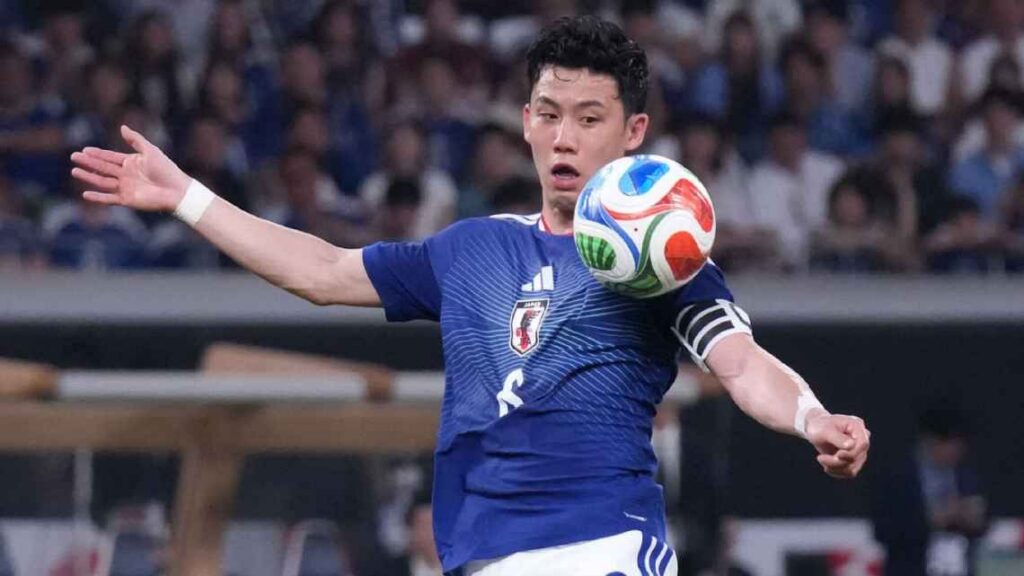

Japan’s bid to make a deep run at the 2026 FIFA World Cup has been dealt a significant blow after captain Wataru Endo withdrew from the tournament because of injury and announced his retirement from international football. The Liverpool midfielder was expected to provide leadership and stability for Hajime Moriyasu’s side, but his absence now creates one of the biggest storylines surrounding Japan ahead of its opening match against the Netherlands.
While injuries before major tournaments are common, losing a captain just days before kickoff presents a different challenge. Japan must now adjust both tactically and mentally as it prepares for a demanding Group F campaign that also includes Tunisia and Sweden.
How Japan Lost Its Most Experienced Midfielder
Endo’s problems began in late February when he suffered a foot injury while playing for Liverpool. Surgery followed, but there was enough optimism around his recovery for him to earn a place in Japan’s final 26-man World Cup squad.
The situation changed after Japan’s warm-up victory over Iceland on May 31. Endo managed only 45 minutes before experiencing discomfort and being substituted. Although Japan’s coaching staff initially remained hopeful, the midfielder’s recovery did not progress as required for World Cup competition.
With the Netherlands opener approaching rapidly, Japan decided not to risk carrying a player who could not contribute at full fitness. Borussia Mönchengladbach forward Shūto Machino was subsequently added to the squad.
The change adds another attacking option but does not solve the void left in midfield, where Endo’s experience and defensive awareness were central to Japan’s structure.
Why Endo’s Exit Matters More Than A Squad Change
Endo’s importance extended far beyond statistics. Since becoming captain after the 2022 World Cup in Qatar, he had emerged as the team’s emotional leader and tactical organizer.
Modern international football often hinges on midfield control, particularly against elite opponents. Endo’s ability to break up attacks, maintain possession and guide younger teammates made him one of the first names on Moriyasu’s team sheet.
His departure comes at a difficult moment because Japan is already dealing with the absence of injured stars Kaoru Mitoma and Takumi Minamino. Losing three influential players before the tournament increases pressure on the next generation of Japanese talent.
Questions surrounding leadership are also unavoidable. Ajax defender Kō Itakura is widely viewed as a potential successor, while Takefusa Kubo and Ritsu Dōan have both worn the captain’s armband during the past year.
The Legacy Endo Leaves Behind
Endo retires from international football with 73 appearances and four goals after making his debut in 2015. Over the past decade, he became one of the defining figures of a Japanese side that consistently challenged stronger football nations on the world stage.
His leadership coincided with a period in which Japan’s ambitions evolved. Reaching the knockout stages was no longer considered enough. Instead, discussions increasingly focused on how far the team could progress against the world’s elite.
That shift in mentality has helped transform expectations around Japanese football. Similar leadership transitions have shaped international teams throughout football history, particularly when established captains depart shortly before major tournaments.
Readers tracking the wider impact of injuries and leadership changes before major competitions can follow our latest football news and tournament analysis.
Can Japan Still Challenge In Group F?
Despite the setback, Japan remains one of Asia’s strongest representatives at the World Cup. The squad still contains proven performers playing across Europe’s top leagues, including several players entering the prime years of their careers.
The challenge will be adapting quickly without the midfielder who connected defense and attack while providing leadership during high-pressure moments.
Against the Netherlands, Japan will likely face immediate questions about midfield balance and defensive organization. Tunisia and Sweden present different challenges, but all three matches will test the squad’s ability to respond without its captain.
Read More
Endo’s retirement announcement reflected confidence in the group’s future rather than disappointment over his own situation. That belief now becomes part of Japan’s task in North America. The team enters the tournament without one of its most influential players, but with an opportunity to demonstrate that the foundations built during Endo’s era remain strong enough to compete on football’s biggest stage.
For official tournament schedules, standings and team updates, visit the FIFA official website.

Make Swikblog your go-to source on Google for reliable updates, smart insights, and daily trends.