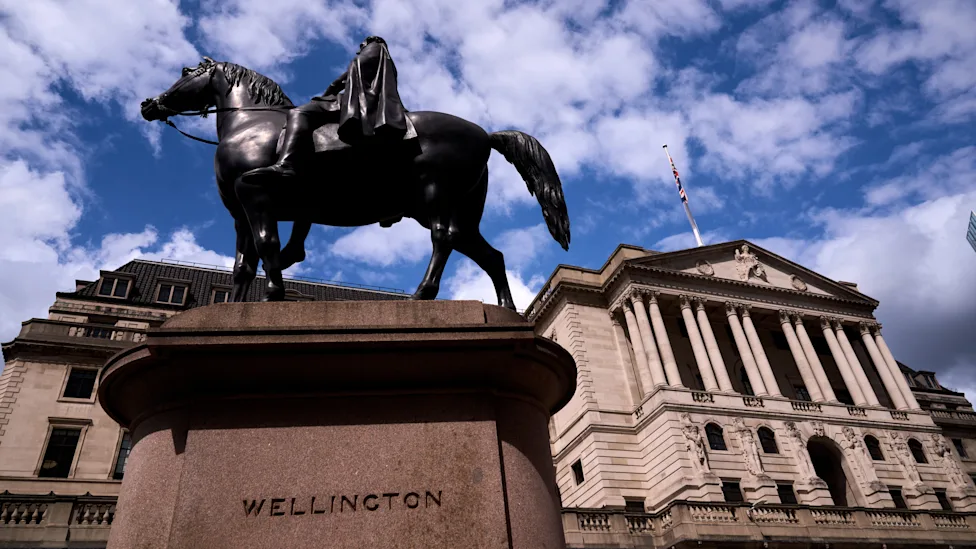

The Bank of England is expected to keep interest rates unchanged at 3.75% when policymakers announce their latest decision on Thursday, a move that reflects the increasingly difficult choices facing central banks in 2026.
At first glance, a rate hold may appear straightforward. But behind the decision lies a growing conflict between two major economic forces. On one side, higher energy costs linked to tensions in the Middle East are threatening to push inflation higher again. On the other, fresh economic data suggests the UK’s growth engine is beginning to lose momentum.
The result is a policy dilemma that could shape borrowing costs, mortgage rates and business confidence for the remainder of the year.
Why policymakers are expected to pause
Most economists believe the Bank of England’s Monetary Policy Committee (MPC) will leave rates at 3.75% rather than increase borrowing costs further.
The case for caution strengthened after official figures showed the UK economy contracted by 0.1% in April, marking the first monthly decline in eight months. The slowdown highlighted growing concerns that businesses and consumers are becoming more cautious amid global uncertainty and elevated costs.
For policymakers, raising rates while economic activity weakens could create additional pressure on households and businesses already dealing with higher financing expenses.
The expected hold also marks a significant shift from the aggressive tightening cycle that pushed Bank Rate to a peak of 5.25%. While rates have since moved lower, recent events have complicated expectations for further reductions.
How the Middle East conflict is influencing inflation
The outlook changed sharply after conflict involving the US, Israel and Iran increased concerns about global energy supplies. Rising oil and energy prices have already affected fuel costs and could contribute to higher household energy bills later this year.
For central banks, energy shocks are particularly challenging because they can quickly spread through the wider economy. Transport costs rise, businesses face higher operating expenses and consumers often see the impact reflected in everyday prices.
Although inflation had been moving closer to the Bank of England’s target, renewed pressure from energy markets raises the possibility that progress could slow during the second half of 2026.
The concern is not only about current prices. Policymakers are focused on preventing temporary energy-related increases from becoming embedded in wages, services and broader inflation expectations.
Economists see a more difficult road ahead
While a rate hold is widely expected this month, economists increasingly believe future decisions may become more challenging.
Suren Thiru, chief economist at ICAEW, recently suggested that policymakers are likely to maintain a watchful approach given weak economic data and heightened uncertainty. However, he also noted that inflation could become a much bigger concern if energy-related pressures continue through the summer.
Deutsche Bank chief UK economist Sanjay Raja has similarly argued that the Bank of England is walking a narrow path between weaker labour market conditions and emerging price pressures. According to Raja, the longer the energy shock persists, the greater the likelihood that policymakers may need to reconsider their current stance.
That does not necessarily mean a rate increase is imminent. However, market expectations have shifted noticeably compared with earlier forecasts that focused primarily on additional rate cuts.
What other central banks are doing
The Bank of England is not alone in facing difficult decisions. The European Central Bank recently raised interest rates for the first time in almost three years, citing inflation pressures associated with developments in the Middle East.
Meanwhile, the US Federal Reserve is also preparing to announce its latest policy decision, with investors widely expecting rates to remain unchanged.
Together, these developments show how quickly the global monetary policy narrative has evolved. Earlier in the year, attention was focused on when central banks would cut rates. Today, investors are increasingly asking whether inflation risks could delay those plans.
What the decision means for borrowers and savers
For homeowners with variable-rate mortgages, a hold at 3.75% would provide short-term stability. Businesses dependent on financing would also avoid an immediate increase in borrowing costs.
However, the outlook beyond this meeting remains uncertain. If inflation accelerates because of sustained energy price increases, policymakers may have fewer options available to support growth.
The challenge facing households is that even when inflation slows, living costs can remain elevated because prices are rising from an already high base. This helps explain why the cost of living can remain high even when inflation falls, an issue that continues to affect consumers across the UK.
Read More
For investors and financial markets, Thursday’s announcement will be about more than the headline rate. The MPC’s language, voting split and assessment of future inflation risks could provide the strongest clues yet about the direction of UK monetary policy during the rest of 2026.
Official updates on Bank Rate decisions and monetary policy forecasts are available through the Bank of England.

Make Swikblog your go-to source on Google for reliable updates, smart insights, and daily trends.