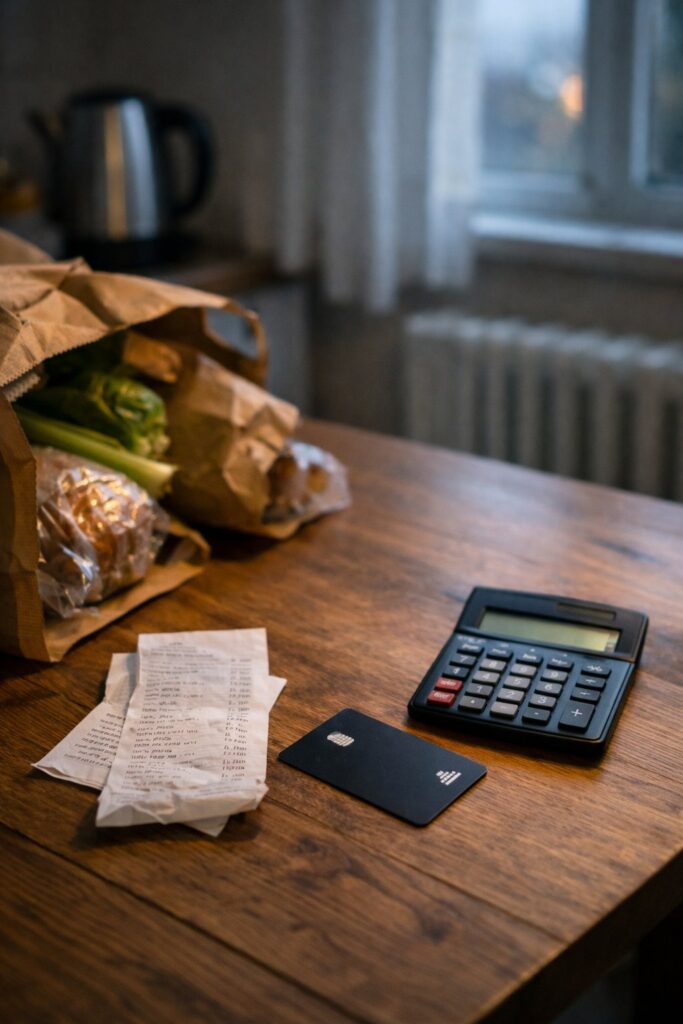

When a headline says “inflation is falling”, it sounds like permission to breathe out. Fewer price shocks, a little more room in the budget, maybe even the sense that the worst is behind us. But for plenty of households, the lived reality doesn’t match the statistic. The supermarket shop still stings. Rent renewals still land with a thud. Council tax and bills still take their turn at the top of the pile.
So what’s going on? In November, the UK’s Consumer Prices Index (CPI) rose 3.2% compared with a year earlier, down from 3.6% in October. That is a clear deceleration, and it matters for interest rates, wages negotiations, and confidence. But it doesn’t automatically translate into “things are cheaper”. In fact, it often does the opposite: it exposes the awkward truth that prices can keep rising even as inflation “falls”.
The simplest way to think about it is this: inflation is the speed of price increases, not the level of prices. If inflation drops from 3.6% to 3.2%, prices are still going up — just a little more slowly than before. For families who’ve watched everyday costs climb over several years, “slower” can still feel like “unaffordable”, especially when budgets are already stretched thin.
There’s also the question of which prices are doing the slowing. The Office for National Statistics said the latest drop was driven by easing growth in food prices, alongside declines in categories such as clothing and footwear, and effects from last year’s tobacco price jump rolling out of the annual comparison. That kind of mix can make the national number look healthier, while leaving the most stubborn household pressures largely intact. (You can read the ONS bulletin here: Consumer price inflation, UK: November 2025.)
Food matters because it’s one of the most frequent purchases most of us make — a constant reminder of what money no longer buys. Even if food inflation is easing, many items are still noticeably higher than they were not long ago. And because we buy them weekly (or daily), the pain is more immediate than, say, a slightly cheaper dress or a once-a-year change in some discretionary spend.
Then there’s services inflation — a closely watched measure because it tends to reflect the domestic economy: labour costs, rents, hospitality, repairs, childcare and day-to-day “life admin”. In November it edged down to 4.4%. That’s lower than before, but it is still well above the Bank of England’s 2% target for overall inflation, and it matters because services are where households often feel trapped: you can switch a brand in the supermarket, but you can’t always negotiate a rent rise or cancel childcare.
The other reason the cost of living still feels heavy is that pay packets and job security shape how prices feel. If your income is rising at the same pace as prices — or faster — inflation is still irritating, but manageable. If wages are cooling and work feels less secure, the same inflation rate feels harsher. Recent labour-market data pointed to a softening backdrop: unemployment at 5.1% in the three months to October, and private-sector pay growth slipping below 4% for the first time since 2020. (ONS summary here: Labour market overview, UK: December 2025.)
This is why the conversation now quickly turns to the Bank of England. Falling inflation gives policymakers more room to consider rate cuts, and markets have been leaning that way ahead of the next decision. But rate cuts — if they come — won’t reach everyone equally or instantly. Borrowers on variable-rate mortgages and some tracker deals can feel relief relatively quickly. People remortgaging may see offers improve over time. But renters, many of whom have faced sharp increases in recent years, are less directly “rescued” by a quarter-point change. And households without meaningful savings don’t benefit much from shifts in deposit rates either.
There’s a second complication that rarely makes it into tidy inflation headlines: fear and uncertainty change behaviour. If you’ve lived through a period where bills seemed to jump overnight, you don’t stop bracing just because the curve bends. Many families respond by tightening spending anyway — cutting treats, delaying purchases, living more cautiously. That can make the economy look weak even as inflation cools, and it reinforces the sense that things are still “bad” even when the statistics improve.
It also helps to remember that the official inflation basket is broad, and household budgets are personal. A family with children will feel food, transport and childcare intensely. A renter in a high-demand area will feel housing first, second and third. Someone with long-term health needs will notice costs and access issues the CPI doesn’t fully capture. The national measure is useful — but it can never be a perfect mirror of every kitchen table.
So what should readers watch next? First, whether services inflation continues to drift lower — because that’s a sign that domestic pressures are easing, not just the result of one-off category swings. Second, whether wage growth stabilises without the labour market worsening, because the cost of living is as much about income as it is about prices. And third, how quickly any shift in Bank Rate filters through to the deals households actually face — mortgages, consumer credit, and (more slowly) the wider economy.
Inflation falling is good news in the way a storm easing is good news: it can be the difference between damage and disaster. But it doesn’t rebuild what’s already been battered. For many households, the cost of living still feels high because the price level remains elevated, the most “felt” categories move slowly, and wages and security haven’t offered the kind of confidence that makes a 3.2% headline feel like relief.
You may also like: Universal Studios UK Gets Government Green Light — Here’s What It Means for Bedfordshire and the Nation

Make Swikblog your go-to source on Google for reliable updates, smart insights, and daily trends.