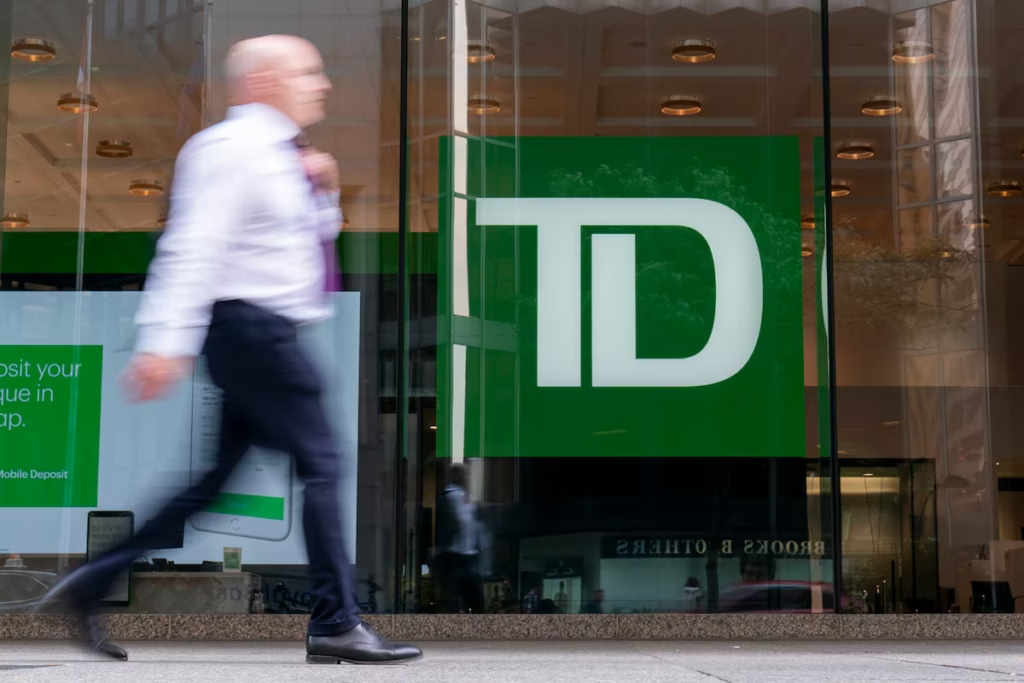

TD Bank is facing a fresh governance test after a Reuters report said the Canadian lender plans to use employee monitoring software in parts of its financial crimes and risk management operations. The report has placed Toronto-Dominion Bank (NYSE: TD) back in the spotlight at a time when investors are already watching how the bank strengthens compliance, improves controls and protects its reputation after recent anti-money laundering setbacks in the United States.
The issue is not expected to immediately change TD’s earnings outlook. Still, it raises a bigger question for shareholders: can a major bank improve productivity and regulatory oversight without creating new concerns around employee privacy, morale and internal trust?
What TD Is Reportedly Introducing
According to Reuters, TD told some employees in its financial crimes and risk management teams that it plans to deploy WorkiQ, a workplace analytics platform developed by ActiveOps. The software is designed to help managers understand how employees spend time across digital systems and where operational delays may exist.
The tool will reportedly track activity across browsers, internal chat applications and meeting platforms. Reuters said its report was based on a recording of an internal team call and a document shared with employees.
TD has said the technology is not artificial intelligence and described the use of automated workflow tools as standard practice across the industry. The bank said the purpose is to improve visibility into workloads, team capacity and resource allocation, while adding that safeguards are in place to protect employee privacy.
Why Employees Are Asking Privacy Questions
The employee response is what gives the story wider importance. Staff reportedly raised questions about consent, data usage, workplace privacy and whether information collected by the software could be used in performance reviews.
Those concerns are not unusual in a hybrid-work environment. Since the pandemic, many large companies have searched for ways to measure productivity outside traditional office settings. But employees often want clear limits on what is tracked, how long data is stored and whether activity records could affect promotions, reviews or job security.
An internal FAQ reportedly addressed questions about internet use during lunch breaks and how much unaccounted-for time would be acceptable. That detail shows why the rollout is sensitive. Once workers begin asking how much of the day must be measurable, the discussion moves beyond technology and into workplace culture.
The Compliance Backdrop Matters
TD’s financial crimes and compliance functions have become especially important after the bank faced major U.S. anti-money laundering penalties. Since then, the lender has been expanding oversight efforts, adding compliance resources and working to improve risk management systems.
From management’s perspective, WorkiQ could help identify manual bottlenecks, overloaded teams and inefficient processes inside departments that carry heavy regulatory responsibility. If used carefully, workflow data may support better staffing decisions and stronger operational control.
The risk is that employees in these sensitive roles may view the software as surveillance rather than support. Financial-crime investigators and risk professionals already work under pressure, and morale inside those teams matters because their work directly affects the bank’s regulatory standing.
Why This Matters for TD Stock
For TD stock, the immediate market impact may be limited. Investors will continue to focus on loan growth, interest-rate trends, credit quality, capital strength, dividend stability and progress with regulators in Canada and the United States.
However, governance issues can influence long-term investor confidence. A bank recovering from compliance failures must show that stronger oversight is matched by a healthy internal culture. Employee monitoring, if poorly communicated, can become a reputational problem even when the original goal is operational improvement.
Investors following wider financial-market developments and banking-sector sentiment can track more stock market updates as regulatory scrutiny, compliance spending and technology investment continue to shape major financial institutions.
A Wider Corporate Trend
TD is not alone in facing questions about workplace analytics. Large companies across banking, technology and professional services are testing new ways to measure productivity in hybrid workplaces. Some employers argue that these tools improve efficiency and employee well-being by identifying workload pressure. Critics argue that excessive tracking can damage trust and increase stress.
For TD, the timing makes the issue more important. Because the bank is already trying to rebuild confidence around compliance, even an internal productivity tool can become part of a larger governance story.
Read More
What Investors Should Watch Next
The key issue now is implementation. TD will need to clearly explain what WorkiQ tracks, what it does not track, how employee data is protected and whether the information will be used for performance management.
If the rollout remains transparent and limited to workflow improvement, investors may treat it as part of TD’s broader compliance rebuild. If employee concerns grow, the story could become another reputational challenge for a bank already under close regulatory and shareholder attention.
For now, the Reuters report does not change TD’s financial fundamentals overnight. But it does add a new layer to the TD stock story: the bank must prove it can strengthen oversight and productivity without weakening trust inside the teams responsible for managing risk.

Make Swikblog your go-to source on Google for reliable updates, smart insights, and daily trends.