
Federal student loan borrowers have a limited-time opportunity to reduce the cost of their education debt as the U.S. Department of Education prepares to roll out a significantly larger autopay incentive beginning July 1, 2026.
Eligible borrowers who enroll in automatic payments can receive a 1% interest rate reduction on qualifying federal student loans, up from the longstanding 0.25% autopay benefit. While the change may appear small at first glance, the impact can be meaningful for borrowers carrying balances for years or even decades.
The incentive arrives during a period of major transition for the federal student loan system, with repayment plans changing, SAVE borrowers facing a mandatory move to new options, and policymakers looking for ways to encourage consistent repayment.
A Bigger Autopay Benefit Than Borrowers Have Seen Before
For years, federal student loan borrowers who signed up for automatic payments received a modest 0.25% interest rate reduction. Beginning July 1, that discount will increase to a full 1% for eligible borrowers.
The Department of Education says borrowers already enrolled in autopay do not need to take any additional action. Their accounts will automatically receive the enhanced reduction.
Borrowers who are not currently using autopay must enroll by Sept. 30, 2026, to qualify. Because the benefit begins on July 1, enrolling sooner could maximize the amount saved during the program period.
Who Qualifies for the 1% Student Loan Interest Rate Reduction?
The temporary benefit applies to eligible Federal Direct Loans that originated after July 1, 2012. Student borrowers and parents with qualifying federal loans can both take advantage of the program.
The discount is available across multiple repayment options, including income-driven repayment plans, the Repayment Assistance Plan and the Tiered Standard Plan.
As long as a borrower has an eligible loan and is actively repaying through autopay, they can generally qualify for the reduced rate.
SAVE Plan Borrowers Face Additional Requirements
One group of borrowers should pay especially close attention to the rollout.
The SAVE repayment plan is being phased out, meaning borrowers currently enrolled in SAVE cannot simply activate autopay and receive the discount. Instead, they must first select a new eligible repayment plan.
Loan servicers are expected to begin notifying SAVE borrowers about the transition beginning July 1. Borrowers will have 90 days to choose another repayment option before being moved into a standard repayment structure if no action is taken.
Understanding these deadlines is increasingly important as several federal student loan changes take effect this summer, affecting repayment options for millions of borrowers.
Why the Department of Education Is Expanding the Discount
The larger interest rate reduction is intended to encourage more borrowers to make on-time payments through automatic withdrawals.
According to Department of Education data, only about 40% of borrowers currently making payments are enrolled in autopay. Before the pandemic-era payment pause, that figure was approximately 80%.
Officials believe a stronger financial incentive could help improve repayment performance while lowering borrowing costs for households dealing with student debt.
Automatic payments also reduce the risk of missed due dates, helping borrowers avoid delinquency and potential credit-related consequences.
What Happens if Your Student Loans Are in Default?
Borrowers with loans currently in default cannot immediately access the new interest rate benefit.
To qualify, they must first restore their loans to good standing. One option is consolidating defaulted loans into a Direct Consolidation Loan. Borrowers may also become eligible by making three consecutive full payments before completing consolidation.
After returning to active repayment status, eligible borrowers can enroll in autopay and receive the reduced rate.
How Much Money Could the Discount Save?
The exact savings will vary based on loan balance, repayment plan and interest rate, but even a temporary reduction can make a noticeable difference.
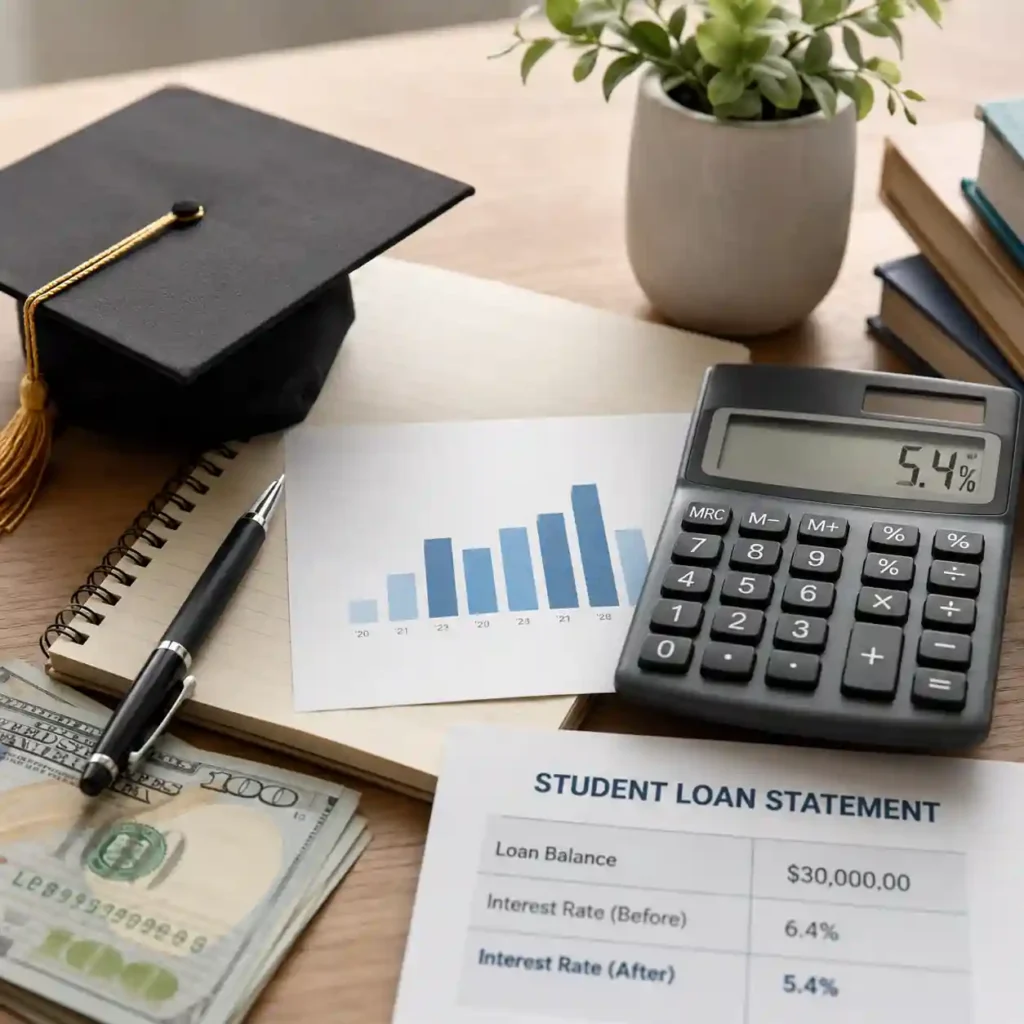
Consider a borrower with $30,000 in federal student loans carrying a fixed 6.4% interest rate. Under the new incentive, that rate could fall to 5.4% through June 30, 2028.
Using a 15-year repayment example, monthly payments could decline from roughly $260 to about $243. More importantly, a greater share of each payment would go toward reducing the principal balance instead of covering interest charges.
Over the two-year discount period, that shift could save hundreds of dollars in interest costs while helping borrowers pay down debt faster.
Read More
Important Dates Borrowers Should Remember
July 1, 2026: Enhanced 1% autopay interest rate reduction begins.
Sept. 30, 2026: Deadline for borrowers to enroll in autopay and qualify for the temporary benefit.
June 30, 2028: Scheduled expiration date for the enhanced discount.
For borrowers already facing higher living costs and changing repayment rules, the expanded autopay incentive offers a relatively simple way to reduce interest expenses without refinancing into a private loan. Reviewing eligibility and enrollment options before the September deadline could help borrowers capture the full value of the temporary rate reduction.
Borrowers can review official eligibility requirements and program details through the Federal Student Aid website.

Make Swikblog your go-to source on Google for reliable updates, smart insights, and daily trends.