Latest Update
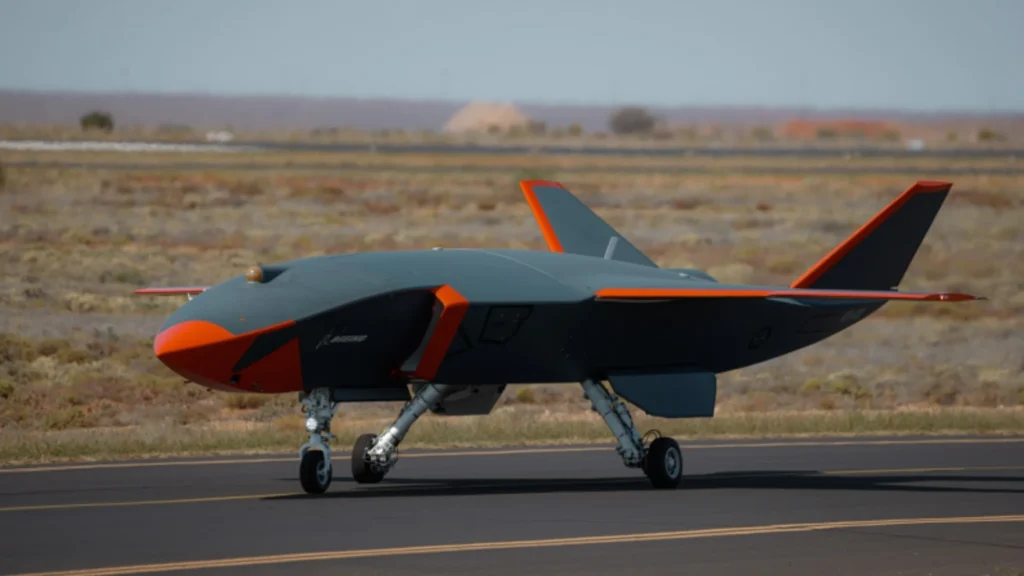
Canada and Australia have formally announced the radar partnership, confirming that the A$2.5 billion JORN agreement will serve as the first major phase of Canada’s Arctic over-the-horizon radar program under its broader NORAD modernization plan. The project is targeting an initial operational capability by the end of 2029, with Australian defence company BAE Systems Australia expected to play a central role in designing, integrating and supporting the new system. During the announcement, Canadian officials also reviewed Australia’s MQ-28 Ghost Bat autonomous aircraft, highlighting that defence cooperation between the two countries could expand beyond radar technology in the coming years.
Canada has officially chosen Australia’s Jindalee Operational Radar Network (JORN) technology as the foundation of a new Arctic surveillance system under a landmark A$2.5 billion defence agreement. The project represents Australia’s largest defence export ever and is expected to become a key part of Canada’s effort to strengthen long-range monitoring across its northern territory as the Arctic grows in strategic importance.
Rather than purchasing a conventional radar installation, Ottawa is investing in an advanced over-the-horizon radar capability that can detect aircraft and ships thousands of kilometres away. The agreement forms an important stage of Canada’s wider modernization of the North American Aerospace Defense Command (NORAD), which is focused on improving early warning against emerging air and maritime threats.
What is JORN and why is it different?
The Jindalee Operational Radar Network, better known as JORN, is Australia’s long-range over-the-horizon radar system. Unlike conventional radar, which can only detect objects within the Earth’s line of sight, JORN sends high-frequency radio waves toward the ionosphere. Those waves reflect back to Earth, allowing operators to monitor aircraft and ships far beyond the normal radar horizon.
Australia’s network includes radar facilities in Queensland, the Northern Territory and Western Australia, linked through sophisticated command, communications and processing systems. Under suitable atmospheric conditions, the technology can monitor activity roughly 1,000 to 3,000 kilometres away, providing valuable information for border protection, maritime surveillance, defence operations and search-and-rescue missions.
Its performance relies on decades of scientific research, advanced software and continual analysis of ionospheric conditions rather than simply larger antennas. That operational experience is one of the reasons Canada selected Australian technology for its Arctic surveillance plans.
Why Canada is investing in Australian radar
Canada’s Arctic spans millions of square kilometres, making it one of the most challenging environments in the world for military surveillance. Long distances, extreme weather and limited infrastructure have increased demand for technology capable of monitoring activity much earlier than traditional radar systems.
The new radar network will support Canada’s contribution to NORAD while improving awareness across northern approaches. According to the Department of National Defence, strengthening Arctic surveillance remains one of the country’s highest defence priorities as the region becomes increasingly important for global security.
Canada has committed around C$6 billion to its wider Arctic over-the-horizon radar program. The Australian agreement is the first major implementation stage, with an initial operational capability expected by the end of 2029. Engineers will adapt the system specifically for Arctic conditions instead of directly replicating Australia’s existing network.
A record defence export for Australia
For Australia, the agreement marks an important milestone. JORN has long been regarded as one of the country’s most strategically sensitive defence capabilities, and exporting the technology demonstrates growing confidence in Australia’s domestic defence industry and its role among allied nations.
Deputy Prime Minister and Defence Minister Richard Marles has described the radar technology as highly sensitive, noting that Australia would only share such capability with trusted partners. Additional information about Australia’s defence programs is available from the Australian Department of Defence.
BAE Systems Australia, which currently supports Australia’s operational JORN network, is expected to play a leading role in delivering the Canadian project. The agreement is expected to generate work across engineering, software development, systems integration and long-term maintenance throughout the life of the program.
Why the Arctic has become strategically important
The Arctic has become an increasingly important region for defence planning as commercial shipping expands, sea ice changes and military activity grows across northern waters. Governments are investing heavily in technologies that provide earlier warning of aircraft, ships and other potential threats approaching national territory.
Unlike conventional radar networks that require numerous installations, over-the-horizon radar can monitor enormous areas from a relatively small number of sites. That makes it especially valuable for countries with vast remote territories such as Canada and Australia.
Australia has also expanded defence cooperation with several international partners in recent years as demand grows for advanced surveillance and security technologies. More global defence, technology and geopolitical developments are available on the latest news homepage.
Broader defence cooperation is already emerging
The radar agreement has encouraged wider discussions about Australian defence technology. During his visit, Canada’s Secretary of State for Defence Procurement, Stephen Fuhr, also inspected Boeing Australia’s MQ-28 Ghost Bat autonomous aircraft, reflecting Canada’s interest in learning more about Australia’s growing defence capabilities.
Although Canadian officials have not announced plans to acquire the aircraft, the visit highlights how the JORN agreement could create opportunities for broader defence collaboration in areas including autonomous systems, surveillance technologies and future military innovation.
Looking beyond the radar project
The agreement extends beyond supplying radar equipment. It establishes a long-term partnership in which Australian and Canadian specialists will work together to develop, adapt and support one of the world’s most advanced over-the-horizon radar systems for Arctic conditions.
For Canada, the investment is expected to strengthen northern surveillance and improve early warning across a rapidly evolving strategic region. For Australia, the deal transforms decades of research and operational experience into a record-setting defence export while reinforcing the country’s reputation as a trusted supplier of advanced military technology for allied nations.

Make Swikblog your go-to source on Google for reliable updates, smart insights, and daily trends.