
Updated: July 2, 2026
Australia’s property market is showing fresh signs of slowing after auction results weakened across the country’s major cities. New figures suggest buyers are becoming more cautious, sellers are adjusting expectations, and higher borrowing costs continue to influence housing decisions despite the Reserve Bank of Australia leaving interest rates unchanged this month.
Preliminary data showed auction clearance rates across Australia’s combined capital cities slipped to 47.4% during the latest reporting week. Property analysts expect the final clearance rate to settle in the low-40% range once delayed results are included, making it one of the weakest auction performances since the disruption caused by the COVID-19 pandemic in 2020.
The latest figures mark a noticeable change from earlier this year, when clearance rates remained close to 60% for most weeks despite higher interest rates.
Auction market sends an early warning signal
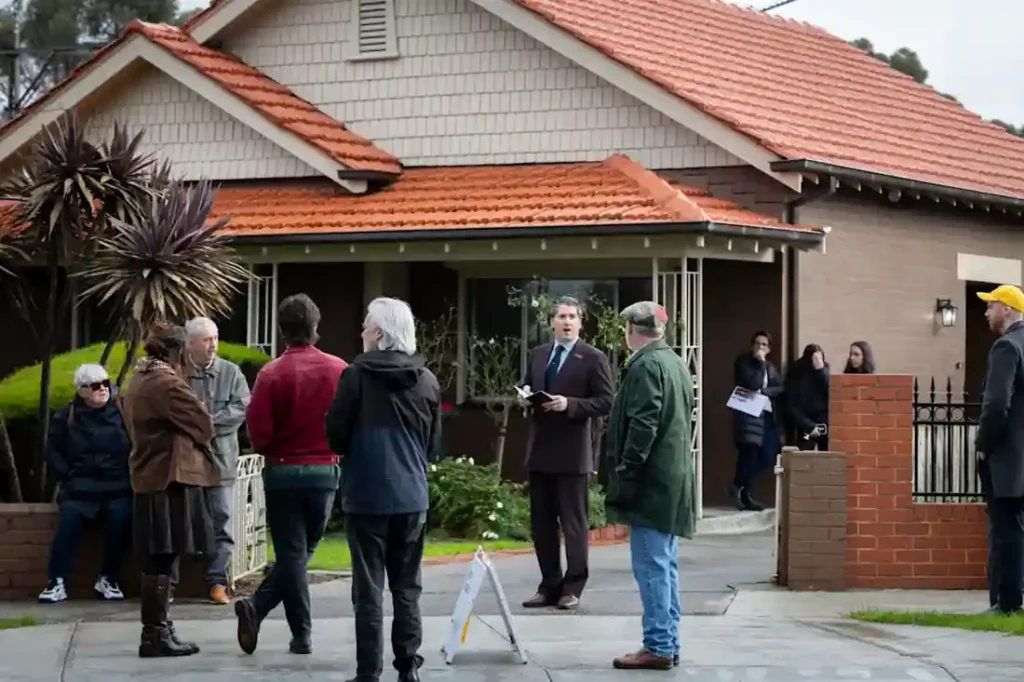
Auction clearance rates are closely watched because they provide one of the earliest indications of changing housing market conditions. When more homes sell under the hammer, competition is generally stronger. When fewer properties attract successful bids, it often points to slowing demand and softer price momentum.
The latest data suggests confidence has weakened on both sides of the market. About 23.6% of scheduled auctions were withdrawn before taking place, while almost 48% of successful sales happened before auction day. Those trends indicate many vendors are choosing private negotiations rather than risking weaker public auction results.
Auction volumes also eased. Capital cities recorded 1,869 auctions, down 10.8% from the previous week. Although fewer listings can sometimes improve clearance rates, buyer demand softened enough to outweigh the lower supply.
Higher borrowing costs continue to affect demand
The Reserve Bank of Australia (RBA) kept its cash rate unchanged this month, but households are still dealing with the impact of three interest rate increases during 2026. Higher mortgage repayments have reduced borrowing capacity for many buyers, particularly first-home purchasers and investors.
Uncertainty has also increased following the Albanese government’s proposed housing tax reforms. The package includes a minimum 30% tax on capital gains from July 2027 and plans to remove negative gearing. Supporters argue the changes could improve housing affordability over time, while critics believe they may discourage investment and reduce future housing supply.
These policy discussions come after decades of rapid property growth. Australian residential property values have risen by around 400% since 2000, leaving many aspiring homeowners facing record affordability challenges even as market activity begins to cool.
Recent housing data reflects the scale of the market, with Australia’s $12.3 trillion housing market remaining one of the country’s largest sources of household wealth despite the current slowdown.
Sydney and Melbourne remain in focus
Sydney and Melbourne continue to shape national housing sentiment because they account for a large share of Australia’s property transactions.
Louis Christopher, managing director of property research firm SQM Research, recently forecast that Sydney home prices could fall by as much as 9% this year, while Melbourne could record declines of up to 7%. He has suggested that many capital city markets may have already passed their recent price peaks.
Melbourne hosted 910 auctions during the week, with a preliminary clearance rate of 50.6%, down from 57.6% previously. Sydney recorded 645 auctions, representing a 17.5% decline in auction activity compared with the previous week, while its clearance rate matched the national combined figure at 47.4%.
Other cities experienced similar weakness. Brisbane posted a 33.3% clearance rate from 142 auctions, Adelaide cleared 40% of 91 auctions, the Australian Capital Territory recorded 47.1% from 91 auctions, and Perth achieved a 40% success rate across 16 auctions.
Read More
Why buyers and sellers are struggling to agree
One of the clearest themes emerging from the latest auction results is the growing difference between what buyers are prepared to pay and what many sellers still expect to receive.
Prospective buyers are factoring higher mortgage costs and economic uncertainty into their offers, while many homeowners continue to benchmark prices against the stronger market conditions seen over recent years. That gap is making negotiations more difficult and extending selling times for some properties.
Property professionals note that buyer interest has not disappeared altogether. Instead, purchasers are becoming more selective, placing greater emphasis on value, location and financing costs before making offers.
What could happen next?
The coming months may become an important adjustment period for Australia’s housing market. If sellers gradually lower reserve prices and buyers gain confidence that values have stabilised, transaction activity could improve. If borrowing costs remain elevated or economic conditions weaken further, auction performance may stay under pressure.
Market participants will be closely watching future policy announcements from the Reserve Bank of Australia, as changes to interest rates can directly affect mortgage affordability, borrowing capacity and housing demand.
For now, the latest auction figures point to a market that is shifting away from the strong momentum seen in recent years and entering a more balanced phase where pricing, affordability and confidence will determine the pace of future activity.

Make Swikblog your go-to source on Google for reliable updates, smart insights, and daily trends.