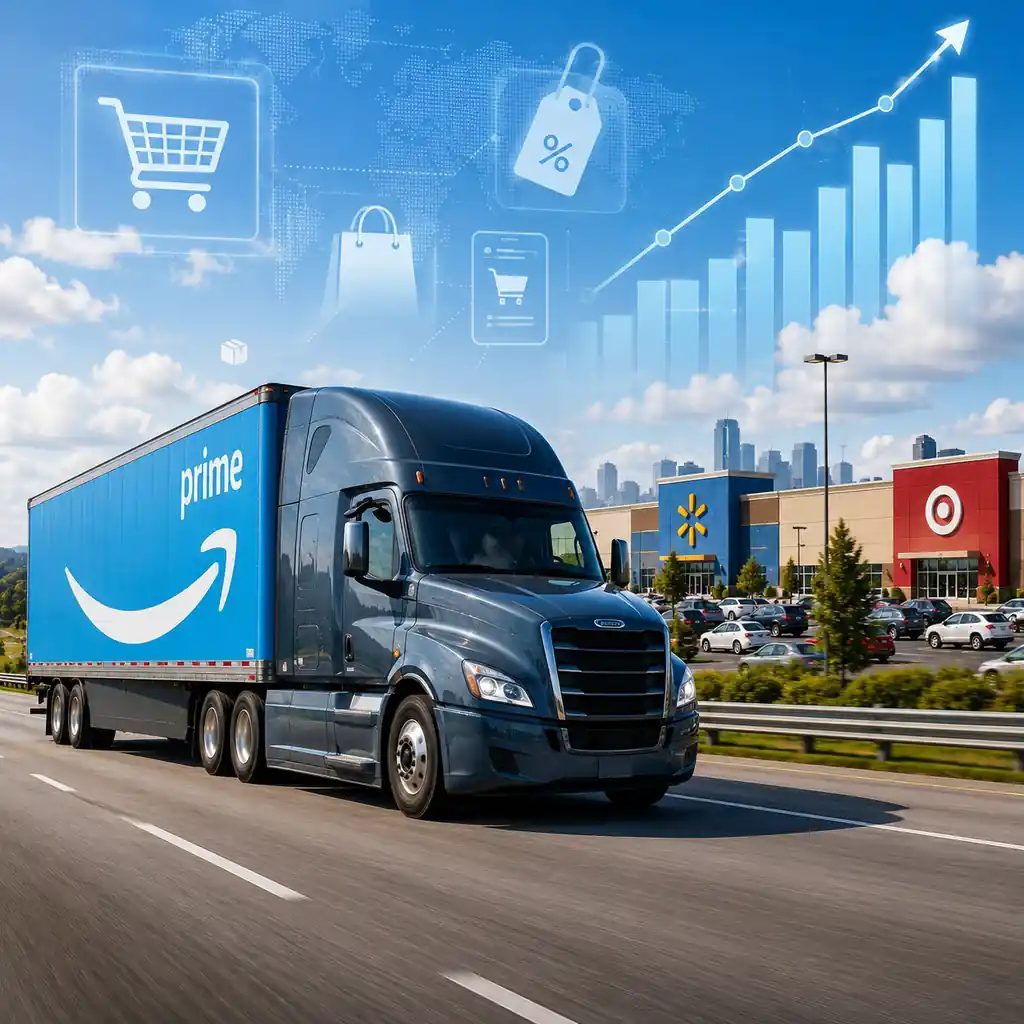

Amazon Prime Day 2026 is turning into a wider retail showdown, with shoppers expected to spend $26 billion online as Walmart, Target and Best Buy push rival deal events around the same four-day sales window.
The Amazon event runs from June 23 to June 26, giving Prime members access to discounts across electronics, fashion, beauty, home goods, grocery products and Amazon devices. The timing matters because Prime Day is no longer just a summer sale for Amazon. It has become a national online shopping moment that pulls in nearly every major retailer looking to capture deal-driven demand before the back-to-school season.
Adobe projects Prime week online spending will rise 9% from a year earlier to $26 billion. That forecast would give e-commerce a major second-quarter boost and could help make the quarter the first $300 billion online retail period outside the holiday season.
Why Amazon’s June event changes the summer retail calendar?
Amazon usually holds Prime Day in July, but the 2026 event arrived earlier, running from Tuesday through Friday. The company has said the June timing gives shoppers earlier access to savings, while also placing the event ahead of a crowded summer calendar that includes major sports and national celebrations.
Amazon’s official Prime Day update confirms that Prime members get four days of exclusive savings from June 23 to June 26, with millions of deals across more than 35 categories.
The shift gives Amazon a longer runway to influence back-to-school purchases, travel-related spending and home upgrades. Shoppers are expected to look for discounts on kids’ apparel, backpacks, lunch boxes, luggage, car seats, portable chargers, refrigerators, washers, dryers and power tools.
The bigger story is the competitive response. Walmart and Best Buy started six-day deal events on Monday, with discounts of up to 50% running through Sunday. Target is running promotions of up to 45% from June 23 to June 26, matching Amazon’s main event window.
For shoppers tracking the exact sale window and early details, the confirmed Amazon Prime Day 2026 dates show why retailers are concentrating their biggest summer discounts around the same four-day period.
Key retail signal: Prime Day has become less about one company and more about a full-week test of online consumer demand, pricing power and promotional strength across the biggest US retailers.
Consumers are cautious, but still spending
This year’s deal rush arrives with shoppers under pressure from inflation, higher living costs and uneven consumer sentiment. That makes the $26 billion spending forecast more important for retailers and investors because it suggests households are still willing to buy when discounts are clear and timely.
Bank of America data cited in the Yahoo Finance report showed e-commerce spending was up 13% in May from a year earlier. That points to a consumer who has not stopped spending, but is becoming more selective about timing, value and necessity.
Numerator’s shopper survey also shows how deal behavior is changing. Nearly 46% of planned shoppers said they would browse without a fixed plan, while 25% planned to stock up on goods they already buy. Another 21% said they would purchase household essentials or higher-priced items they had delayed.
That mix gives retailers both opportunity and risk. Browsing shoppers can lift impulse sales, but delayed purchases suggest many households are waiting for promotions before committing to bigger-ticket items. For Amazon, Walmart and Target, the strongest results may come from products that combine clear price cuts with everyday usefulness.
Retail stocks face a margin test
For Amazon, Prime Day supports more than retail sales. It strengthens Prime membership value, lifts marketplace activity, helps advertising revenue and gives the company another chance to push its devices, grocery business and logistics network.
For Walmart, Target and Best Buy, the challenge is different. Their rival deal events are partly defensive, designed to keep shoppers from moving all summer spending to Amazon. But heavy promotions can also pressure margins if discounts become too aggressive.
Electronics, apparel and beauty are expected to carry some of the biggest deals. Amazon’s own products, including Alexa-related devices and Kindle products, are also expected to see steep discounts. Grocery savings could be especially important as Amazon continues trying to gain more share in everyday household spending.
Buy now, pay later is another important signal. Adobe expects the payment option to account for 7.8% of e-commerce spending during the event. That shows consumers are still shopping, but some may be leaning on flexible payments to manage larger baskets.
Prime Day 2026 will give retailers a live read on the health of the US consumer before the back-to-school and holiday seasons. A strong week would support the case that shoppers remain active when value is obvious. A weaker result would suggest that discounts alone may not be enough to overcome pressure from higher prices and tighter household budgets.

Make Swikblog your go-to source on Google for reliable updates, smart insights, and daily trends.