
Waymo is preparing to bring its driverless robotaxi service to Las Vegas, San Diego, Tampa and Denver, marking another major step in the company’s push to turn autonomous ride-hailing into a broader U.S. transport network. The Alphabet-owned company will begin with employee-only fully autonomous rides in the four cities before opening the service to the public later, though it has not announced an exact launch date.
The announcement matters because Waymo is expanding beyond its most established markets while introducing a newer vehicle experience. Las Vegas, one of the country’s busiest tourism and convention hubs, is expected to be among the first cities where riders experience Waymo’s newest robotaxi, called Ojai.
Waymo Adds Four New Cities to Its Robotaxi Roadmap
Waymo confirmed that Las Vegas, San Diego, Tampa and Denver will become the next cities to receive fully autonomous testing. Rather than launching directly for the public, the company will first provide employee-only rides, allowing engineers to evaluate how the vehicles perform in different traffic environments before expanding commercial access.
This staged rollout reflects Waymo’s long-standing strategy of validating its autonomous technology under real-world conditions before opening rides to paying customers. The company has not provided a public launch date for any of the four cities.
According to the official Waymo announcement, the expansion is part of a broader effort to scale its commercial robotaxi network while introducing its latest autonomous driving technology and next-generation vehicle platforms.
Las Vegas already has an active autonomous mobility ecosystem with companies including Zoox and Motional. Waymo’s arrival adds another major competitor to one of the country’s fastest-growing driverless transportation markets.
Why Las Vegas Is an Important Expansion Market
Unlike suburban test routes, Las Vegas presents an environment filled with tourists, airport traffic, casinos, hotels, entertainment venues, buses, pedestrians and frequent ride-hailing demand. Successfully operating in these conditions would demonstrate that autonomous taxis can handle one of America’s busiest urban transportation corridors.
The city also provides a valuable proving ground because millions of visitors depend on short-distance transportation between resorts, convention centers, restaurants and airports. For autonomous ride services, that creates significant commercial opportunities while also increasing operational complexity.
The expansion also reflects how autonomous driving and artificial intelligence are becoming increasingly connected. As self-driving technology advances, companies across the tech sector are investing heavily in AI-powered platforms, including Meta’s plan to build an AI cloud business by selling excess AI computing power.
New Ojai Robotaxi Focuses on Passenger Comfort
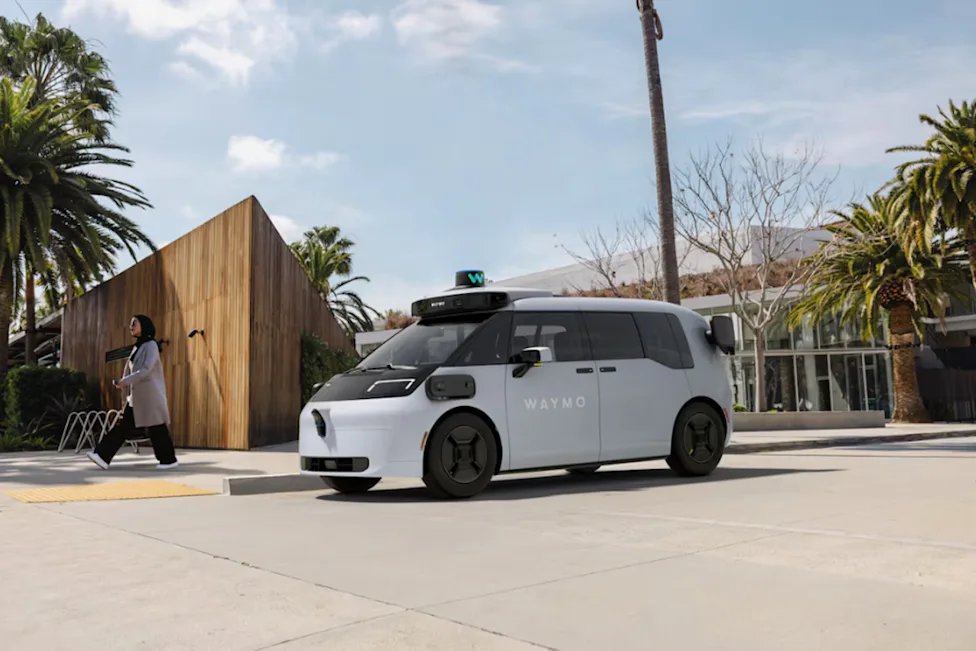
Las Vegas will be among the first places where riders experience Waymo’s newest autonomous vehicle, the Ojai. The company describes it as an “oasis on wheels,” highlighting its passenger-first approach rather than treating it as simply another self-driving car.
The Ojai features a redesigned cabin intended to improve comfort during autonomous trips. It currently accommodates four passengers because the front driver’s seat remains unavailable for riders while the vehicle continues operating without a human driver.
The model represents an important shift toward vehicles designed specifically for autonomous ride-hailing instead of adapting conventional passenger cars for self-driving use.
Purpose-built robotaxis may eventually reduce operating costs while improving passenger experience, giving Waymo an advantage as competition intensifies across the autonomous transportation industry.
Hyundai IONIQ 5 Expands Waymo’s Autonomous Fleet
Waymo also announced that it has begun testing its sixth-generation autonomous driving system in Hyundai IONIQ 5 electric vehicles.
The addition of Hyundai’s EV platform demonstrates how the company intends to expand beyond its existing fleet while refining its newest self-driving software. Testing multiple vehicle types also improves flexibility as Waymo increases production and enters additional cities.
Technology companies are introducing smarter connected products alongside advances in autonomous mobility. Recent launches such as the AlphaTheta CDJ-1500X professional media player highlight how AI, software and hardware innovation are reshaping multiple technology industries at the same time.
Waymo Already Operates Across 10 Metro Areas
Before announcing its latest expansion, Waymo already operated fully autonomous robotaxi services around the clock across ten U.S. metropolitan areas:
- San Francisco Bay Area
- Phoenix
- Los Angeles
- Miami
- Orlando
- Dallas
- Houston
- San Antonio
- Atlanta
- Austin
Adding Las Vegas, San Diego, Tampa and Denver would significantly expand the company’s geographic footprint while exposing its autonomous driving system to different traffic conditions and customer demand patterns.
Safety Performance Remains Under Scrutiny
As Waymo grows, its safety performance continues receiving close attention. The company has stated that its autonomous vehicles experience 12 times fewer crashes involving pedestrian injuries compared with human driving benchmarks.
Even so, several incidents have attracted public attention. A Waymo vehicle struck a dog in San Francisco last December, while another report said a neighborhood cat had been killed by one of the company’s robotaxis weeks earlier.
In January, a Waymo vehicle in Santa Monica struck a child after the child ran into the street from behind a double-parked SUV near an elementary school. During the same month, Austin television station KXAN reported that some Waymo vehicles were passing stopped school buses while children crossed the road despite software updates intended to prevent that behavior.
Those events illustrate why every new city expansion receives close attention from regulators, transportation officials and local communities. Beyond improving software, Waymo must continue demonstrating that autonomous vehicles can safely respond to unpredictable situations encountered on public roads every day.
Read More:
- London robotaxi launch: Wayve, Uber and Waymo prepare driverless taxi rollout
- UK driving test rules change as DVSA limits test centre swaps
- Visit the Swikblog homepage for more latest news
Residents in Las Vegas, San Diego, Tampa and Denver should expect a gradual rollout instead of an immediate public launch. Employee-only rides will allow Waymo to validate routes, improve software performance and gather operational data before commercial service begins.
The latest announcement shows that Waymo’s ambitions now extend beyond individual pilot programs. By combining new cities, a purpose-built robotaxi, an expanded EV platform and its sixth-generation autonomous driving system, the company is laying the groundwork for a much larger national driverless ride-hailing network.
Whether that expansion succeeds will depend not only on technological progress but also on public confidence, regulatory approval and the ability to operate safely in increasingly complex urban environments.

Make Swikblog your go-to source on Google for reliable updates, smart insights, and daily trends.