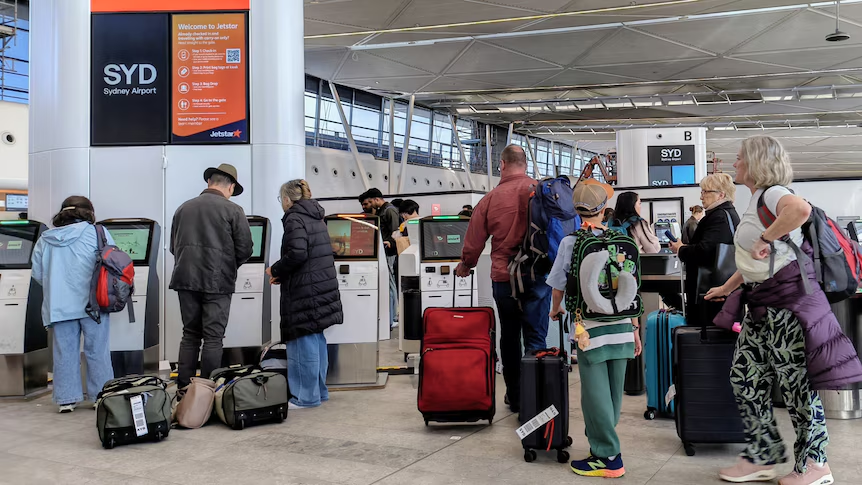

Passengers travelling through Sydney Airport are facing major delays today after air traffic controller roster constraints forced Airservices Australia to reduce aircraft movement rates at the country’s busiest airport. More than 150 flights have been delayed, affecting thousands of travellers across both domestic and international services.
Qantas has reported around 95 delayed flights, including approximately 25 QantasLink services, while Virgin Australia has also confirmed delays on flights operating to and from Sydney. The disruption is expected to continue throughout the day, with passengers urged to check directly with their airline for the latest updates.
Unlike weather-related disruptions, today’s delays stem from operational staffing issues within Australia’s air traffic control system. To maintain safety, Airservices Australia introduced Air Traffic Flow Management (ATFM) measures, reducing the number of aircraft that can depart and arrive within a given period.
Why Sydney Airport flights are delayed
Airservices Australia said departure spacing was introduced because of roster constraints affecting air traffic controllers. Increasing the time between aircraft departures allows controllers to safely manage traffic but reduces overall airport capacity.
According to Airservices, Air Traffic Flow Management helps balance flight demand with available operational capacity, preventing congestion while maintaining aviation safety.
For passengers, this means aircraft may be ready to depart but still have to wait for an available departure slot, resulting in delays across multiple airlines.
More than 150 flights affected
Airlines for Australia and New Zealand chief executive Stephen Beckett said more than 150 flights had already been delayed during the morning, impacting thousands of passengers.
Around 95 Qantas flights have been delayed, including about 25 QantasLink services, while Virgin Australia has also experienced delays. Because the restrictions apply to airport operations rather than individual airlines, other domestic and international carriers may also experience schedule changes.
The disruption follows similar operational restrictions on Friday, when some aircraft reportedly remained on the tarmac for more than an hour before departing. A similar pattern was seen during the recent Sydney Airport disruption that affected flights across Australia, illustrating how quickly delays can spread through the aviation network.
Why Sydney delays affect the entire network
Sydney Airport is Australia’s busiest aviation hub, with aircraft and flight crews operating multiple services throughout the day. When flights depart late from Sydney, aircraft often arrive late at their next destination, delaying subsequent services.
Stephen Beckett said disruptions at Sydney quickly affect both domestic and international networks because so many airline schedules depend on aircraft moving through the airport on time.
Even after operating restrictions are lifted, airlines can take hours to recover as they reposition aircraft, adjust crew schedules and accommodate passengers who miss connecting flights.
What Airservices Australia is doing
Airservices Australia acknowledged the disruption and said it is working with airlines to minimise delays. The organisation is also expanding its air traffic controller training pipeline and improving roster depth to strengthen long-term operational resilience.
Because air traffic control is a highly specialised profession, increasing staffing levels requires extensive training and cannot be achieved immediately.
Zurich Airport Radar Failure Grounds Flights: What Happened and Latest Travel Updates
Brussels Airport Strike Cancels Hundreds of Flights: What Travelers Need to Know
Visit the homepage for the latest travel news, airline updates and breaking stories
What passengers should do
Sydney Airport is advising travellers to check their airline’s website or mobile app before leaving for the airport, as departure times may continue to change throughout the day. Passengers with connecting flights should pay particular attention to updates, as delays in Sydney can affect onward journeys across Australia.
Travellers should also continue to follow normal airline check-in deadlines unless advised otherwise. A delayed departure does not automatically extend baggage drop or check-in cut-off times.
For broader transport developments that could affect upcoming journeys, travellers can also follow the latest Australia travel and airport updates.
While Sydney Airport remains fully operational, reduced air traffic capacity means delays are likely to continue until normal aircraft movement rates are restored. For individual flight information, airlines remain the most reliable source of real-time updates.

Make Swikblog your go-to source on Google for reliable updates, smart insights, and daily trends.