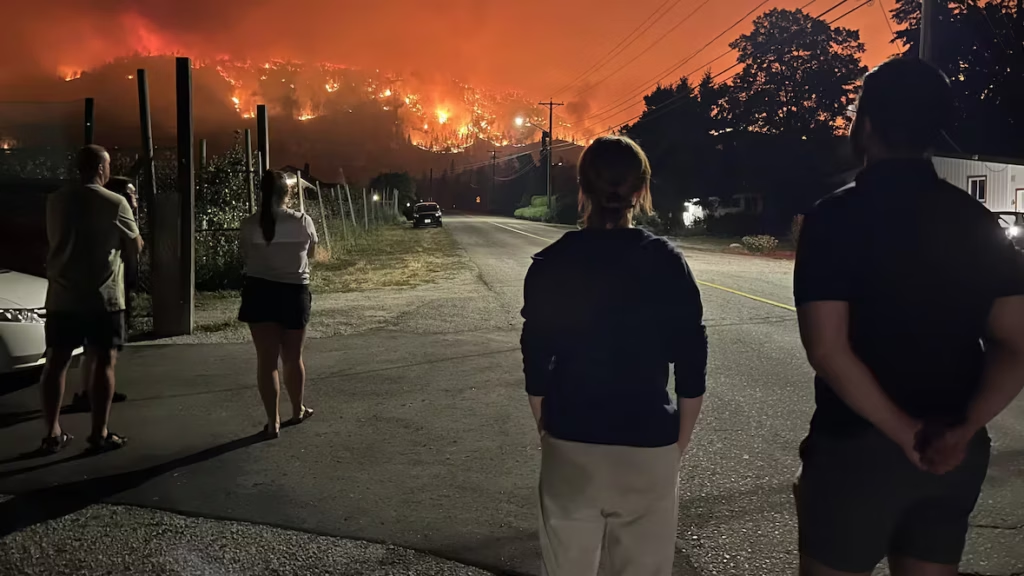

An 80-year-old woman has died while trying to escape the Bald Range wildfire near Summerland, British Columbia, as thousands of residents remain displaced and firefighters battle dangerous conditions across the Okanagan.
Police said the woman was attempting to leave her home in the Meadow Valley area with her family when she died. The RCMP believes her death resulted from the wildfire. The B.C. Coroners Service is investigating, and police said there were no other known fire-related fatalities at the time of the update.
The death comes amid a wider emergency affecting Summerland, Peachland and surrounding communities, where evacuation orders, structural losses, smoke and damaged infrastructure are preventing many residents from returning home.
Bald Range wildfire grows rapidly near Summerland
The Bald Range wildfire broke out shortly after 5 p.m. Pacific Time on Friday, August 7, about 15 kilometres from Summerland. It spread rapidly, triggering tactical evacuations that included operations involving firefighting helicopters.
By Sunday, the fire had grown to approximately 136 square kilometres. About 12,000 residents, along with people in surrounding areas including southern Peachland, remained under evacuation orders.
The remainder of Peachland, areas south of Summerland and areas west of Penticton were under evacuation alerts. The Penticton Indian Band also declared a state of emergency.
For more context on how the emergency developed, including the initial evacuations and disruption around the region, see this British Columbia wildfire update on the Bald Range fire.
Residents should check the official B.C. Wildfire Service Bald Range incident information for current conditions because evacuation boundaries and fire behaviour can change quickly.
Downtown Summerland spared but structures lost
Officials said downtown Summerland remained intact despite dramatic fire activity around the community.
Summerland Chief Administrative Officer Graham Statt said the downtown had not been destroyed, although active fires and hotspots were still being dealt with nearby.
Mayor Doug Holmes confirmed structures had been lost but said officials did not yet know how many.
There is also no firm timeline for residents to return. Downed power lines and concerns about water supplies mean authorities must assess essential infrastructure before neighbourhoods can safely reopen.
A phased re-entry is being planned. Some people working with livestock have been given temporary access to care for animals.
More than 200 residents moved to safer locations
Interior Health said it helped transport more than 200 residents out of Summerland and established assistance for families trying to reconnect with loved ones who were relocated.
Many evacuees are sheltering in Penticton, where a resource hub has been established. With accommodation limited, people have been encouraged to stay with friends or relatives where possible.
For displaced families, the emergency extends beyond escaping the flames. Medication, temporary housing, transportation, pets, livestock and information about when homes can be safely accessed can all become immediate concerns.
Why evacuation orders matter
Emergency officials have urged residents to obey evacuation orders, warning that remaining behind can endanger both residents and emergency personnel.
Wildfire conditions can deteriorate quickly. Smoke can reduce visibility, wind can redirect flames and fallen trees or power lines can block evacuation routes.
The woman’s death while attempting to leave underscores the danger of delaying an evacuation. Residents under an alert should prepare essential documents, medications, supplies and arrangements for pets or livestock before an order is issued.
Similar challenges have affected other Canadian communities facing fast-moving fires, including during the Whitecourt wildfire evacuation in Alberta, where changing conditions also put communities and access routes under pressure.
Read More
Summerland wildfire claims the life of 80-year-old woman: RCMP https://t.co/YgP6GhpX4i
— CTV National News (@CTVNationalNews) August 10, 2026
Drought and smoke complicate the emergency
Heavy smoke from the Bald Range wildfire has spread across the Okanagan and contributed to multiple flight cancellations at Kelowna International Airport.
Severe drought is also making firefighting difficult. Much of British Columbia’s southern Interior is at the federal government’s highest drought intensity level.
BC Wildfire Service incident commander Nicole Bonnett described conditions as heavily drought-driven. Crews received less overnight moisture relief than hoped, while officials warned that clearer skies and increasing winds could significantly increase fire behaviour.
Firefighters were concentrating on limiting growth in the drainage between Fish Lake and Garnet Valley, with further growth to the south remaining a concern.
Thousands affected across British Columbia
The Summerland fire is part of a broader provincial wildfire emergency. About 13,200 properties across B.C. were under evacuation order, affecting approximately 21,700 people, while another 5,800 properties were under alert, affecting around 10,600 people.
For Summerland residents, the next critical updates will involve evacuation orders, structural damage assessments, road access, drinking water, electricity and the phased return home.
Downtown Summerland being spared is encouraging, but the emergency is not over. Structures have been lost, thousands remain displaced and firefighters continue working in extremely dry conditions where wind could rapidly change the fire’s behaviour.

Make Swikblog your go-to source on Google for reliable updates, smart insights, and daily trends.