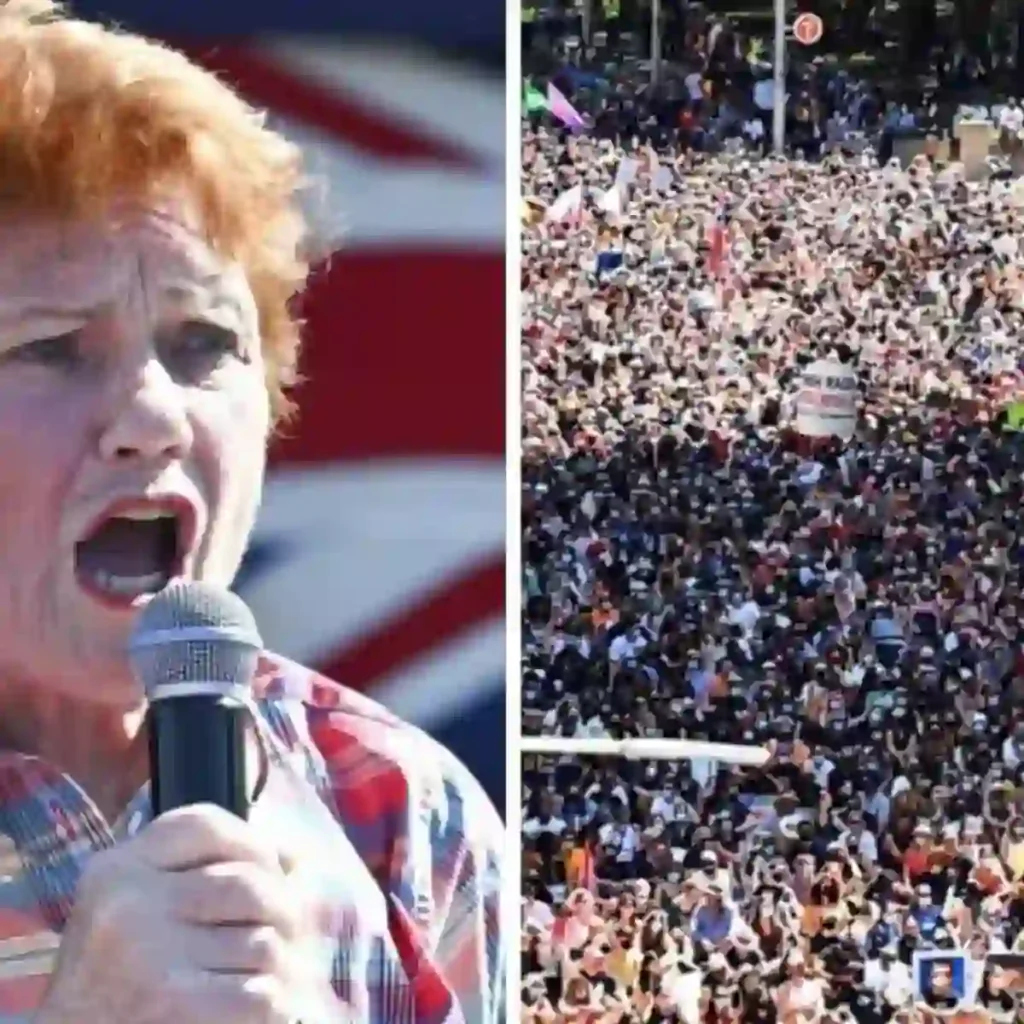

Thousands of school and university students are taking part in coordinated demonstrations across Australia on Thursday, August 13, protesting Pauline Hanson and One Nation. The nationwide walkout has developed into a wider argument about migration, multiculturalism, youth political participation and whether students should leave class to make a political statement.
The National Union of Students organised the “Students Say No to Hanson” action, with demonstrations planned in Sydney, Melbourne, Brisbane, Canberra, Adelaide, Perth, Wollongong and Newcastle. In Sydney, hundreds of students gathered around Town Hall, including university students arriving from UTS.
Organisers accuse Hanson and One Nation of promoting policies that divide Australians over migration and minority communities. Hanson rejects that characterisation and has questioned why students are skipping classes to protest.
Why are students protesting Pauline Hanson?
National Union of Students president Felix Hughes has argued that international students and migrants should not be blamed for Australia’s housing and cost-of-living pressures. Organisers say young people should challenge policies they believe encourage division rather than wait until they are old enough to vote.
The timing is significant because One Nation has been attracting increased political attention. Its growing support has intensified debate about migration, housing, national identity and dissatisfaction with Australia’s major parties. That broader shift helps explain why One Nation’s rise in the polls matters for Australian politics.
At Sydney Town Hall, protesters used chants supporting migrants and condemning racism. Groups including Socialist Alternative and Students for Palestine were also visible around the demonstration. Some protesters used more confrontational language against Hanson, although statements from individual participants should not be treated as representing everyone attending the rallies.
Hanson pushes back as politicians question the walkout
Hanson has responded by arguing that schools should teach students “how to think, not what to think”. She has attempted to redirect attention towards wages and living costs, maintaining that One Nation is addressing economic problems affecting young Australians and their families.
Barnaby Joyce has criticised what he describes as the influence of socialist or left-wing teachers on students. Liberal senator James Paterson has also said school students should remain in class, while warning that aggressive campaigns against One Nation could potentially help Hanson by allowing the party to portray itself as unfairly targeted.
The disagreement therefore extends beyond whether people support One Nation. Politicians can oppose Hanson’s policies while still believing students should not miss school to attend demonstrations.
Migration, housing and international students are part of the dispute
Housing affordability has become closely connected to Australia’s migration debate. One Nation advocates substantially lower migration, while critics argue Australia’s housing shortage has broader causes involving construction, infrastructure, planning and housing supply.
The question of whether reducing migration would materially improve affordability remains politically contested. The wider arguments around migration cuts and Australia’s housing shortage help explain why housing has become such an important part of the dispute surrounding the student demonstrations.
Protest organisers argue that international students are classmates rather than the cause of Australia’s affordability problems. Hanson and One Nation, meanwhile, have made migration levels a central part of their case for changing Australia’s economic and population policies.
Why protest if many students cannot vote?
One of the biggest questions surrounding the walkout concerns participants who are under 18.
The Australian Electoral Commission says Australians aged 16 and 17 can enrol so they are ready to vote when they turn 18. Until then, elections are not available to them as a direct way of influencing government.
Protests, petitions, community campaigns and contacting elected representatives are other ways young people can participate in public debate. Being unable to vote also does not mean teenagers are unaffected by decisions involving education, housing, employment, migration or living costs.
That does not automatically settle the argument about leaving school. Attendance requirements still apply, and the right to express a political opinion is separate from whether an absence is authorised by a school.
Read More
Student political action is not new in Australia
Australia has a long history of young people participating in political movements. High school students demonstrated over issues including corporal punishment and gender segregation in the 1970s, while School Strike for Climate brought another generation of students onto Australian streets decades later.
Thursday’s demonstrations also follow continuing controversy around Hanson. She recently failed to overturn a court ruling arising from her dispute with Greens senator Mehreen Faruqi, keeping questions about race and political speech around One Nation in the national conversation.
Why the protests matter beyond Thursday
The political impact of the walkout is difficult to predict. Demonstrations may encourage young Australians opposed to Hanson to become more politically engaged, but they could also energise One Nation supporters who believe the party is being unfairly targeted.
It is equally important not to treat students as one political group. Those attending the rallies represent one section of youth opinion; other young Australians may support Hanson, oppose the walkout or disagree with both sides.
What Thursday’s nationwide action makes clear is that arguments over migration, housing, national identity and multiculturalism are reaching Australians before they enter the voting booth. For political parties thinking beyond the next election, the opinions being formed by today’s students could matter considerably once those teenagers become voters.

Make Swikblog your go-to source on Google for reliable updates, smart insights, and daily trends.