
MACH Energy’s plan to keep the Mount Pleasant coal mine operating beyond 2026 remains under assessment in New South Wales, while a separate High Court battle continues over the company’s much larger proposal to extend mining to 2048.
The latest NSW planning record lists Mount Pleasant Modification 8 as being at the assessment stage. The application seeks permission to continue mining until 31 December 2032 and lift the approved run-of-mine coal extraction rate from 10.5 million tonnes to 12.5 million tonnes a year.
That distinction is important. The six-year extension has been proposed, but the NSW Planning Portal had not recorded a final determination at the latest available update. It should therefore not be treated as an approved extension unless the project’s official status changes.
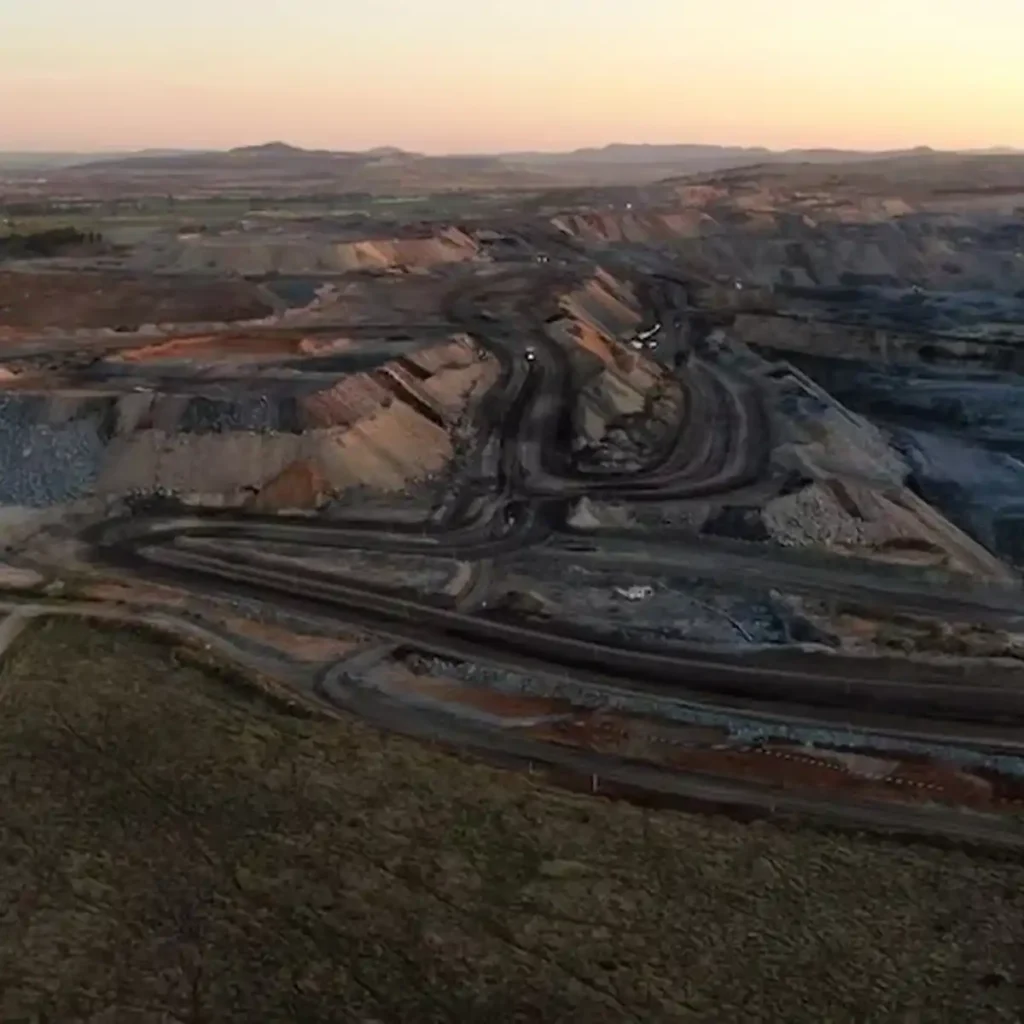
Mount Pleasant is an open-cut coal operation near Muswellbrook in the Upper Hunter region of New South Wales. It is operated by MACH Energy Australia and has become the focus of two separate planning and legal processes that could determine how long mining continues at the site.
Mount Pleasant’s 2032 proposal explained
The mine’s existing development consent, DA 92/97, permits mining until December 2026. Modification 8 was lodged to extend that period by six years, providing a potential operating bridge to the end of 2032.
The proposal would also increase the annual extraction ceiling by 2 million tonnes. Moving from 10.5 million tonnes to 12.5 million tonnes represents an increase of about 19%.
This is an extraction limit rather than a forecast of actual annual production. Approval would allow production up to that level, but it would not mean the mine must produce 12.5 million tonnes every year.
The official NSW Mount Pleasant Modification 8 project page contains the application documents, agency advice and public submissions.
Why the 2032 and 2048 proposals are different
There are effectively two timelines surrounding Mount Pleasant.
The first is Modification 8 under the mine’s older development consent. It seeks to move the current December 2026 expiry date to the end of 2032 and raise the annual extraction limit to 12.5 million tonnes.
The second is the much larger Mount Pleasant Optimisation Project. That project received development approval for mining to continue until 2048, but the approval became the subject of a major legal challenge.
Keeping those processes separate matters because an outcome in one does not automatically settle the other. The 2032 modification is being assessed through the NSW planning system, while the future of the longer 2048 approval is tied to proceedings before Australia’s highest court.
How the High Court case reached this point
The Denman Aberdeen Muswellbrook Scone Healthy Environment Group, commonly known as DAMSHEG, challenged the approval of the Mount Pleasant Optimisation Project.
In 2025, the NSW Court of Appeal found the approval invalid in a case that centred on whether the Independent Planning Commission had adequately considered likely environmental impacts connected with greenhouse gas emissions from the development.
The dispute includes the consequences associated with coal exported from Australia and burned overseas, often described as downstream or Scope 3 emissions.
MACH Energy appealed the decision to the High Court of Australia. The legal questions include how planning law requires decision-makers to consider the likely impacts of a development and the connection between greenhouse gas emissions and environmental effects in NSW and the Hunter Valley.
The outcome could have significance beyond Mount Pleasant because the court’s reasoning may clarify how parts of NSW planning law apply when authorities assess environmental consequences connected with major resources projects.
Why MACH Energy is seeking a six-year extension
The timing creates a practical problem for the company. Without another approval pathway, the existing consent reaches the end of its permitted mining period in December 2026 while litigation over the longer project remains unresolved.
Modification 8 would provide an additional six-year operating period under DA 92/97 if approved.
Documents associated with the proposal indicate that the modification is centred on extending the mining period and increasing the extraction rate rather than establishing an entirely new mine.
The application nevertheless has significant implications because extending operations means mining, transport and associated environmental impacts could continue for longer than under the present 2026 deadline.
Jobs and the Upper Hunter economy remain central
Employment has been one of the main arguments made by supporters of extending operations.
Submissions to the NSW planning process describe Mount Pleasant as an important source of employment for people living across Muswellbrook and the wider Hunter region. Contractors, equipment providers, transport operators and other businesses can also be affected by how long a large mine remains operational.
The issue comes as the Upper Hunter adjusts to changes across Australia’s energy industry. The region has long been closely connected with coal mining and coal-fired electricity generation, making the timing of mine and power-station closures particularly important for local employment.
Those changes became highly visible with the demolition of the Liddell Power Station chimneys during the Hunter Valley’s energy transition.
For workers connected with Mount Pleasant, the difference between a December 2026 deadline and potential operations through 2032 represents several additional years of possible employment and contracting activity. Those benefits, however, depend on the modification receiving final approval and future operating decisions.
Environmental concerns remain a major issue
Opponents argue that extending the mine would prolong local and global environmental impacts associated with coal production.
Issues raised during the planning process include greenhouse gas emissions, dust, noise, cumulative mining impacts and the consequences of continuing coal extraction as NSW works toward its emissions-reduction targets.
The extraction increase is particularly relevant to that debate. A ceiling of 12.5 million tonnes a year is about 19% higher than the existing 10.5-million-tonne limit, although actual production could remain below the maximum.
The legal dispute over the 2048 project adds another layer. The High Court case involves questions about how environmental impacts linked to greenhouse gas emissions should be considered under NSW planning law.
Coal supply is another part of the assessment
The debate is not limited to jobs and emissions. Coal supply to electricity generators has emerged as another consideration as NSW moves through a broader change in its power system.
The Hunter Valley is particularly exposed to that transition because major coal mines, power stations and their supply chains have operated alongside each other for decades.
The regional impact can be seen beyond the coal industry itself. Employment changes elsewhere in New South Wales, including SunRice’s decision to cut 78 jobs in the Riverina, have similarly highlighted how changes affecting major regional employers can flow through local communities and businesses.
For the Hunter, the challenge is balancing the remaining role of coal-fired generation with investment in replacement electricity supply and the economic consequences of retiring older energy assets.
Where the Mount Pleasant mine stands now
The most important point is that Mount Pleasant’s future involves two separate processes.
Under its existing consent, the mine faces a December 2026 limit. Modification 8 seeks to extend that period to 31 December 2032 and increase the extraction ceiling to 12.5 million tonnes a year.
Separately, MACH Energy is pursuing its High Court appeal concerning the larger Mount Pleasant Optimisation Project and the proposed pathway to mining until 2048.
A final decision on Modification 8 would determine whether the mine gains a six-year extension under its older consent. The High Court proceedings address the much longer-term legal position.
Until those processes are completed, the 2032 modification and the proposed 2048 expansion need to be treated as separate parts of the Mount Pleasant story, with each carrying different implications for workers, the Upper Hunter economy and environmental policy.

Make Swikblog your go-to source on Google for reliable updates, smart insights, and daily trends.