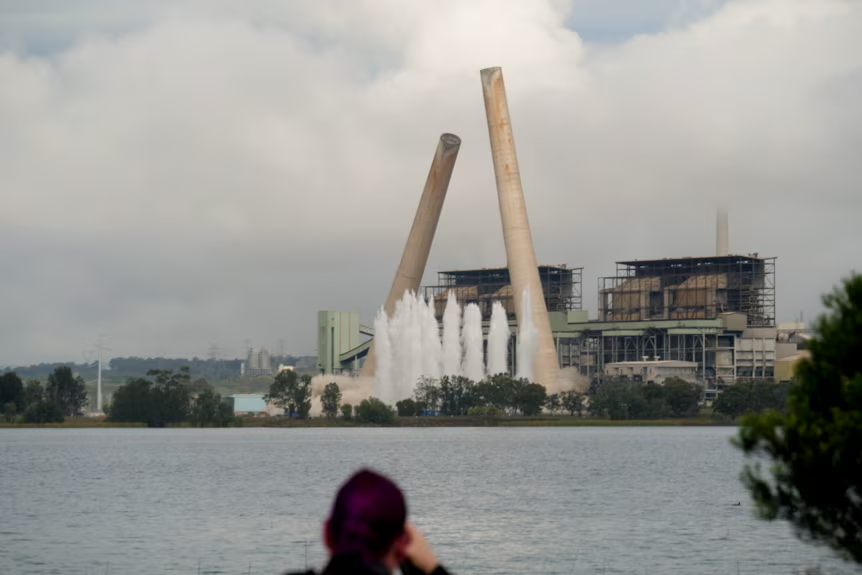

Liddell Power Station’s chimneys have come down in the Hunter Valley, but the bigger story is not just the demolition of an old coal plant. It is the speed at which Australia’s energy map is being redrawn, with former coal sites now being prepared for batteries, manufacturing, recycling and other clean-energy industries.
The two 170-metre stacks were demolished in a controlled blast after engineers drilled hundreds of holes into the base of the structures and used explosives to bring them down safely. The collapse lasted only seconds, yet it ended a visible piece of coal-fired history that had stood in New South Wales for decades.
Liddell was retired in 2023 after 52 years of operation. When it was fully running in the early 1970s, it was one of the largest coal-fired power stations of its kind in Australia. Over its lifetime, the plant generated about 431,000 gigawatt hours of electricity, showing how deeply it was tied to the state’s power supply and industrial growth.
For the Hunter region, the demolition was also personal. Liddell was not simply a power asset on a balance sheet. It was a workplace for generations of local families, a landmark on the skyline and a symbol of the region’s long connection with coal-fired electricity. That is why the falling chimneys carried both grief and significance for many former employees and residents.
The physical removal of the stacks came after months of work to disconnect and clean up the site. AGL has said large volumes of material have been recovered or recycled during the process, including around one million litres of oil. That clean-up work is important because the future value of the site depends on turning old industrial land into usable energy infrastructure again.
The main reason Liddell matters now is what comes next. AGL is progressing with its Hunter Energy Hub, a redevelopment plan that aims to use the former coal site for new energy and industrial projects. The most advanced piece of that transition is the 500MW Liddell Battery, which AGL describes as a two-hour grid-scale battery located at the former power station site.
According to AGL, construction of the battery is complete, commissioning of the first 250MW is underway, and the project is expected to ramp up toward full commercial operations by June 2026. That makes Liddell a clear example of how old coal infrastructure can be reused rather than abandoned.
This reuse is not accidental. Former coal plants usually sit on valuable energy land. They have grid connections, roads, water access, industrial zoning and a local workforce already familiar with large-scale energy operations. Those advantages make sites like Liddell attractive for batteries, solar supply chains, recycling facilities and even data infrastructure.
AGL has also pointed to possible future developments at the site, including solar panel manufacturing, solar recycling and data-related projects. Prime Minister Anthony Albanese previously visited Liddell while announcing a $1 billion program aimed at boosting Australian-made solar panels, underlining the site’s role in the country’s wider clean-energy ambitions.
Read More
The demolition also gives a preview of what may happen across Australia’s ageing coal fleet. Liddell is one of the first major thermal power stations in the country to reach this stage of demolition, and more closures are expected over the coming decade. The nearby Bayswater Power Station, also owned by AGL, is scheduled to close in 2033.
For investors and energy-market watchers, the shift from coal assets to storage and cleaner infrastructure is part of a wider global trend. Swikblog has also covered how major energy companies are adjusting to changing demand, investor pressure and transition risks in its analysis of BP shares and fossil fuel strategy.
Liddell’s demolition was dramatic, but its real importance lies in the transition behind it. The Hunter Valley is not only losing a coal landmark; it is being positioned for a different energy economy. The challenge now is whether new projects can deliver enough jobs, investment and reliable power to match the scale of the industry that came before.

Make Swikblog your go-to source on Google for reliable updates, smart insights, and daily trends.