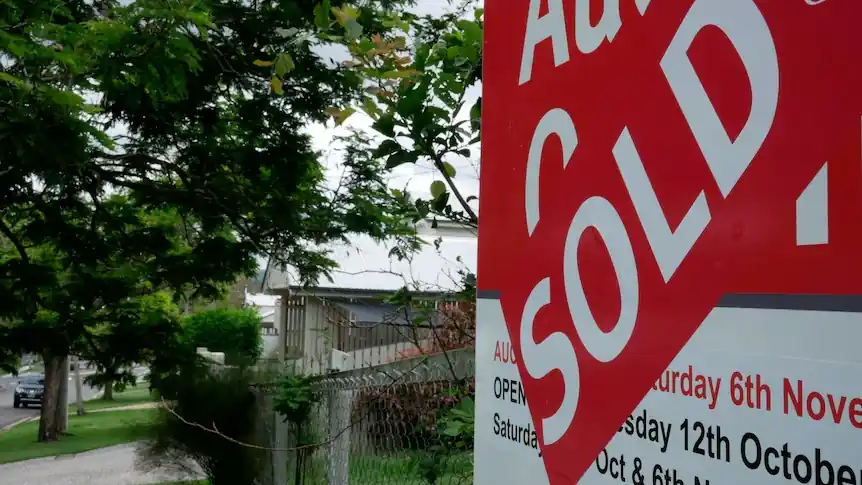

Australia’s auction market has entered a much tougher phase, with the latest property figures showing that fewer than half of homes taken to auction are selling, even as the national clearance rate improved slightly over the past week.
The preliminary national auction clearance rate rose from 49.2% to 49.8%, according to the latest Cotality figures. While that is technically an increase, it does little to change the bigger picture: auction conditions remain weak, buyer urgency has faded, and sellers are facing a market where price expectations are being tested more aggressively.
The sub-50% result is important because it marks the third consecutive week where fewer than half of known auction results have cleared. Last week’s figure had already been described as the weakest since the COVID-era housing slowdown in 2020, making the latest result another sign that the property market downturn is not limited to one city or one weekend.
Brisbane stands out as auction weakness deepens
The national result hides sharp differences between capital city markets. Melbourne recorded the strongest clearance rate at 54.5%, while Sydney remained slightly above the halfway mark at 51.6%. Canberra came in at 50%, showing a market balanced on the edge between sellers and buyers.
Adelaide was weaker at 45.7%, but Brisbane recorded the clearest deterioration, with its auction clearance rate falling to just 23.8%. That is a steep fall from 39.3% a week earlier and a dramatic change from the same time last year, when Brisbane’s clearance rate was 69.6%.
That year-on-year shift matters. Brisbane had been one of the stronger housing markets, supported by population growth, limited supply and strong buyer demand. A fall to below one-quarter of auctions clearing suggests buyers are now far more cautious, and vendors may need to reset expectations if they want campaigns to convert into sales.
What low clearance rates say about the market
Auction clearance rates are not a complete measure of the housing market, but they are one of the fastest signals of demand. When clearance rates are high, it usually means buyers are competing strongly and sellers have pricing power. When clearance rates fall and stay low, it often points to weaker confidence, tougher finance conditions or a gap between seller expectations and buyer budgets.
Cotality’s auction data tracks known auction outcomes, including homes sold before, during or after auction, along with passed-in and withdrawn results. That makes the weekly figures a useful indicator of how much pressure exists in the market. More detail on the data can be found through Cotality’s auction results information.
A clearance rate under 50% does not mean homes are not selling. Some properties still transact after auction through negotiation. But it does show that the auction room is no longer producing the same level of competitive bidding that helped push prices higher in stronger market conditions.
Housing values are already moving lower
The weak auction results follow a broader cooling in home values. Cotality figures show national housing values recorded their biggest monthly fall in June since 2022, adding to evidence that the slowdown has moved beyond auction sentiment and into actual price movement.
The decline came after the latest federal budget announcement limiting negative gearing to new builds. That policy shift has added uncertainty for investors, particularly those who had relied on established dwellings as part of their tax and rental-income strategy.
For homeowners, this matters because falling values can change the psychology of the market. Buyers may wait for better deals, investors may reassess returns, and sellers may find that price guides based on last year’s conditions no longer match current demand.
Why buyers are gaining more control
Several forces are working in favour of buyers. Affordability remains stretched, borrowing capacity has been squeezed by interest rate rises, and serviceability rules continue to limit how much households can spend.
At the same time, advertised listings are rising. More homes on the market means buyers have more choice, reducing the fear of missing out that often drives strong auction bidding. When buyers can compare more properties, they are less likely to chase a single listing beyond budget.
This shift is changing negotiations. Sellers who meet the market are still finding buyers, but homes with ambitious price expectations are more likely to pass in or require post-auction discussions.
Tim Lawless expects weakness to continue
Cotality’s Asia-Pacific executive research director Tim Lawless said the move from 49.2% to 49.8% was not enough to signal a real improvement.
He said persistently low clearance rates show a mismatch between buyer and seller expectations. In his view, the market is moving through a period of negative price momentum, with multiple headwinds suppressing demand.
Those headwinds include affordability challenges, borrowing serviceability pressure, interest rate rises, investor pullback after budget changes and the increase in advertised listings. Together, they are creating a market where buyers feel less urgency and sellers have less leverage.
Investor demand has pulled back
Property Buyers director Munro Donen said investor interest has weakened sharply, linking the slowdown to changes around negative gearing and capital gains tax.
Lower investor participation can have an outsized impact on auction markets. Investors often compete for units, townhouses and established homes in high-rental-demand locations. When that buyer group steps back, some listings face thinner demand, especially if owner-occupiers are also cautious.
Still, Donen noted that sales have not disappeared. Quality homes in good locations, particularly renovated properties, continue to attract interest. The $1 million to $2 million segment remains active, showing that well-positioned properties can still draw competition even in a softer market.
New home confidence also under pressure
The slowdown is not limited to established homes. Housing Industry Association chief executive for industry and policy Simon Croft said softer confidence is also being seen in display homes and enquiries about new builds.
He pointed to recent interest rate rises and uncertainty linked to the Middle East conflict as factors weighing on confidence. When households feel uncertain about repayments, job security or the wider economy, they are less likely to make large financial commitments quickly.
Croft said the current market may create a window of opportunity for some buyers while prices are softer. However, any recovery in price growth is likely to depend on improved confidence and more stable financial conditions.
What this means for sellers
For sellers, the message from the auction market is clear: pricing and presentation now matter more. A strong suburb name or last year’s comparable sale may not be enough to generate competition if buyers believe prices are still adjusting.
Vendors may need to be realistic about reserves, campaign feedback and post-auction offers. Passing in at auction is not always a failed campaign, but it can weaken negotiating power if buyers sense the seller has limited alternatives.
Homes that are renovated, well located and priced in line with current demand remain better placed. Properties that require major work, carry high price expectations or compete with a rising number of similar listings may face more resistance.
Read More
What buyers should consider before bidding
For buyers, the softer auction market can create opportunity, but it does not remove risk. Lower clearance rates may provide more negotiating room, yet borrowing costs and repayment pressure still need to be carefully assessed.
Buyers should compare recent local sales, not just asking prices. They should also look at how long similar homes are staying on the market, whether vendors are revising guides, and whether passed-in properties are later selling at discounts.
Readers following wider housing and economic trends can also look at how major city markets respond to changing confidence and local demand, including property-linked economic shifts in urban markets.
The next few weeks will test market confidence
The key question now is whether the national clearance rate can move back above 50% and stay there. A single weekly lift is not enough to prove a recovery, especially when the increase was only from 49.2% to 49.8%.
If clearance rates remain low while listings rise, buyers are likely to keep more negotiating power. If sellers adjust expectations, more deals may happen below earlier price hopes. If confidence improves, the market could stabilise, but the current data still points to a cautious and uneven housing downturn.
For now, Australia’s property auction market is sending a clear message: buyers are no longer rushing, investors are more hesitant, and sellers are being forced to compete harder for serious offers.

Make Swikblog your go-to source on Google for reliable updates, smart insights, and daily trends.