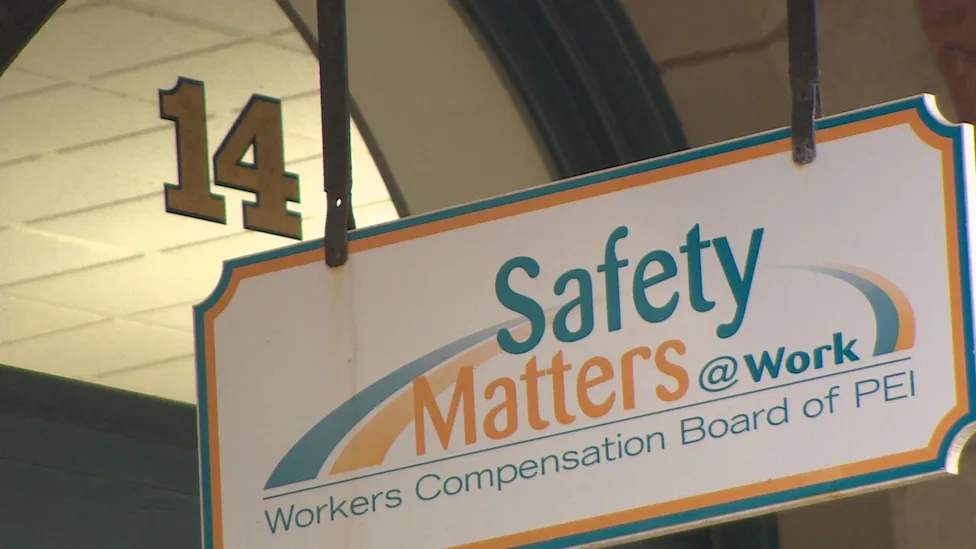

Prince Edward Island’s workers’ compensation surplus program is facing fresh scrutiny after the Workers Compensation Board returned $185 million to employers since 2015, even though current rules do not automatically block businesses involved in serious workplace accidents from receiving surplus money.
The issue has raised questions about fairness, workplace safety and how the compensation system balances employer protection with support for injured workers. Under P.E.I.’s model, employers pay premiums into the system and receive protection from most civil lawsuits, while injured workers receive benefits through the WCB instead of suing their employer directly.
Critics say that trade-off becomes harder to defend when employers can receive surplus distributions while injured workers may still face lost income, long recovery periods and limited legal options.
How the surplus fund works
P.E.I. employers pay premiums to the Workers Compensation Board to cover workplace injury and illness claims. The board also invests funds in financial markets. When investment performance is stronger than expected and the system remains fully funded, surplus money can be returned to eligible employers.
The size of a distribution can depend on payroll, the number of employers in the province and premium rates. Those premium rates already consider factors such as past injury records and inspection history.
However, worker advocates argue that the current system does not go far enough because it does not add clear extra restrictions for employers connected to severe workplace injuries, fatalities or safety convictions.
Why advocates say reform is needed
Chris Grawey of the Injured Workers Community Legal Clinic in Ontario has criticized the lack of stronger eligibility rules. The concern is that a business may still receive a cheque or credit from the system even after a worker has been seriously injured or killed on the job.
For injured-worker advocates, the issue is not only the amount of money returned. It is also about the message the policy sends. Workers’ compensation was created to support people hurt at work, and critics say surplus payments should more clearly reward safe employers rather than simply flow back to all qualifying businesses.
What injured workers receive
In P.E.I., injured workers can receive up to 90 per cent of their average earnings, capped at just over $89,000 a year. After age 65, they no longer qualify for wage-loss benefits.
Mary Lloyd, president of the Pictou County Injured Workers Association, has pointed out that employers receive full protection from civil liability when they participate in the workers’ compensation system. That means workers generally cannot sue their employer, even if an injury permanently prevents them from returning to work.
That legal protection is central to the criticism. Advocates argue that if employers are shielded from lawsuits, the benefit and surplus systems should be designed with stronger accountability for workplace safety.
Label Recycling case sharpened the debate
The controversy has been intensified by a serious workplace accident at Label Recycling in Charlottetown. In July 2025, an employee was trying to fix a jam in the feed chute of a cardboard baler when he fell into the machine and lost both legs.
In May 2026, Label Recycling pleaded guilty to two counts under P.E.I.’s Occupational Health and Safety Act. The sentence included $5,000 in fines and a $70,000 penalty directed to the WCB for public education on safe conduct related to the offence.
None of that $70,000 went directly to the injured worker. Under current policy, the company would not automatically be prevented from receiving a future surplus distribution if it remains registered with the WCB and continues paying its premiums.
How P.E.I. compares with other provinces
Critics point to Ontario and Alberta as examples of provinces with guardrails that can prevent some less-safe employers from receiving similar payments. That comparison matters because it shows surplus distributions can be tied more directly to safety performance.
P.E.I.’s current approach already considers safety history through premium rates, but advocates say serious incidents should have a clearer effect on eligibility for surplus money.
WCB says the system must stay balanced
Stephen Carpenter, senior legal adviser at the Workers Compensation Board of P.E.I., has acknowledged that concerns about surplus distribution are “not without merit.” However, the board has defended its approach as part of a balanced relationship with both employers and employees.
Carpenter has also said strong investment returns should not be treated as guaranteed. Workers’ compensation boards in Canada have previously struggled to remain fully funded, and current surpluses may reflect a specific moment in market performance rather than a permanent condition.
The WCB’s position is that surplus distributions are separate from decisions about worker benefits, new programming and benefit improvements. Carpenter said the board has improved worker benefits over the last three years.
Read More:
- Emma Vardy returns to BBC Breakfast after maternity leave
- Suspected space debris washes up on North Queensland beach
- Visit the Swikblog homepage for more latest news
Why the $185 million figure matters
The $185 million returned since 2015 gives the debate scale. It shows the surplus program is not a small administrative detail, but a major financial feature of P.E.I.’s workers’ compensation system.
For employers, surplus payments can help lower costs and reflect a well-funded system. For injured workers and advocates, the same payments can appear unfair when compensation does not replace full wages and workers have limited access to the courts.
Coverage of the surplus payments was reported by CBC News Prince Edward Island, while the debate continues over whether future investment gains should be returned to employers without stronger safety-related conditions.
The wider issue is similar to other benefit and accountability debates, including how benefit verification rules affect claimants, where policy design can determine whether people experience a system as supportive or punitive.
For P.E.I., the next challenge is whether the WCB can keep the system financially stable while giving injured workers more confidence that surplus rules do not reward unsafe workplaces. Any reform would need to balance predictable employer costs with stronger public trust in workplace safety accountability.

Make Swikblog your go-to source on Google for reliable updates, smart insights, and daily trends.