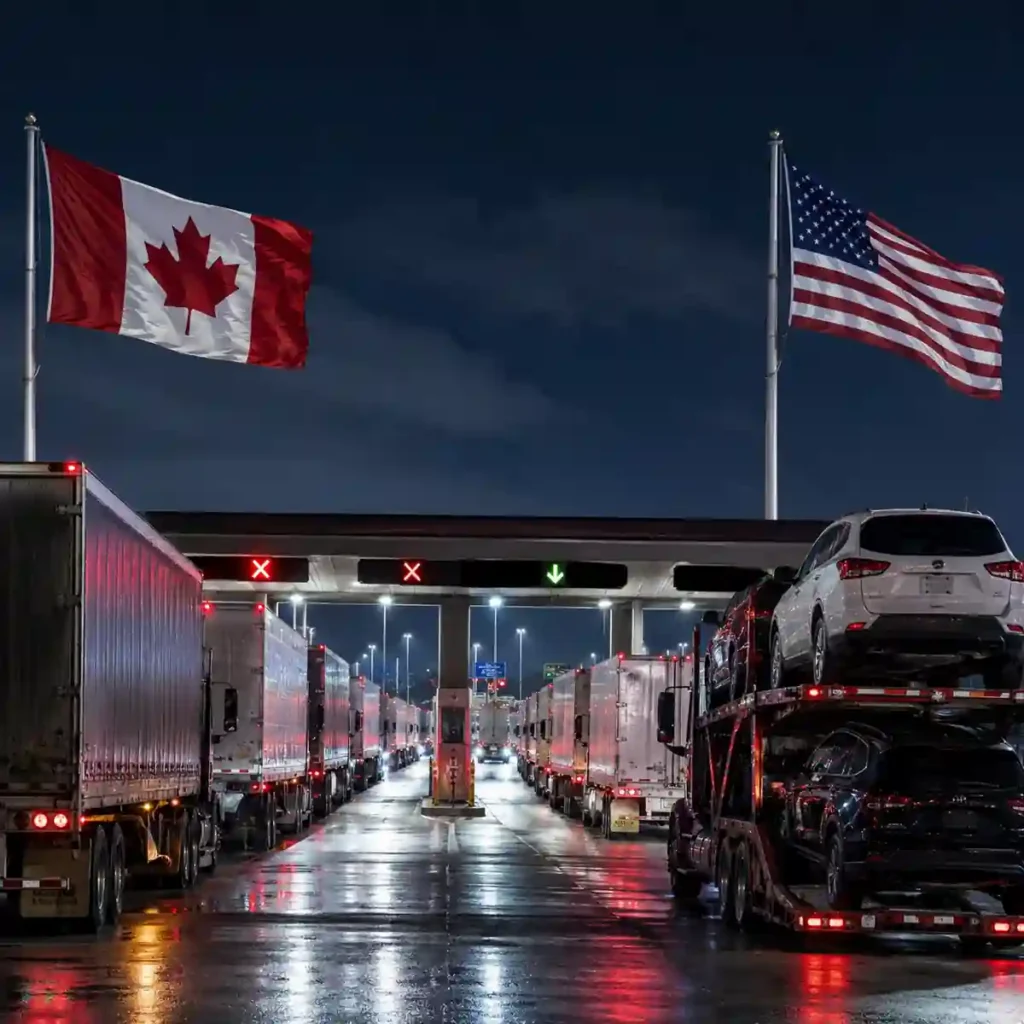

President Donald Trump has delayed a threatened 50% tariff on a wide range of Canadian goods for three days, giving the United States and Canada a short window to finalize what Trump says is a new trade agreement.
The additional duties were scheduled to take effect at 12:01 a.m. ET on August 19. Hours before the deadline, Trump said the tariffs would be paused because the two countries had a deal “subject to the finalization of documents.”
The reprieve covers roughly $20 billion worth of Canadian imports, including products ranging from dairy and alcohol to furniture and manufactured goods. For businesses and consumers, the crucial point is that the tariffs have been paused, not permanently cancelled.
Which Canadian goods were facing 50% tariffs?
The Trump administration targeted Canada over what it described as unfair treatment of American dairy products, alcoholic beverages, cars and auto parts. But the tariff lists extended well beyond those industries.
Covered products included industrial equipment, plastics, furniture, clothing and other manufactured goods. The White House’s Canada tariff announcement also identified exclusions, including energy, potash, certain goods already covered by Section 232 tariffs, fish and critical minerals.
The duties were imposed under Section 338 of the Tariff Act of 1930, an obscure trade provision allowing additional tariffs of up to 50% in response to discriminatory treatment of U.S. commerce.
Unlike some temporary tariff authorities, Section 338 does not impose a fixed expiration date. That means the duties could potentially remain in place until a president modifies or removes them.
USMCA would not automatically protect affected goods
One of the most significant details is that qualifying for the United States-Mexico-Canada Agreement would not automatically exempt a Canadian product covered by these tariffs.
That creates uncertainty for businesses whose North American supply chains were designed around preferential USMCA treatment, particularly manufacturers that regularly move materials and components across the border.
The dispute also comes as the trade agreement itself faces renewed scrutiny. Trump has repeatedly questioned whether the pact sufficiently benefits the United States. His earlier comments declaring the USMCA “irrelevant” while criticizing Canadian auto production showed how cars and cross-border manufacturing had already become major points of tension.
The legal strategy matters too. After the Supreme Court struck down sweeping tariffs imposed under another authority earlier this year, the administration began relying on other trade laws. Trump’s move to raise the U.S. global tariff to 15% following the Supreme Court ruling highlighted that broader shift in tariff policy.
Trump and Carney raced to reach a deal
The three-day pause followed several days of negotiations. Canadian Prime Minister Mark Carney and Trump spoke on Monday and Tuesday as officials worked to prevent the tariffs from taking effect. Carney described the discussions as “very delicate and intense.”
Canada has particular reason to avoid another escalation because its economy is deeply connected to the United States. It was also the only country besides China to retaliate against Trump’s earlier tariffs, although Carney later rolled back most of those measures.
The United States also faces risks from a prolonged dispute. American companies depend on Canadian energy, raw materials, components and finished products. In industries such as automobiles, parts can cross the border multiple times during production.
A 50% tariff could force U.S. importers to absorb higher costs, negotiate lower prices with suppliers, find alternative sources or pass some expenses to customers. The U.S. Chamber of Commerce warned that higher tariffs could increase costs for families, disrupt supply chains and threaten jobs connected to North American trade.
CUSMA Collapse Could Put 316,000 Jobs at Risk as Trump Tariff Deadline Nears
Keystone XL becomes part of the conversation
Trump added another potentially important element when announcing the pause, saying the Keystone XL pipeline “may be awoken from the grave.” He did not explain whether reviving the long-stalled Canada-U.S. oil pipeline is formally part of the tentative agreement.
The comment therefore should not be interpreted as confirmation that Keystone XL has been approved or will restart. Until the agreement is published, it remains unclear whether the pipeline is a negotiating issue, a potential future project or simply a proposal Trump wants Canada and the United States to reconsider.
What the three-day pause means now
The biggest unanswered question is what Canada has agreed to in exchange for avoiding the tariffs. Full terms covering dairy, alcohol, automobiles and other trade issues have not yet been disclosed.
If both governments finalize the agreement, Trump could withdraw, modify or further suspend the 50% duties. If negotiations fail, the tariff threat could return.
For businesses, the final documents will matter more than the temporary pause. They will determine which products remain exposed, whether USMCA trade is affected, and whether another round of Canadian retaliation is avoided.
For now, roughly $20 billion in Canadian imports has escaped an immediate 50% tariff. The next three days will determine whether that relief becomes a lasting settlement or merely postpones another U.S.-Canada trade confrontation.

Make Swikblog your go-to source on Google for reliable updates, smart insights, and daily trends.