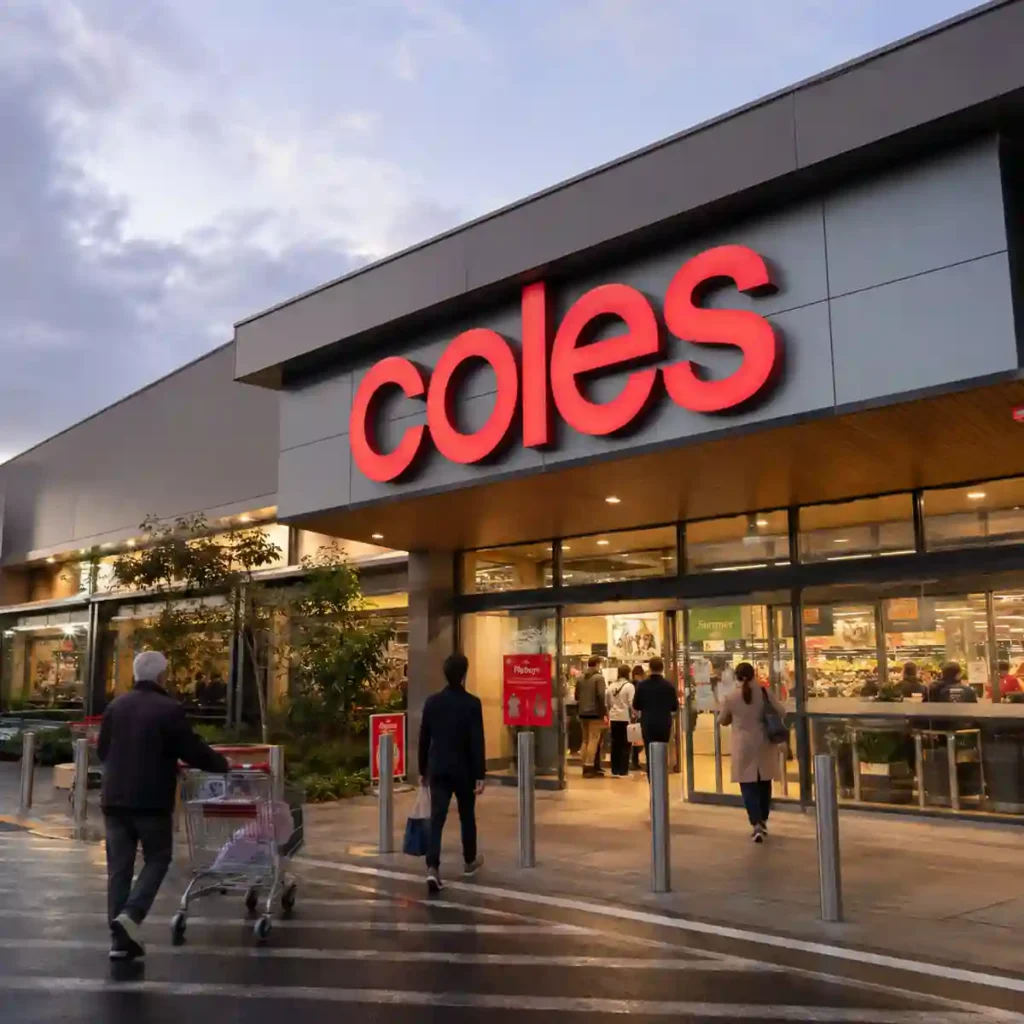

Coles has reported nearly $45.7 billion in annual sales, but a $235 million provision linked to historical employee underpayments has weighed on an otherwise strong year for Australia’s supermarket giant.
For the year ended June 28, 2026, group sales revenue increased 2.8%, while statutory net profit after tax rose just 1% to about $1.09 billion. The results matter to shareholders and thousands of salaried managers involved in the payroll dispute, while also revealing how aggressively Coles and Woolworths are competing for Australian grocery spending.
Why is Coles taking a $235 million hit?
Coles recognised a $235 million pre-tax significant item following a Federal Court judgment concerning historical payments to salaried managers. The after-tax impact was approximately $165 million.
Excluding significant items, Coles reported underlying net profit after tax of approximately $1.255 billion, up 13.7%. That compares with statutory profit of about $1.09 billion after the significant item was included.
The $235 million is not simply cash already distributed to workers. It represents a provision associated with historical employee payment matters following the court decision.
Who is affected by the Coles underpayment case?
The proceedings concern roughly 7,800 to 8,700 salaried Coles managers and whether their annual salaries adequately covered award entitlements generated by the hours they worked, including overtime and penalty-related payments.
A major issue was whether payments could be assessed or offset over extended periods. The Federal Court’s ruling reinforced the importance of satisfying minimum award entitlements within applicable pay periods.
Coles had already paid approximately $31 million in remediation to affected salaried managers before the judgment. Not every current or former employee will automatically receive further back pay; individual outcomes depend on employment circumstances and the legal process.
The company’s latest disclosures are available through the Coles Group investor centre.
Woolworths faces a similar payroll issue
Separate proceedings involving Woolworths have covered more than 19,000 employees, while reported provisions associated with its historical salaried employee remediation have reached as much as approximately $750 million before tax.
The cases have increased scrutiny of how major Australian employers reconcile fixed annual salaries with award entitlements when managers work beyond ordinary hours.
Coles supermarkets and online sales grow
Coles’ underlying grocery business performed considerably better than the headline profit figure suggests. Supermarket sales increased about 3.7%, while supermarket EBIT rose 12.2% to approximately $2.37 billion. Its EBIT margin improved from about 5.3% to 5.7%.
E-commerce was a standout, with supermarket online sales jumping 26.4% to approximately $5.6 billion. Online penetration reached about 13.6%, and Coles said its customer fulfilment centres became EBITDA-positive in their second year.
Woolworths Ooshies briefly hurt Coles sales
Coles also disclosed that sales moderated for almost four weeks during a competitor’s collectables campaign — a reference to Woolworths’ Disney Ooshies promotion featuring Disney, Marvel and Star Wars characters.
Coles chief executive Leah Weckert characterised the effect as temporary and said physical supermarkets were affected more noticeably than online shopping. Sales recovered after the promotion ended.
Survey findings cited in reporting indicated nearly two-thirds of surveyed parents changed some aspect of their shopping behaviour because of Ooshies. Some schools and childcare services also restricted the collectibles following disputes over trading and ownership.
The rivalry is increasingly about more than grocery prices. Both chains are investing in promotions, digital services and store technology, while recent facial recognition developments at Australian supermarkets have also raised questions about customer privacy.
Large retailers are simultaneously investing in physical expansion, a strategy also visible internationally through Target’s new US store expansion plans.
Target Halloween Costume Controversy: Why the Kids’ Clown Outfit Was Removed
Liquor sales fall as Coles plans more stores
Coles’ liquor division was weaker. Sales declined about 3.3% to $3.55 billion, while EBIT fell from $113 million to approximately $59 million. Coles is restructuring the network, with more closures planned during FY27.
Meanwhile, Coles ended FY26 with approximately 870 supermarkets. It plans around 25 new supermarkets and 75 store renewals in FY27, with expected capital expenditure of about $1.55 billion across stores, technology and supply-chain projects.
Coles dividend rises 13%
Coles declared a 37-cent fully franked final dividend, taking its total FY26 dividend to 78 cents per share, up 13%. The final dividend is scheduled to be paid on September 22, 2026, with a September 4 record date.
For investors, the results show a substantial gap between statutory and underlying performance: the employee-related provision weighed on reported profit while supermarket earnings, margins and online sales strengthened. For affected managers, the key issue remains how the legal and remediation process ultimately determines any outstanding individual entitlements.

Make Swikblog your go-to source on Google for reliable updates, smart insights, and daily trends.